









In Czechia, property tax enters housing debate
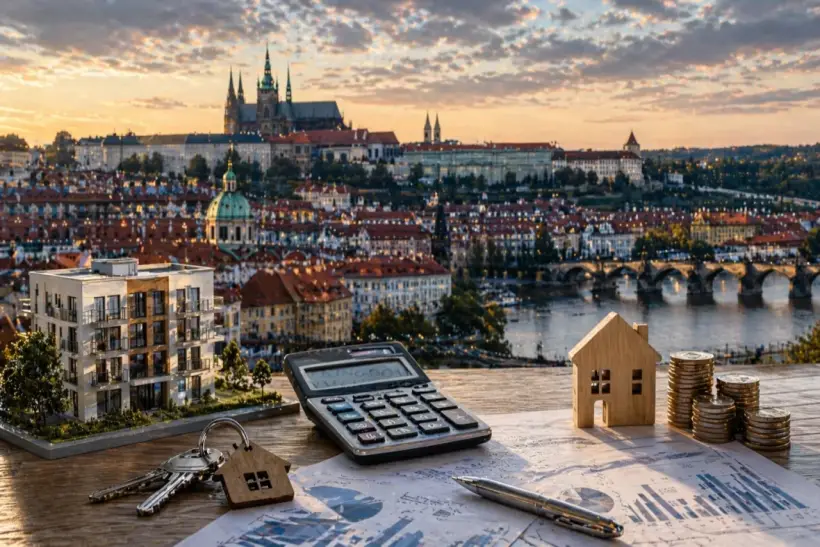
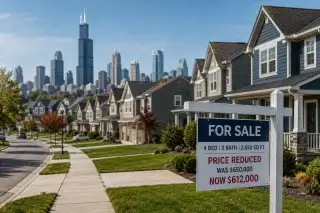
In Czechia, the housing crisis debate has shifted back toward taxation, as rising home prices, poor affordability and a large stock of underused apartments have fueled calls to raise annual property tax to 0.1% of market value in order to push owners to use housing more efficiently.
The Czechia housing market is climbing again
After the 2022–2023 slowdown, Czech housing prices have regained momentum. The Czech National Bank said the residential property price index rose 10% year on year in the first quarter of 2025, with new apartment prices up 13% and older properties up 9.3%. That suggests affordability pressures remain intense even after the period of high mortgage rates.
Over a longer period, the pressure looks even stronger. Eurostat data show Czech house prices have risen much faster since 2010 than in many European Union countries, while Czech housing affordability remains among the weakest in Central Europe. Materials published by the Ministry of Regional Development also show that buying an average 70-square-meter apartment requires more than six annual incomes, leaving the country among the region’s most stretched ownership markets.
Why property tax is back in focus in Czechia
Against that backdrop, the Czech debate has increasingly turned to whether property tax should serve not only as a revenue tool, but also as a market instrument. The April commentary proposed linking tax more directly to real market value and lifting it to 0.1% annually, arguing that the current system gives owners little incentive to rent out or sell vacant apartments.
That line of argument fits into a broader policy discussion. A joint housing reform study on Czechia and Poland prepared with OECD involvement says a comprehensive reform of the property tax system could help boost investment in affordable housing while correcting inequities in the current tax framework. The report also makes clear that Czech property taxation remains weak relative to the scale of the housing challenge.
How many empty apartments there are in Czechia
One of the strongest arguments for tougher taxation is the size of the unused housing stock. A study by the Czech Ministry of Regional Development estimates that the country has roughly 200,000 long-term unoccupied apartments in multi-apartment buildings, equal to 7.5% of that housing stock. In broader public debate, the figure is often described as above 10% when wider categories of unused housing are included. The study says many of these units remain outside the market for unclear reasons or are used for other purposes.
That matters because even a partial release of those units could expand supply without waiting for new construction. In the Czech debate, this has become a core point: activate existing housing first, then build more.
How much property tax has already risen in Czechia
The government has already moved once, but on a much smaller scale. The Czech Financial Administration said the consolidation package that took effect on January 1, 2024 increased real estate tax rates by 1.8 times on average. That was a meaningful shift for property owners, but critics say the tax remains too low by European standards and still too weak to alter the behavior of owners holding investment apartments off the market.
That is why the 0.1% idea has gained traction. Compared with more aggressive foreign models, it looks moderate, yet it would still be meaningful for high-value apartments in Prague and Brno. In the illustrative calculations used in the public debate, that would translate into about CZK 8,000 a year for an average apartment in Brno rather than the symbolic amounts many owners paid previously.
Could a higher tax in Czechia ease apartment prices
There is no automatic one-to-one link between higher property tax and lower home prices. But the argument behind the proposal is straightforward: if keeping a vacant apartment becomes more expensive, some owners may decide to rent it out or sell it sooner. If supply rises, price and rent growth could cool.
The political limits are equally clear. A higher annual tax is likely to face resistance from owner-occupiers, especially elderly households and families living in long-held homes without high current incomes. That is why the Czech debate already includes possible carve-outs, such as exemptions for a primary residence or stronger taxation focused specifically on investment properties. For now, this remains a public policy argument rather than a government bill.
As International Investment experts report, the Czech property-tax debate shows that Europe’s housing crisis is increasingly being treated not only as a construction problem, but also as a question of how efficiently existing housing is used. If Prague and other large Czech cities eventually move toward tougher taxation of vacant or investment property, it could become one of the most visible shifts in regional housing policy in recent years.