







 Australia’s Spring Auctions Rise but Remain Well Below 2025
 Number of Foreigners Holding Turkish Residence Permits Exceeds 1.27 Million
 Demand from Russian Tourists for Holidays in Georgia Rises by 20–25%
 Montenegro Property Buying Costs in 2026
 Four in Ten Companies Would Not Choose Slovakia
 Gulf Countries Prepare Unified Tourist Visa
Paris Office Towers Head to Market at Cut Prices
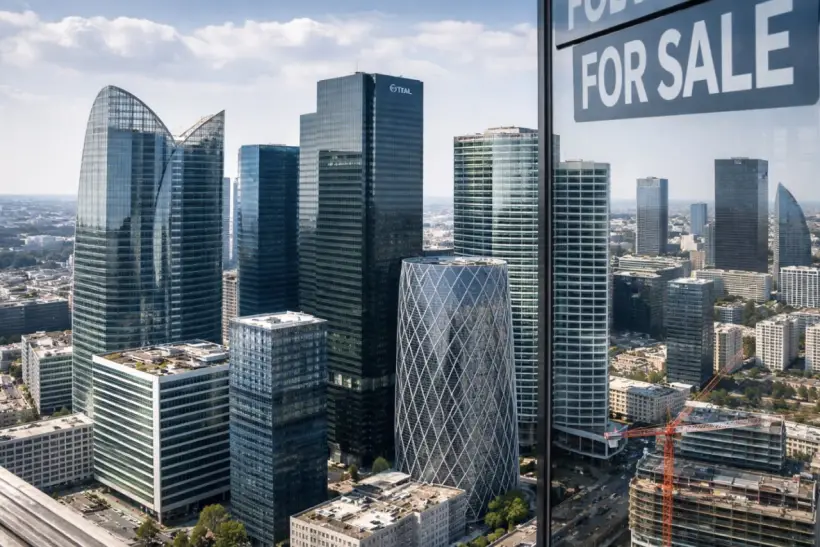
The Paris commercial real estate market is undergoing notable shifts as several office towers and properties in key business districts are being sold at discounted prices. Recent market coverage indicates that lenders and debt holders are increasingly taking control of distressed office assets or preparing them for sale below typical valuation levels, responding to persistent vacancy problems and weakening demand in the office segment.
Paris Faces an Office Demand Downturn
In recent years, demand for traditional office space in Paris has softened significantly. Vacancy rates have climbed, particularly in non-central and suburban districts, leaving numerous buildings underutilized or empty. As occupancy challenges mount, lenders and financial institutions are opting to cut their losses by facilitating sales of these assets at reduced prices, rather than maintaining positions in a sluggish market environment.
Drivers of Discounted Sales
Multiple trends have converged to pressure office asset values in Paris. One of the chief drivers is the shift in corporate workspace needs since the pandemic, with hybrid working models and downsizing decreasing requirements for large traditional offices. Combined with rising costs associated with upgrading older buildings to modern environmental standards, owners find themselves incentivized to offload properties below previous valuation benchmarks.
Investor Reaction and Market Outlook
Despite the current headwinds, some market participants view the prevalence of discounted sales as a strategic opportunity. These investors aim to acquire underperforming office buildings at lower entry costs, with the intention of repositioning or repurposing them to capture value as market conditions evolve. The success of such strategies will depend on future trends in workplace dynamics and corporate real estate demand.
As reported by experts at International Investment, the wave of cut-price office transactions in Paris signals a broader structural adjustment in the city’s commercial property sector, with lenders and investors adapting strategies in response to shifting demand patterns and economic uncertainties.