







 Vietnam Mortgage Surge Pushes Homes Out of Reach
 Lithuanian Apartment Prices Accelerate Across Major Cities
 London Flats Lose Value Ahead of Leasehold Reform
 Construction of the Batumi–Sarpi Highway Begins in Georgia
 Baltic Property Investment Accelerates in 2026
 Hong Kong and Singapore Renew Their Expat Rivalry
Green Housing Stays Out of Reach in Greece
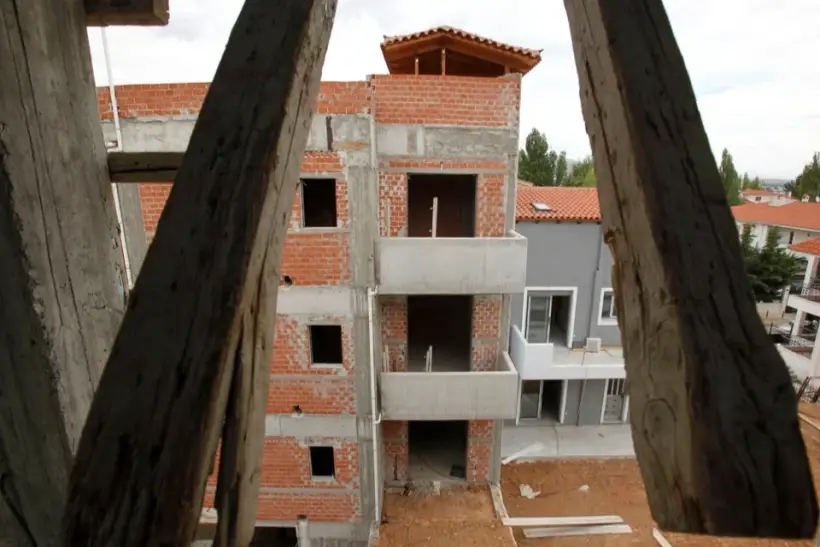
Greece’s housing market showed a clear affordability paradox in 2025, with demand shifting not toward energy-efficient homes but toward cheaper and lower-quality stock. According to an analysis cited by eKathimerini and based on Spitogatos data, asking prices for homes in the two lowest energy-certificate categories rose faster in 2025 than those for properties considered “green,” defined as homes in energy classes A+ to B. The pattern suggests that for many buyers, affordability now outweighs insulation standards, energy savings and modernization quality.
Energy-efficient homes are far more expensive in Athens
The pricing gap is especially visible across the Athens market. In central Athens, the average asking price for a high-energy-class residence in 2025 stood at 3,530 euros per square meter, compared with 1,915 euros per square meter for low-energy-class homes, a difference of about 84%. In the southern suburbs, the premium was even larger, with “green” homes priced at 4,925 euros per square meter versus 2,481 euros for lower-efficiency properties, close to a 98% gap. In the western suburbs, the difference reached 97.7%.
That premium reflects the structure of the Greek housing supply. High-efficiency homes are generally either newly built properties or older units that have undergone substantial renovation and upgrading. As a result, their asking prices incorporate not only location and size but also the cost of insulation, energy systems and compliance with modern building expectations. In a market where affordability remains under pressure, that makes energy-efficient stock difficult for mainstream buyers to access.
Lower-quality homes are gaining price faster
The most important signal from the data is that the lower end of the market is appreciating more quickly. In central Athens, asking prices for low-energy-class homes rose 11.8% year on year, while high-energy-class homes increased by just 3.8%. Piraeus showed a similar divergence: low-end properties rose 12.9% to 1,531 euros per square meter, compared with only 4.5% growth for higher-end homes, which reached 3,450 euros per square meter.
That trend does not necessarily mean buyers have lost interest in energy efficiency. It suggests instead that households are increasingly constrained by entry price. Buyers appear to be choosing homes that remain financially attainable upfront, even if those properties come with weaker insulation, higher long-term energy costs and greater renovation needs. In effect, the market is rewarding affordability more than energy performance.
Greece’s housing market remains shaped by affordability pressures
The eKathimerini report fits into a broader picture of Greece’s residential market, where rising prices continue to collide with limited affordable supply. Even where energy-efficient housing exists, it remains a relatively narrow segment because the premium over conventional homes is so large. Earlier Spitogatos-based reporting had already shown that the price premium for green properties can be especially pronounced in Attica and on island markets, narrowing the buyer pool further.
In practical terms, that means Greece’s green transition in housing is still not happening through broad-based absorption of efficient stock. As long as energy-efficient homes remain close to twice as expensive as lower-grade properties in key Athens districts, the market is likely to continue absorbing older and less efficient homes because they remain the only viable option for a large share of buyers.
As International Investment experts report, the Greek market shows that stronger interest in energy efficiency does not automatically translate into mass demand for green housing: when the price gap between upgraded and conventional properties remains too wide, demand will continue to concentrate in cheaper but less efficient stock.