







 How Ukraine’s New-Build Housing Market Has Changed Over Four Years
 European Prime Rents Rise as Property Yields Turn Higher
 The Most Expensive Airlines in Europe in 2026
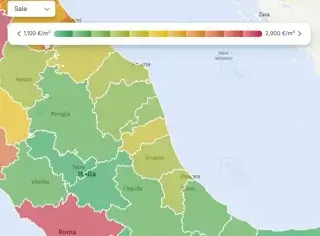 Housing Prices in Italy Reach a Two-Year High
 Travellers Increasingly Choose Cooler Scandinavia
 Serbia Property Sales Decline as Transaction Value Rises
Balanced Growth Lifted European Hotel Transactions

European hotel investment advanced on broader foundations
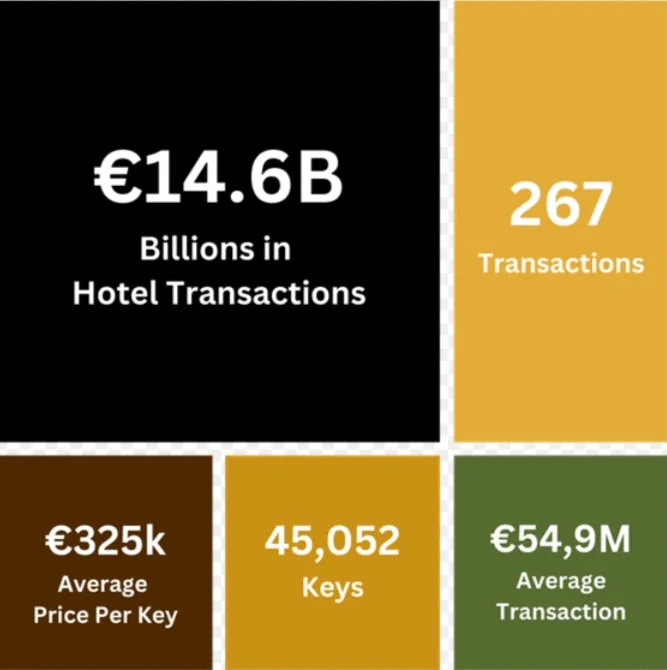
Europe’s hotel transaction market moved through 2025 with growth that was not explosive, but notably broader and more structurally balanced. According to Global Asset Solutions’ European Hotel Transactions Report 2025, the region recorded 267 hotel transactions worth a total of €14.65 billion during the year. Investors remained cautious because of geopolitical volatility, yet easing inflation, better liquidity and looser monetary conditions helped sustain activity and bring institutional capital back into the sector.
European hotel transactions grew without signs of overheating
What stands out in the 2025 market is that growth was not driven only by a handful of trophy deals. Capital was spread more widely across segments and geographies. Investors traded 45,052 hotel keys during the year, with an average transaction size of €54.9 million and an average price of €325,000 per key. That profile points to an active market, but not an overheated one. Investors were still underwriting carefully and were not willing to pay indiscriminately simply because tourism had recovered.
Upscale hotels became the core driver of European investment
The upscale segment attracted the largest share of capital in Europe in 2025. The report shows that upscale assets accounted for 132 transactions worth €7.66 billion, almost half of all deals completed during the year. Luxury recorded 34 transactions totaling €3.66 billion, while midscale and economy together accounted for 101 transactions worth €3.33 billion. This breakdown is important because it shows that investors are not relying only on prestige and scarcity at the top end. They are favoring hotel formats that are easier to scale, finance, operate and exit.
Why investors are favoring upscale and upper-upscale assets
Global Asset Solutions argues that upper-tier assets have gained an edge because they combine resilient demand, stronger pricing power and a better balance between returns and liquidity. The development pipeline supports that view. At the end of 2025, Europe had 367 upscale projects with 57,028 rooms, while upper-upscale reached a record 307 projects with 48,969 rooms. Together, those two categories represent about 39% of all projects and 42% of rooms in Europe’s active hotel pipeline. For investors, that signals a clear preference for products that can serve both leisure demand and the ongoing recovery in corporate travel.
ECB rate cuts and easing inflation supported deal activity
Hotel investment in Europe was supported not only by travel demand, but also by a more constructive macro backdrop. The report says European Central Bank policy easing significantly improved investor confidence. By June 2025, the ECB deposit facility rate had fallen from 3.00% in December 2024 to 2.00%, while inflation moderated in the second half of the year. That improved debt availability and helped restore liquidity. Still, the authors stress that investors kept underwriting discipline and that transaction timelines often became longer because of political and geopolitical uncertainty.
Travel demand continued to underpin European hotel assets
Tourism remained the fundamental support for the sector in 2025. The report says European flight activity moved above 2019 levels, passenger volumes reached record highs, and business travel continued its gradual recovery, helping weekday demand in major gateway cities. The European Union also recorded a historic 3.08 billion nights in tourist accommodation establishments, while Eurocontrol reported 10.2 million flights, around 5% above 2019 levels. That gave hotel assets a firmer operational base and meant the market was supported by real occupancy and revenue trends rather than recovery hopes alone.
France, the UK, Spain and Germany remained the core markets
Investment continued to cluster around Europe’s largest and most liquid hotel markets. According to Hospitality Net, citing Global Asset Solutions, France, the UK, Spain and Germany accounted for €9.61 billion out of the total €14.65 billion invested across Europe in 2025, or about 66% of the region’s transaction volume. The underlying report adds that the UK recorded 43 transactions worth €2.67 billion, Spain logged 31 transactions totaling €2.06 billion, and Germany posted 45 deals worth €2.05 billion. This concentration confirms that the biggest and deepest markets still set pricing benchmarks, liquidity standards and the direction of institutional capital across the region.
Spain and resort assets strengthened Europe’s hotel appeal
Spain remained one of the strongest national stories because of record tourism demand and resilient pricing. The country welcomed 96.8 million international tourists in 2025, setting a new all-time high, while hotel transactions totaled €2.06 billion across 31 deals. Upscale assets performed especially well in both resort and urban markets, supported by high occupancy and ADR growth. Investor appetite was reinforced by established leisure destinations such as the Canary and Balearic Islands as well as major gateways including Barcelona and Madrid.
Luxury deals still define the narrative, but not the market base
Even though the market often focuses on trophy assets, 2025 showed that ultra-luxury remains important but still represents a niche layer of activity. Among the year’s landmark transactions were the €432 million sale of the Mare Nostrum Resort in Tenerife and the deal for the remaining 67% of Four Seasons Astir Palace in Greece for a reported €413 million. At the same time, the report’s authors note that luxury remains attractive because of profitability and pricing power, but also carries higher operating costs and a narrower buyer universe, which raises execution risk.
European hotel investment outlook for 2026
The report suggests Europe is entering 2026 with a relatively solid foundation. However, the outlook is not entirely linear. Financing conditions, capital costs, geopolitics, inflation and the pace of recovery in certain international travel flows, including mainland Chinese demand, will continue to influence the market. Still, the region is supported by a large active pipeline, new openings and continued investor preference for quality branded assets in major cities and leading resorts.
As International Investment experts report, Europe’s hotel investment market in 2025 marked an important shift from emotional post-pandemic recovery to a more mature phase of asset selection. Capital is available, but it is being deployed selectively toward scalable upper-tier products, strong locations and assets with clearer earnings profiles. For Europe, that means the region is not only preserving its appeal, but also moving toward a more disciplined and higher-quality phase of hotel transaction growth in 2026.
Against the backdrop of more balanced hotel transaction growth across Europe, Georgia is also drawing more attention as hotel development continues to expand, especially in Tbilisi and Batumi. TBC Capital says the country’s branded hotel pipeline is concentrated mainly in those two cities, while branded hotel occupancy remains among the strongest in the market. That makes Georgia increasingly relevant for developers and operators looking for a mix of growing tourism demand, relatively flexible cost structures and a still-maturing competitive landscape.