







 Turkey Is Losing Its Cheap-Holiday Advantage
 Development Is Rewriting Southeast Asia’s Historic Districts
 How Ukraine’s New-Build Housing Market Has Changed Over Four Years
 European Prime Rents Rise as Property Yields Turn Higher
 The Most Expensive Airlines in Europe in 2026
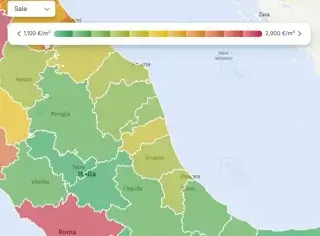 Housing Prices in Italy Reach a Two-Year High
Brazil Hedge Funds Suffer Worst March Since 2020

Oil shock hits Brazil hedge funds in March
Brazil hedge funds post worst monthly loss since 2020
Brazilian hedge funds posted their worst monthly performance since 2020 after a sharp rise in oil prices upended one of the market’s most crowded trades, the expectation of lower interest rates across global and emerging markets. According to Bloomberg, a basket of local hedge funds tracked by Brazil’s capital markets association fell 3.4% in March, marking the weakest monthly return since the pandemic shock. By contrast, the CDI benchmark rate, the main short-term reference for much of Brazil’s financial industry, gained 1.2% during the month.
The funds that recorded the deepest losses
The biggest decliners included flagship funds at Ibiuna Investimentos and Kapitalo Investimentos, which lost 10.9% and 6.5%, respectively, according to Bloomberg, their worst month on record. Other notable losses came from Adam Macro II, down 4.44%, Legacy Capital, down 3.55%, Occam Retorno Absoluto Advisory, down 2.87%, Ace Capital, down 2.04%, Vinland Macro, down 1.78%, Genoa Capital Radar, down 1.34%, Bahia AM Marau, down 0.91%, and Absolute Vertex, down 0.81%. Verde Asset Management was a rare exception, posting a gain of 0.05%.
Why the oil surge hit Brazil’s macro funds
The main trigger was oil. Bloomberg reported that a large share of the losses came as Brazilian swap rates jumped after traders cut the odds of interest-rate cuts by nearly half amid the sudden rise in energy costs. Positions linked to lower oil prices also backfired as Brent climbed from about $70 a barrel at the start of the war to more than $115 by the end of March. The broader commodities backdrop was equally violent. J.P. Morgan Asset Management said the Bloomberg Commodity Index rose 24.4% in the first quarter, while the U.S. Energy Information Administration also reported a sharp rise in Brent prices after the start of military action in the Middle East.
How Brazil’s rate outlook changed in March
The losses came as investors were still recalibrating expectations for Brazilian monetary easing. On March 18, the Central Bank of Brazil’s monetary policy committee, known as Copom, unanimously cut the benchmark Selic rate by 25 basis points to 14.75% a year. At the same time, policymakers stressed that uncertainty tied to the Middle East conflict required greater caution. Within days, a Bloomberg survey showed economists raising their forecasts for both inflation and the year-end Selic rate for 2026, even after the easing cycle had started.
What IHFA and CDI mean for investors
The IHFA referenced in Bloomberg’s report is the Índice de Hedge Funds ANBIMA, a benchmark designed for Brazil’s actively managed multi-strategy funds, the local category most comparable to hedge funds. CDI is the benchmark interbank overnight deposit rate that underpins a large share of Brazilian fixed-income and cash-market products. In early April, exchange operator B3 showed both the Selic and CDI rates at roughly 14.65% per year, underlining how high the opportunity cost remained for active managers even after the March rate cut.
How major managers responded to the selloff
Bloomberg said Ibiuna’s losses were mainly tied to emerging-market rates and the dollar. Kapitalo was hurt by bullish equity positions, bets on lower rates in both emerging and developed markets, and lower crude prices. Partner and chief operating officer Bernardo Feijó said the market had been caught off guard and that risk allocation would probably resume more gradually than usual. Legacy Capital said losses were driven by positions in local swap rates and overseas equities and that it had cut risk. Occam reduced bets on lower rates in Brazil. Absolute said losses were limited because it had only a relatively small position favoring lower rates, partly offset by bets on higher yields. Verde gained on larger positions in Brazilian equities, hedges using oil options and a newly implemented silver trade.
Why Brazil’s Treasury stepped into the bond market
The repricing in rates became so abrupt that the government moved to stabilize the domestic bond market. In mid-March, Brazil’s National Treasury intervened for a second straight day with off-schedule operations to buy back and sell government debt in order to support liquidity and steady trading. Bloomberg said those operations reached about 43.7 billion reais over two days. Agência Brasil described the move as the biggest intervention in more than a decade and said the nominal volume exceeded the operations seen during the pandemic period.
What the March slump signals for Brazil’s hedge fund industry
The March drawdown does not look like an isolated event. Bloomberg reported in January 2025 that investors had already pulled a record amount from Brazilian hedge funds during 2024 as rising interest rates and weak local markets hurt performance. The renewed losses in 2026 show how exposed the sector remains when a high-rate environment collides with a sudden shift in inflation, oil and yield-curve expectations. In such conditions, outperforming the cash benchmark becomes materially harder.
As International Investment experts note, the events of March 2026 show that the core risk for Brazilian hedge funds is not only the level of the Selic rate, but also the speed with which external shocks can reshape inflation expectations, oil prices and the domestic yield curve. In that environment, investors compare sophisticated strategies with the relatively low-risk return offered by CDI far more aggressively, and any prolonged underperformance quickly becomes a sector-wide pressure point.
FAQ
Why did Brazilian hedge funds lose money in March 2026?
The main reason was the oil-price shock, which changed inflation and interest-rate expectations. Many funds were positioned for lower rates and lower crude prices, and markets moved the other way.
How bad was the industry-wide decline?
The ANBIMA-tracked basket of Brazilian hedge funds fell 3.4% in March, the worst monthly result since 2020.
Which funds were hit the hardest?
Bloomberg said Ibiuna Investimentos and Kapitalo Investimentos were among the biggest losers, down 10.9% and 6.5%, respectively.
What is the Selic rate?
Selic is Brazil’s benchmark interest rate set by the central bank through its monetary policy committee. In March 2026 it was cut to 14.75% a year.
What is CDI and why does it matter?
CDI is Brazil’s benchmark overnight interbank rate. It is widely used as a performance yardstick for funds and fixed-income products, which is why underperforming CDI is a major issue for active managers.
Why did Brazil’s Treasury intervene in the bond market?
The oil-driven repricing in interest-rate expectations reduced liquidity and increased volatility in government bonds, prompting the Treasury to run off-schedule buyback and sale operations.