







read also
 Vietnam Mortgage Surge Pushes Homes Out of Reach
 Lithuanian Apartment Prices Accelerate Across Major Cities
 London Flats Lose Value Ahead of Leasehold Reform
 Construction of the Batumi–Sarpi Highway Begins in Georgia
 Baltic Property Investment Accelerates in 2026
 Hong Kong and Singapore Renew Their Expat Rivalry
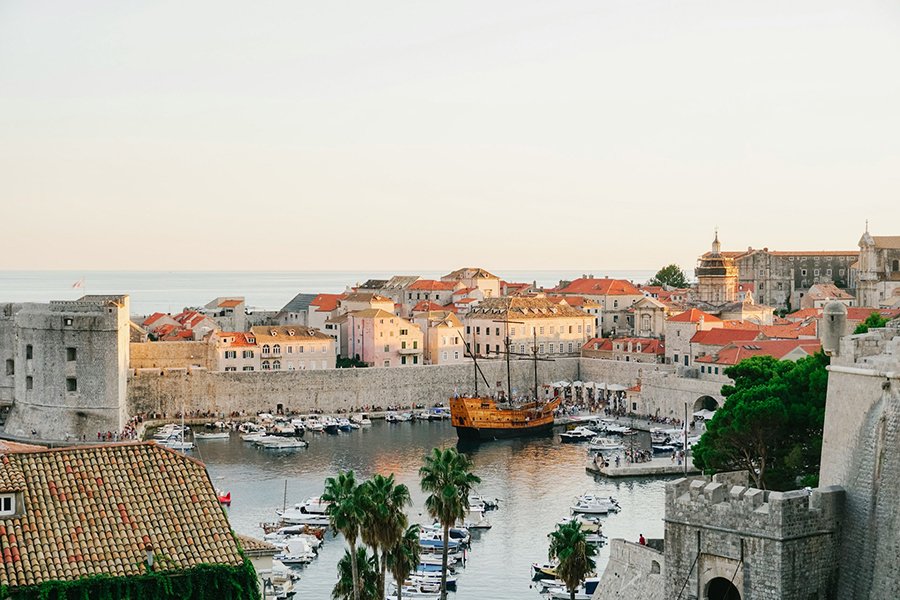
:Photo Unsplash
Croatia’s digital nomad residence permit, introduced in 2021 for third-country nationals, helped position the country as an early European hub for remote professionals. But the regime was built around temporary presence, not continuous long-term residence achieved through administrative switching. Over time, a workaround emerged in which some applicants extended their stay by moving between different temporary residence bases to avoid the intended waiting period. Croatian lawmakers responded by amending the Law on Foreigners to remove that flexibility.
How the loophole worked and what changed
In practice, the workaround relied on changing the legal “basis” of residence at the end of a permit, rather than reapplying under the same basis and observing the required break. A related pattern appeared in family scenarios, where spouses alternated between being the “digital nomad” and a family member joining a digital nomad, effectively stretching continuous time in Croatia. The March 2025 amendments were framed as a direct response to these combinations, which the authorities viewed as contrary to the permit’s intended use.
A broader six-month waiting rule
With the amendments taking effect in March 2025, Croatia strengthened a single principle: after a temporary residence permit expires, a new application can only be submitted after a six-month period, and the rule is drafted to cover adjacent bases to prevent “basis-switching” as a bypass. In effect, switching between digital nomad residence, “other purposes” residence and family reunification tied to a digital nomad is no longer a pathway to uninterrupted stays.
At the same time, a longer nomad stay
The reform is not only restrictive. Croatia also extended the possible validity of the digital nomad residence permit to up to 18 months, compared with the earlier one-year framework that often encouraged applicants to look for alternative routes to remain longer. The policy trade-off is clear: more time under the correct nomad category, but less room for serial “status engineering” to remain indefinitely without a break.
Implications for applicants and the market
For applicants, the change increases the importance of calendar planning: longer legal stays are available, but they are tied to a defined cycle of stay and mandatory waiting time. For families, the shift matters because the previous “role-swap” approach loses its practical value, even though family joining remains a recognised mechanism within the official framework.
As reported by International Investment experts, Croatia’s approach illustrates a wider EU trend: governments keep digital nomad pathways open, sometimes even extending permitted duration, while simultaneously tightening the rules that prevent permits from becoming de facto long-term residence through administrative manoeuvres. For property and rental markets, this points to a more predictable—but more cyclical—demand profile linked to permit durations and mandatory breaks.