







read also
 China Nears a Decision on Fresh Stimulus
 Fines for Illegal Rentals in Spain Reach €800,000
 Australia’s Spring Auctions Rise but Remain Well Below 2025
 Number of Foreigners Holding Turkish Residence Permits Exceeds 1.27 Million
 Demand from Russian Tourists for Holidays in Georgia Rises by 20–25%
 Montenegro Property Buying Costs in 2026
Argentine authorities bring “mattress dollars” back into banks
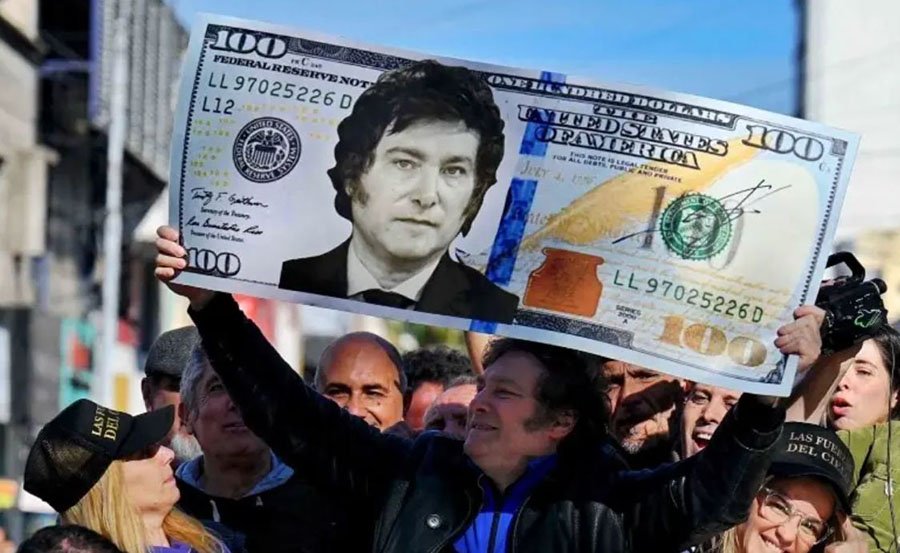
Photo: Dawn
Argentina has eased its tax rules in an effort to return so-called “mattress dollars” to the banking system — cash holdings and overseas savings accumulated by citizens during years of inflation and currency controls. President Javier Milei signed a law granting partial forgiveness for tax violations, aiming to boost foreign currency reserves and support external debt payments, Dawn reports.
Debt obligations
During a prolonged period of high inflation and strict currency controls, Argentines widely converted their savings from pesos into dollars, preferring to keep them in cash or in accounts abroad. According to government estimates, the volume of such funds reaches $251 billion. This is roughly six times larger than Argentina’s international reserves, which stood at $41 billion as of December 30. Authorities believe that channeling even a portion of these funds into the banking system could significantly improve the country’s financial position.
The initiative is directly linked to the state’s debt obligations. In 2026, Argentina is due to make around $19 billion in external debt payments. Additional pressure comes from the International Monetary Fund, to which the country still owes a substantial amount. According to O-Abroad News, Argentina is expected to repay about $13.5 billion between 2026 and 2030, with the largest amounts falling within the next three years. The IMF has been urging a faster rebuilding of foreign currency reserves, and the “tax innocence” law is viewed by the authorities as one of the tools to achieve this goal.
Financial Times writes that in early January 2026 Argentina’s central bank raised around $3 billion from international banks to shore up reserves and cover major external payments, including obligations to private creditors and international institutions. The measure is temporary and aimed at smoothing liquidity shortages in the coming months.
A further positive signal for markets was the early repayment of one tranche of a currency swap with the United States. This step was interpreted as an attempt to strengthen investor confidence and demonstrate the government’s ability to meet its obligations despite ongoing pressure on reserves.
Tax forgiveness and systemic risks
In December, Congress approved key changes to tax and financial regulation. In particular, the threshold for criminal liability for tax evasion was increased 66-fold, to the equivalent of $70,000 per year. At the same time, statutes of limitations for financial crimes were shortened, and a new regime was introduced that exempts taxpayers from reporting changes in their net worth. The government expects these measures to reduce fears of audits and potential penalties.
Economy Minister Luis Caputo urged banks to promptly accept dollar deposits from participants in the tax forgiveness program. He stressed that once funds are deposited, owners will be able to freely use them — either for spending or for earning interest on deposits. If private banks request extensive explanations regarding the origin of funds, Caputo advised turning to the state-owned Banco Nación, which, he said, should ensure the simplest possible access to the program.
The opposition reacted sharply to the initiative, arguing that easing the rules creates risks for the financial system and could turn the country into a convenient hub for money laundering. Among the key concerns is the potential legalization of funds of criminal origin, including proceeds from drug trafficking.
The new measures continue the course taken by Milei shortly after taking office in December 2023. At that time, the government launched a tax amnesty program that, according to official data, brought more than $20 billion into the banking system. These funds were placed in special accounts with restrictions. After the new law came into force, account holders gained the right to freely dispose of the funds — a move the authorities view as a signal of their willingness to make concessions in order to bring dollars back into the formal financial system.
Outlook for 2026–2027
The International Monetary Fund expects Argentina’s real GDP to grow by around 3.0% in 2026 and about 2.7–2.8% in 2027, noting that the recovery will depend on the sustainability of fiscal reforms, foreign currency inflows, and the authorities’ ability to stabilize reserves. The OECD also projects growth of close to 3%, while highlighting persistent inflation risks and vulnerability to external shocks.
Analysts at International Investment believe that the authorities’ focus on bringing “mattress dollars” back reflects the economy’s acute need for an internal source of foreign currency amid limited access to external financing. Easing the tax regime lowers barriers to legalizing accumulated savings and may deliver a short-term boost through higher deposits and improved banking system liquidity. However, the durability of this mechanism will depend on public trust in financial institutions and the predictability of economic policy.
Over the medium term, in 2026–2027, such measures are likely to offset structural imbalances only partially. Without consistent reserve accumulation, inflation control, and fiscal discipline, dollar inflows risk being one-off, leaving Milei’s initiative as a tactical step designed to buy time for deeper reforms that will ultimately shape Argentina’s economic trajectory.