







 How Ukraine’s New-Build Housing Market Has Changed Over Four Years
 European Prime Rents Rise as Property Yields Turn Higher
 The Most Expensive Airlines in Europe in 2026
 Housing Prices in Italy Reach a Two-Year High
 Travellers Increasingly Choose Cooler Scandinavia
 Serbia Property Sales Decline as Transaction Value Rises
India holds rates as rupee weakens
RBI leaves its key rate unchanged
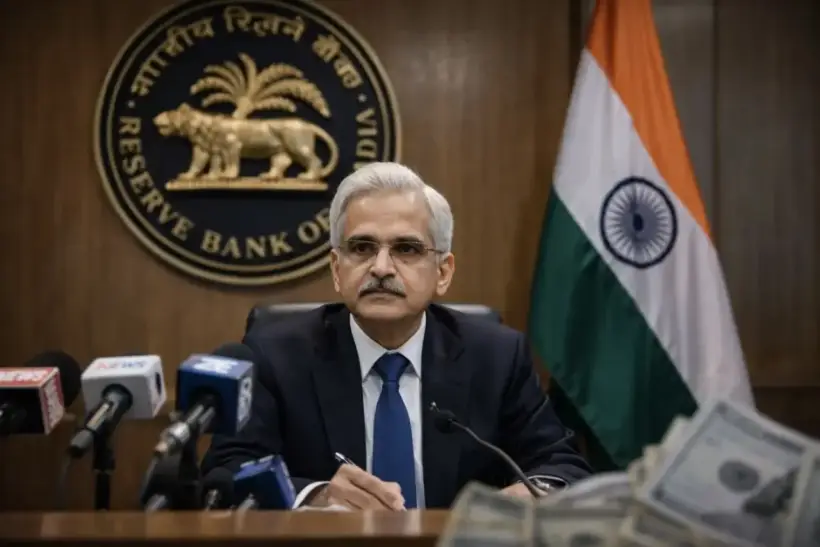
The Reserve Bank of India kept the repo rate unchanged at 5.25% on April 8, retained its neutral policy stance and paused its easing cycle as pressure on the rupee, higher oil risks and a darker global backdrop moved to the center of the policy debate. The decision was unanimous. The standing deposit facility remains at 5.00%, while the marginal standing facility and the bank rate remain at 5.50%.
In its official statement, the RBI said the conflict in West Asia had disrupted global supply chains, raised inflation risks and made the policy trade-off harder for central banks trying to balance growth support with price stability. The central bank also pointed to higher sovereign bond yields, an equity correction and a stronger US dollar driven by safe-haven demand, all of which have added pressure to emerging-market currencies including the rupee.
The weak rupee moved to the center of the RBI decision
The core issue in April was not only inflation but currency stability. Bloomberg had already reported that the rupee remained under intense pressure in early April, with some strategists warning that it could move toward 100 per dollar if the oil shock drags on. On April 6, the currency closed near 93.0612 per dollar after its biggest jump in 12 years, following RBI steps to curb speculation, but markets remained cautious about how durable that rebound would be.
Bloomberg also reported that the RBI’s anti-speculation measures came with side effects, including higher hedging costs and stress in the bond market. Fresh market reports say foreign portfolio investors sold more than ₹8,000 crore of Indian bonds after those rupee-related curbs, while yields moved higher. That helps explain why the currency was no longer just an external symptom for policymakers, but a central financial-stability variable.
Why India did not cut rates despite relatively moderate inflation
On the latest official data available ahead of the meeting, India’s consumer-price inflation stood at 3.21% year over year in February 2026, up from 2.7% in January. In its policy resolution, the RBI likewise said headline inflation under the new CPI series rose to 3.2% in February. That is still below the formal 4% target, but the bank stressed that higher energy prices, food risks and possible second-round effects have sharply increased uncertainty for the coming quarters.
That is why the central bank chose to wait. The policy statement says India is dealing with a supply shock, and in those conditions it is prudent to “wait and watch” how the conflict in West Asia affects oil, logistics and domestic prices. In other words, the RBI no longer sees the current environment as suitable for continuing with faster rate cuts, even if underlying inflation pressures still look relatively contained.
The RBI cut growth expectations and raised its inflation view
Alongside the rate decision, the central bank updated its macro forecasts. Real GDP growth for fiscal year 2026-27 is now projected at 6.9%, with quarterly growth of 6.8% in Q1, 6.7% in Q2, 7.0% in Q3 and 7.2% in Q4. CPI inflation for 2026-27 is projected at 4.6%, with a peak of 5.2% in Q3. That effectively means the RBI is acknowledging a softer growth profile and a less comfortable inflation path at the same time.
That mix makes the April decision especially revealing. As recently as February, Bloomberg had described the pause in easing as a sign that the cycle might be ending after fiscal and trade developments improved the backdrop. The picture has now changed sharply, with geopolitics and oil once again pushing the rupee and external vulnerability to the top of India’s monetary-policy agenda.
Oil and Hormuz are amplifying India’s macro vulnerability
The RBI explicitly warned that elevated energy prices and disruptions in the Strait of Hormuz could drag on production, trade and growth in 2026-27. The policy resolution says higher fuel costs, freight, insurance and logistics prices could hurt exports and constrain input availability for downstream sectors. India is especially exposed because it remains a large oil importer and the rupee has historically been sensitive to energy shocks.
Bloomberg had already argued that the oil shock was pushing the currency market toward a stress scenario. On April 1, some strategists described a move toward 100 per dollar as a “virtual certainty” if the conflict becomes prolonged. Even if that outcome does not become the base case, the fact that it entered mainstream market analysis shows how sharply risk perceptions around India changed over just a few days.
What the RBI decision means for Indian markets
For bonds, the decision means a longer period of sensitivity to the rupee, foreign flows and hedging costs. For currency markets, it signals that the RBI is prepared to defend stability not only through intervention and FX-specific measures but also through a firmer pause in easing than many had expected a few weeks ago. For equities, it means rate policy is no longer an automatic support for growth, and investors will be watching oil, USD/INR and imported inflation much more closely.
As International Investment experts note, the RBI’s April pause shows that India is not yet willing to buy additional growth at the cost of a sharper rupee slide. If the oil shock fades and the currency stabilizes, the central bank could eventually return to a softer tone. But if the dollar stays strong and energy prices remain elevated, protecting currency stability and containing imported inflation are likely to remain more important than resuming rate cuts.
FAQ on the RBI rate decision and the rupee
What rate did the RBI keep unchanged on April 8, 2026
The Reserve Bank of India kept the repo rate at 5.25%, with the SDF at 5.00% and the MSF and bank rate at 5.50%.
Why did the RBI not cut rates
Because the central bank sees the current situation as a supply shock. The conflict in West Asia has raised risks around oil, inflation, supply chains and the rupee, so policymakers chose a wait-and-watch approach.
What was India’s latest inflation reading before the meeting
The latest official inflation reading available at the time was February CPI, at 3.21% year over year. March CPI was scheduled for release on April 13, 2026.
What growth and inflation forecasts did the RBI publish
The RBI projected GDP growth of 6.9% for FY2026-27 and CPI inflation of 4.6%, with inflation peaking at 5.2% in the third quarter.
Why does the weak rupee matter so much for India’s monetary policy
Because a weaker rupee raises the local cost of imported oil and other goods, feeds inflation, pressures bonds and makes it harder for the RBI to balance growth support with price stability.