







 How Ukraine’s New-Build Housing Market Has Changed Over Four Years
 European Prime Rents Rise as Property Yields Turn Higher
 The Most Expensive Airlines in Europe in 2026
 Housing Prices in Italy Reach a Two-Year High
 Travellers Increasingly Choose Cooler Scandinavia
 Serbia Property Sales Decline as Transaction Value Rises
Iran Rejects US Peace Plan: Key Points and Impact on Global Markets
New York Post
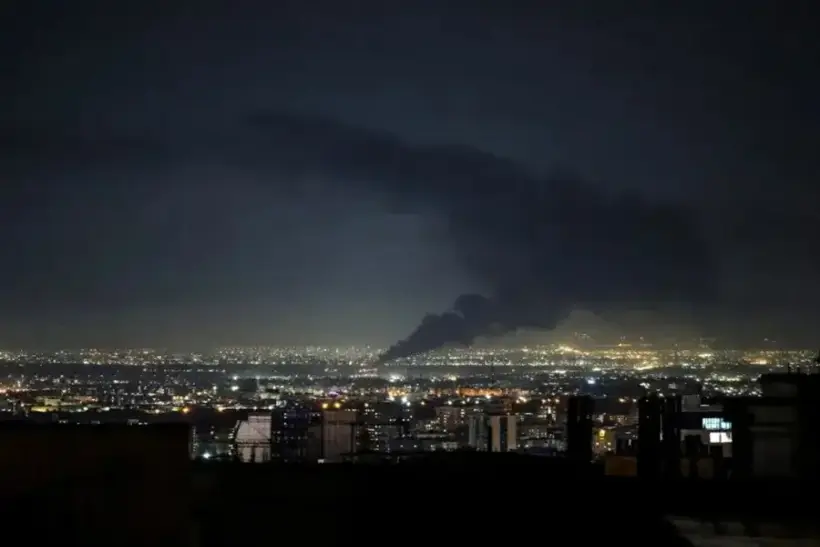
Global markets and diplomatic arenas are once again in a state of uncertainty following a sharp statement from Tehran. Iran has officially rejected the US-proposed settlement framework, claiming that key conditions were violated even before negotiations began. The situation surrounding the recently announced ceasefire is rapidly escalating, raising doubts about its viability and affecting the global economic outlook, according to Times.
Iran Accuses the US of Violations
Iranian authorities insist on a ceasefire in Lebanon. One of the plan’s points called for an immediate halt to hostilities not only in the conflict zone but also in neighboring regions. Meanwhile, Israel has intensified strikes on Hezbollah positions in Beirut — despite the US administration previously stating that it would support negotiations and the peace agreement while excluding Lebanon from it.
The second dispute concerns an incident involving a drone, which Tehran claims entered Iranian airspace and was shot down in Fars Province. In Iran’s interpretation, this constitutes a direct violation of the ban on any military actions during the preparation for negotiations.
The third disagreement is strategic: the US does not recognize Iran’s right to uranium enrichment, even though this point is included in the framework document. For Tehran, this is a non-negotiable position, without which any agreement would lose its meaning.
The head of Iran’s nuclear program, Mohammad Eslami, previously stated that maintaining the right to enrich uranium is a mandatory condition for dialogue. According to him, this issue “remains outside public discussion,” but effectively determines the parties’ readiness for compromise. The US refusal to acknowledge this point exacerbates disagreements and makes the prospects for negotiations highly uncertain.
“Historical Distrust”: Positions of Iran and the US
Iranian authorities have cited a “deep historical distrust” of the US. Parliament Speaker Mohammad Bagher Ghalibaf emphasized that Donald Trump is violating the obligations of the 10-point plan, which he himself previously recognized as a basis for negotiations. Tehran claims that the agreements were undermined even before their actual discussion, making further contact pointless.
Meanwhile, the US views Iran’s plan merely as a framework for negotiations. The President has stated that any potential agreement must include Iran’s complete renunciation of nuclear weapons, a guarantee of the Strait of Hormuz being open and safe, and the maintenance of US military presence in the region until conditions are fulfilled.
President Donald Trump threatened a large-scale military strike on Iran if Tehran fails to comply with the agreement. He emphasized that all US forces deployed in the Middle East will remain in position “until the real agreement is fully respected.”
“If for any reason it does not happen, which is highly unlikely, then the ‘Shootin’ Starts,’” Trump warned, adding that the operation would be “bigger, better, and stronger than anyone has ever seen.”
Prospects for Negotiations and Market Reactions
Sharp statements from both sides have not yet halted preparations for negotiations in Islamabad, mediated by Pakistan, scheduled for April 10. Vice President J.D. Vance will participate in talks with Iran. Air Force General Dan Caine, Chairman of the Joint Chiefs of Staff, emphasized that the ceasefire is a pause, but joint forces remain ready to resume combat operations with the same speed and precision demonstrated over the past 38 days.
Political instability is already affecting global markets. After a brief period of optimism following the ceasefire announcement, investors are returning to a cautious strategy. Oil prices are rising amid supply risks, while stock indices are declining.
Experts note that the prospects for constructive dialogue remain doubtful and uncertain, and the risks are too high for both the region and the global economy.