











Belarus stops allowing Russian conscripts to leave for foreign countries
Russians can no longer use Belarus as a transit route to travel to third countries. The restriction applies to citizens who have received a draft notice, according to BelSat. The first case of such a ban has already been recorded.
Transit blocked: Belarus checks Russian exit bans
Human rights advocates reported the case of a resident of St. Petersburg who was denied departure from Minsk. The man had received a draft notice requiring him to undergo a medical examination on April 29. After that, a travel ban appeared in the Russian electronic register. He was still able to travel to Belarus by train from Smolensk without any checks.
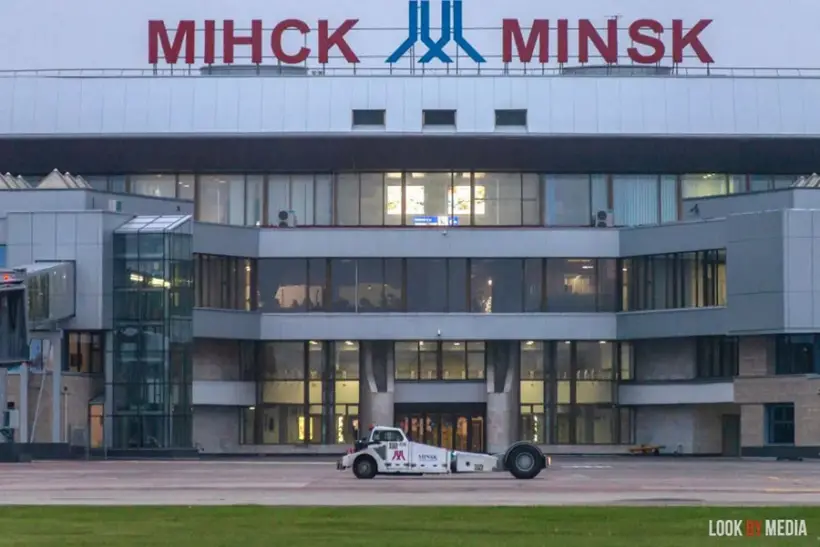
However, on April 22, he was not allowed to board a flight to Tbilisi at Minsk airport. He later attempted to fly to Yerevan using his internal Russian passport but was also denied. No written documents explaining the ban were provided—only verbal explanations.
The State Border Committee of Belarus confirmed to BelSat that it checks whether restrictions imposed by Russia are in place. If there are none, a Russian citizen may still leave Belarus for a third country. If a person appears in the database of individuals banned from leaving, they will not be allowed to cross the border.
Previously, Russians did not face such issues. This route had been considered a safe way to leave the country. Now it appears that border authorities of the two countries have begun exchanging data. In such cases, individuals may attempt to challenge the travel ban via the Gosuslugi portal and then through the courts, although such efforts are often ineffective. Another option is to prove unfitness for service with medical documents or apply for alternative civilian service.
How Russia’s draft system works
According to RBC, the 2026 draft campaign is taking place under full digitalization of military records. Paper notices remain legally valid but are duplicated in the electronic summons register. A notice is considered served either seven days after it is uploaded to the register or immediately upon appearing in a user’s personal account on the Gosuslugi portal.
The draft now runs year-round, from January 1 to December 31. A conscript is defined as a male citizen aged 18 to 30 who is registered for military service and not in the reserve. The upper age limit was raised from 27 to 30 starting in 2024. Those who turned 27 before the end of 2023 were automatically placed in the reserve under the previous rules.
After receiving a draft notice, a citizen must report to the military commissariat on the specified date, or within 30 days if no date is indicated.
Liability for failure to appear and restrictions
Failure to appear without a valid reason results in administrative liability under Article 21.5 of the Russian Code of Administrative Offenses, with fines ranging from 10,000 to 30,000 rubles.
Additional restrictions may also apply after a notice is served. These include a ban on leaving Russia, inability to register as an individual entrepreneur or self-employed, difficulties obtaining loans, and restrictions on registering vehicles and real estate.
If intentional draft evasion is proven, criminal liability may follow under Article 328 of the Criminal Code, including fines of up to 200,000 rubles, compulsory or forced labor, arrest, or imprisonment for up to two years.
Valid reasons for failing to appear include illness, serious health conditions of close relatives, participation in funerals, force majeure, and other circumstances recognized by authorities or courts.
Medical examination, deferments, and alternative service
Before attending the medical examination, individuals are advised to collect all relevant medical documents, including hospital records and test results. The commission determines fitness for service based on these documents.
Category “A” indicates full fitness, “B” fitness with minor restrictions, “V” limited fitness, “G” temporary unfitness, and “D” full exemption from service.
Deferments may be granted for education, health reasons, family circumstances, or employment in certain sectors, including accredited IT companies under specific conditions.
Citizens may also apply for alternative civilian service if their beliefs or religion conflict with military service, or if they belong to certain indigenous groups. This service is carried out in civilian institutions and lasts 21 months.
The duration of compulsory military service in 2026 remains unchanged at 12 months.
Conclusion
Russia continues to tighten its system of draft-related restrictions, increasingly relying on digital technologies. Travel bans are recorded in electronic databases that, as recent cases suggest, may be taken into account not only within Russia but also in neighboring countries.
This expansion reduces the options available to conscripts seeking to avoid military service. In such situations, legal advice and human rights guidance are often of limited effectiveness, and challenging a travel ban in practice is difficult.
As a result, potential conscripts are advised to assess risks in advance and make decisions well before receiving a draft notice. Legal mechanisms such as deferment, exemption, or alternative service remain available, but their application depends on specific circumstances and does not always guarantee a predictable outcome.