







 How Ukraine’s New-Build Housing Market Has Changed Over Four Years
 European Prime Rents Rise as Property Yields Turn Higher
 The Most Expensive Airlines in Europe in 2026
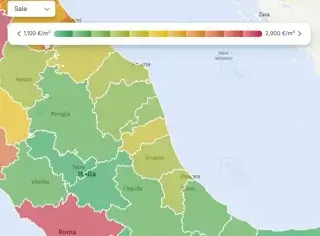 Housing Prices in Italy Reach a Two-Year High
 Travellers Increasingly Choose Cooler Scandinavia
 Serbia Property Sales Decline as Transaction Value Rises
France’s Public Debt Exceeds €3.5 Trillion, Reaching 117.5% of GDP

France’s public debt rose by €75.6 billion in the first quarter of 2026, reaching a record €3.536 trillion, or 117.5% of GDP. In the previous quarter, the figure stood at 115.7% of GDP, according to data from the French National Institute of Statistics and Economic Studies (INSEE).
France’s Financial Dynamics
France’s net public debt, which takes into account government financial assets, amounted to €3.301 trillion at the end of the first quarter, or 109.7% of GDP, compared with 108.5% at the end of 2025.
The gap between gross and net debt growth amounted to €20 billion. INSEE explains this mainly by an increase in central government cash reserves, partially offset by a reduction in liquid assets held by the social security system.
At the same time, the value of shares and mutual fund units held by the public sector fell by €3.5 billion, to €314.7 billion. The decline was driven by lower valuations of assets held by social funds and public agencies, while assets directly owned by the state increased to €75 billion.
Public Sector Debt Breakdown
The central government made the largest contribution to the increase in public debt. Its contribution rose by €66.3 billion, after a decline of €22.6 billion in the previous quarter.
Outstanding long-term government bonds increased by €58.4 billion, while short-term debt securities rose by €7.9 billion. Over the same period, government cash reserves increased by €28.1 billion. As a result, central government net debt rose by €39.3 billion, significantly less than the increase in gross debt.
Debt of other central government entities rose by €0.3 billion. In particular, the debt of the rail infrastructure operator SNCF Réseau increased by €0.2 billion.
Social Security Fund Debt
After a €13 billion decline in the fourth quarter of 2025, social security fund debt increased by €8.2 billion in the first quarter of 2026.
The largest contribution came from the national social contribution collection agency Urssaf Caisse Nationale, whose debt rose by €10.8 billion. Liabilities of the unemployment insurance agency Unédic increased by €1.2 billion, and those of the National Health Insurance Fund (CNAM) by €0.5 billion.
At the same time, debt of the social debt amortisation fund (Cades) fell by €3.5 billion, and the Family Allowance Fund (Cnaf) by €0.9 billion.
Social security assets declined by €7.2 billion over the quarter, mainly due to a €6.7 billion reduction in cash holdings. As a result, net debt in this sector increased by €15.4 billion.
Regional and Local Government Debt
Total local government debt rose by €0.8 billion, following an increase of €12.2 billion in the previous quarter.
Municipalities reduced their debt by €0.6 billion, and departments by €0.9 billion, while regional governments increased their debt by €1.8 billion.
Debt of other local entities rose by €0.4 billion, including a €0.6 billion increase linked to the transport operator Île-de-France Mobilités. Debt of inter-municipal bodies rose by €0.1 billion.
Rising Economic Risks in France
The French Court of Audit expects public debt to continue rising rapidly in 2026, increasing by more than €160 billion and exceeding €3.6 trillion, or around 118.5% of GDP.
At the same time, debt servicing costs are expected to rise significantly, with interest payments projected to reach €77.4 billion due to higher rates on new borrowing.
Senior auditor Carine Camby stated that excessive debt is already constraining the state’s financial capacity and policy choices, saying: “Suffocation under debt is not a risk, it is a reality of our public finances.” She also noted that upcoming presidential elections in France complicate efforts to take corrective measures.
The government aims to reduce the budget deficit to 5% of GDP this year, but experts consider this goal “far from guaranteed” amid slowing economic growth, geopolitical uncertainty, and persistent inflation risks.
Conclusion
Auditors argue that the government must develop a clear and credible multi-year strategy to bring the deficit below 3% of GDP by 2029 and secure a sustainable primary surplus in the long term. Otherwise, France will remain dependent on financial markets’ confidence in its ability to meet its obligations.
Analysts at International Investment note that rapidly rising public debt is making the country increasingly sensitive to market sentiment. Budget prospects for 2026 are highly vulnerable. Current policy relies heavily on tax increases, which is generating public dissatisfaction, while spending cuts remain limited.