












U.S. Supreme Court Upholds Birthright Citizenship and Rejects Trump Order
POLITICO
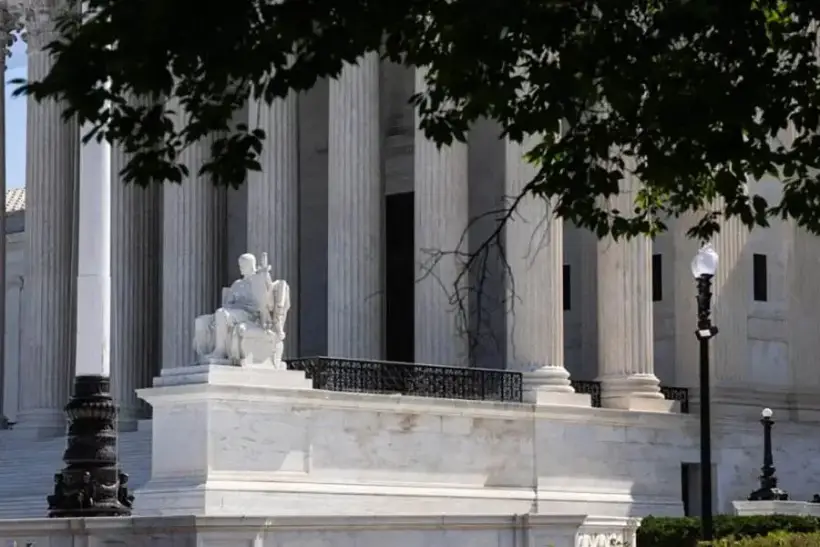
The U.S. Supreme Court has upheld the right to birthright citizenship and rejected Donald Trump’s attempt to change a rule that has been in place for nearly 130 years. The decision came in response to a presidential order restricting citizenship for children of foreign nationals, POLITICO reports.
Trump’s Executive Order on Birthright Citizenship in the U.S.
Donald Trump signed an executive order to revoke birthright citizenship at the beginning of his second presidential term on January 20, 2025. The document proposed denying citizenship to children of undocumented migrants, as well as to foreign nationals residing in the United States on temporary visas, including students, workers, and tourists.
One of the arguments cited was a sharp increase in immigration. According to the Migration Policy Institute (MPI), the share of children born in immigrant families in the United States rose from 77% in 1990 to 86% in 2023. The share of children with at least one immigrant parent increased from 13% to 26%. The Center for Migration Studies noted that in recent years between 225,000 and 250,000 children have been born annually in the U.S. to parents without legal status, accounting for about 7% of all births.
Conflict with the 14th Amendment of the U.S. Constitution
Shortly after the order was issued, federal judge Deborah Boardman in Maryland imposed a nationwide preliminary injunction. The decision was based on the view that the order conflicted with the 14th Amendment, long-standing legal precedent, and the historical interpretation of U.S. citizenship law.
The 14th Amendment was adopted in 1868 after the Civil War. Its original purpose was to guarantee citizenship for children of formerly enslaved people. Over time, it became the foundation of the principle that almost all children born on U.S. soil are granted citizenship. The amendment states that all persons born or naturalized in the United States and subject to its jurisdiction are citizens.
U.S. Supreme Court Decision in 2026
In late June 2026, the Supreme Court ruled that Trump’s approach was unconstitutional. Chief Justice John Roberts rejected arguments suggesting that birthright citizenship should apply only to children of parents permanently residing in the United States and demonstrating allegiance to the country. Several other justices supported the decision, emphasizing that the executive order violated federal law.
Justice Samuel Alito argued that even in the absence of a constitutional guarantee, the issue of legal status should be decided by Congress. He noted that many immigrant children raised in the United States have a moral claim to remain in the country, but that this falls outside the scope of the 14th Amendment.
At the same time, some members of the Court advanced arguments closer to the position of the Trump administration, framing the restriction as a response to illegal immigration.
Political Context and Trump’s Position
The ruling marked the second major setback for Trump’s policy agenda from the Supreme Court in 2026. Earlier, the Court struck down large-scale import tariffs that had formed the basis of his trade strategy.
Trump actively promoted the idea of revising birthright citizenship, arguing that it encourages illegal immigration and so-called “birth tourism,” where foreign nationals travel to the United States specifically to give birth to children who automatically receive U.S. citizenship.
In April, the president personally attended Supreme Court hearings, a rare move for a sitting head of state. He later intensified public criticism of the Court through social media, stating he expected an unfavorable outcome and describing the judiciary as “biased.”
Significance for Foreign Nationals in the United States
The ruling effectively confirms the existing legal practice and reaffirms that birthright citizenship remains unchanged for most children born on U.S. soil.
At the same time, federal agencies have recently expanded the administration’s immigration enforcement powers. On June 23, the Court supported broader authority for immigration services to deport green card holders accused of crimes involving “moral turpitude,” expanding grounds for removal even for permanent residents.
On June 25, the Court allowed the termination of Temporary Protected Status (TPS) for nationals of Haiti and Syria. For over a decade, this program had enabled people from countries affected by war, political crises, and natural disasters to live and work legally in the United States.
On the same day, the Court also approved the reinstatement of the “metering” policy at the Mexico border, allowing border officials to limit and delay asylum applications from migrants arriving at the border.
Conclusion
Analysts at International Investment note that preserving the long-standing tradition of birthright citizenship appears as a rare restraint within a broader trend of tightening immigration policy. Since 2025, the Trump administration has advanced a series of restrictive initiatives, including expanded asylum rejections, renewed border controls at the U.S.–Mexico border, and a review of temporary protection programs. Some countries have faced visa changes and additional fees, while for others, including Russian applicants, application access points have been reduced.
Authorities have also increased scrutiny of previously issued visas and green cards and expanded grounds for deportation. As a result, the U.S. immigration system is becoming more restrictive and selective, where judicial decisions may limit individual measures but do not fundamentally alter the overall direction of the administration’s policy.