




How Much Do They Pay for Work in Europe: Market Leaders and Laggards

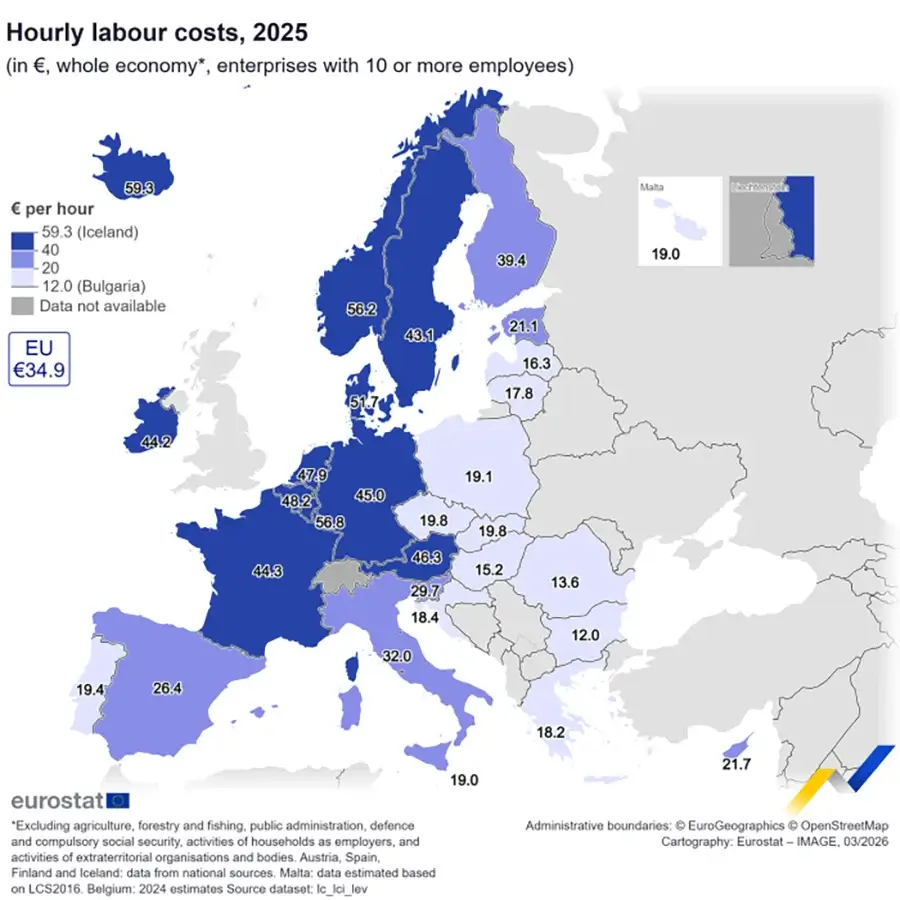
Significant differences in average hourly labor costs still persist across EU countries. They range from €12 in Bulgaria to €57 in Luxembourg. France and Sweden lead in social security and pension contributions. Eurostat recorded wage growth in 2025 in almost all countries, except Malta.
Hourly Wages in Europe
Average Figures
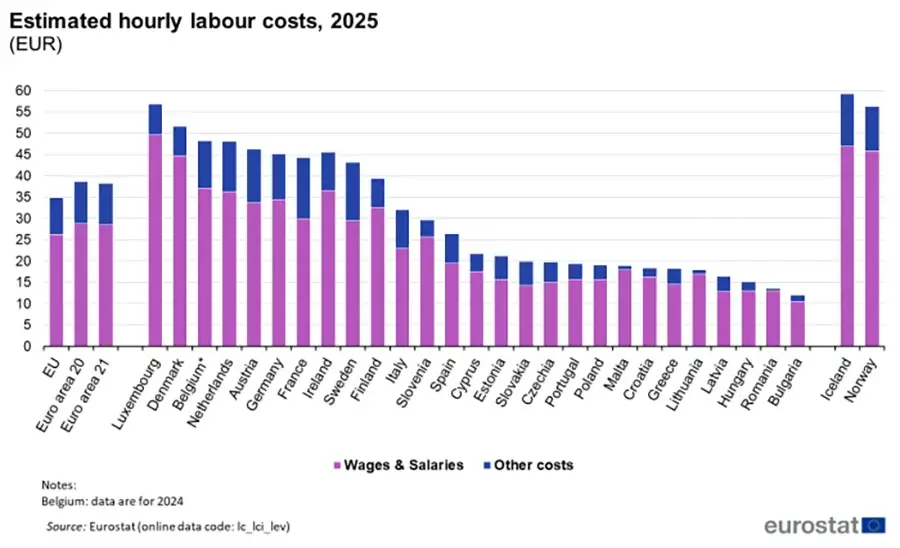
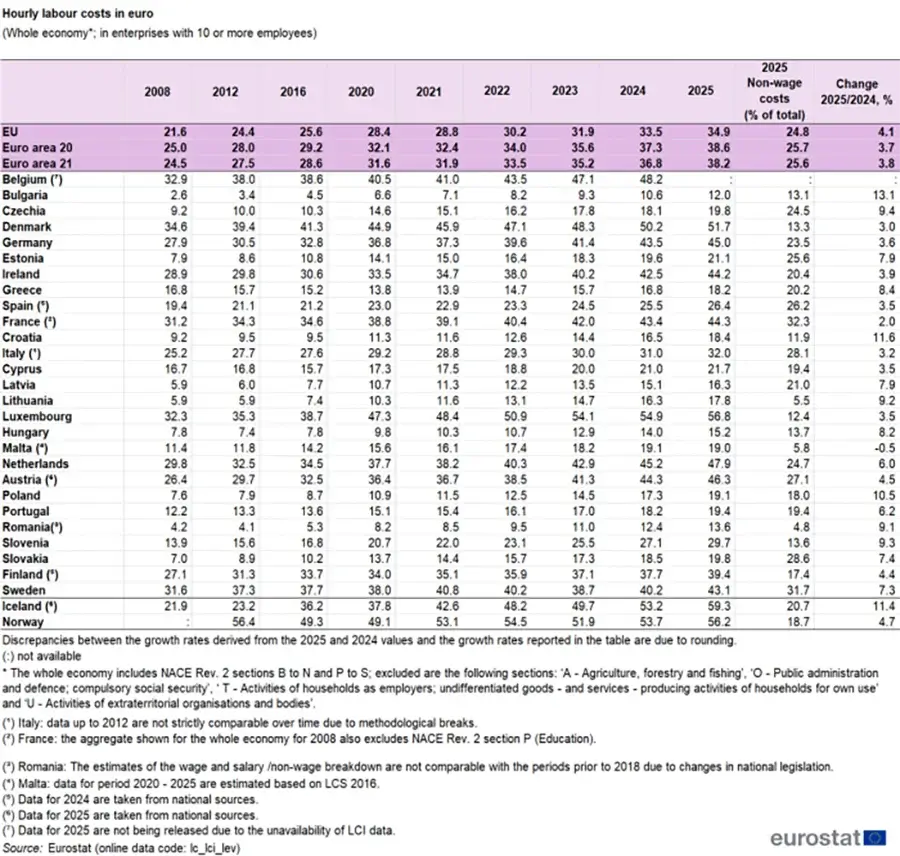
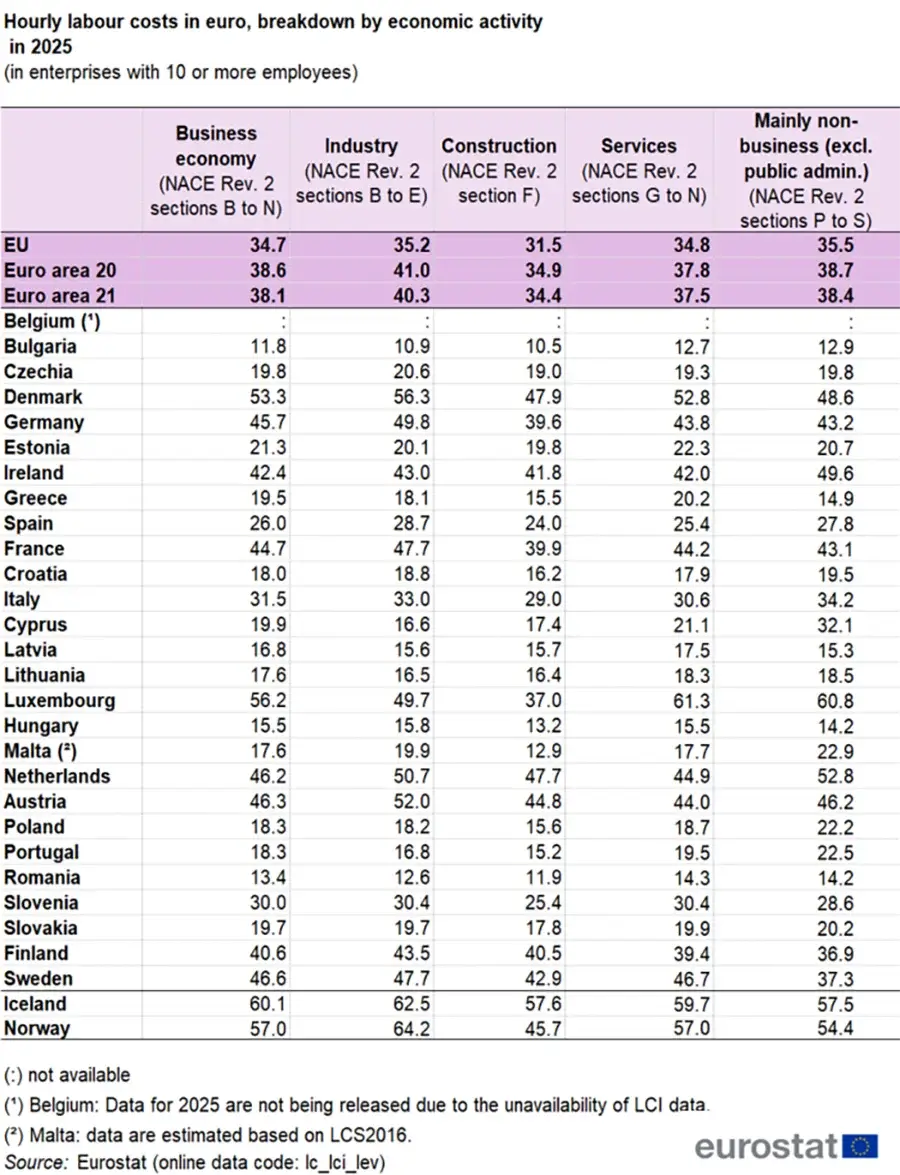
In 2025, the average hourly wage was estimated at €34.9 in the EU and €38.2 in the Eurozone. However, these averages hide considerable disparities. The lowest wages were recorded in Bulgaria (€12), Romania (€13.6), and Hungary (€15.2). The highest wages were in Luxembourg — €56.8. Denmark (€51.7) and the Netherlands (€47.9) also had relatively high levels.
Wage Dynamics
From 2024 to 2025, wages increased across all sectors — by 4.1% in the EU and 3.8% in the Eurozone. Almost all countries saw growth, except Malta, which experienced a slight decline of 0.5%. Bulgaria led in wage growth (+13.1%), followed by Croatia (+11.6%) and Slovenia (+9.3%). Latvia had a similar pace, with a 9.2% increase. In comparison, wage growth was more modest in Luxembourg, Spain, and Cyprus (+3.5%), Italy (+3.2%), and France (+2%), the lowest rate.
Countries with National Currencies
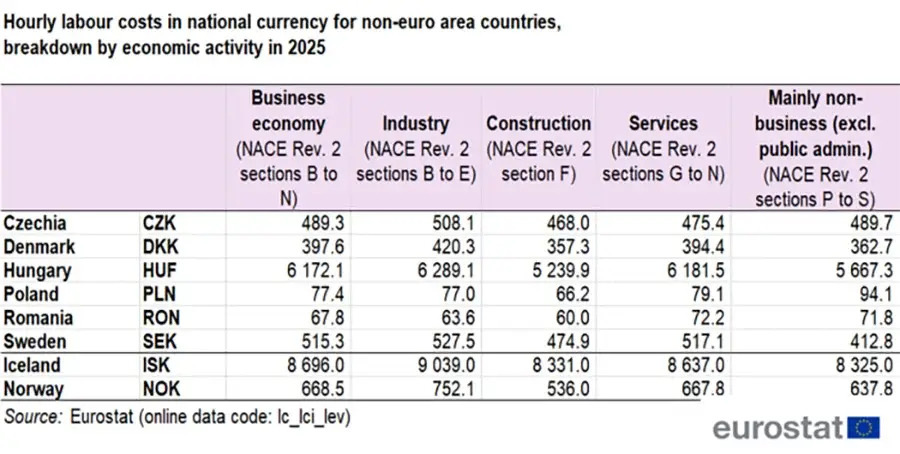
In EU countries outside the Eurozone, hourly wages also rose in all countries. Romania (+10.6%), Hungary (+8.9%), and Poland (+8.8%) led the ranking. Denmark recorded the lowest increase (+3.0%).
Hourly Wages by Sector
Highest wages were paid in non-business-related sectors such as education, healthcare, and social services (€35.5).
The lowest wages were in the construction sector (€31.5). In the Eurozone, the gap was even larger: construction wages were €34.4 per hour, while industry wages reached €40.3.
Social Contributions in Europe
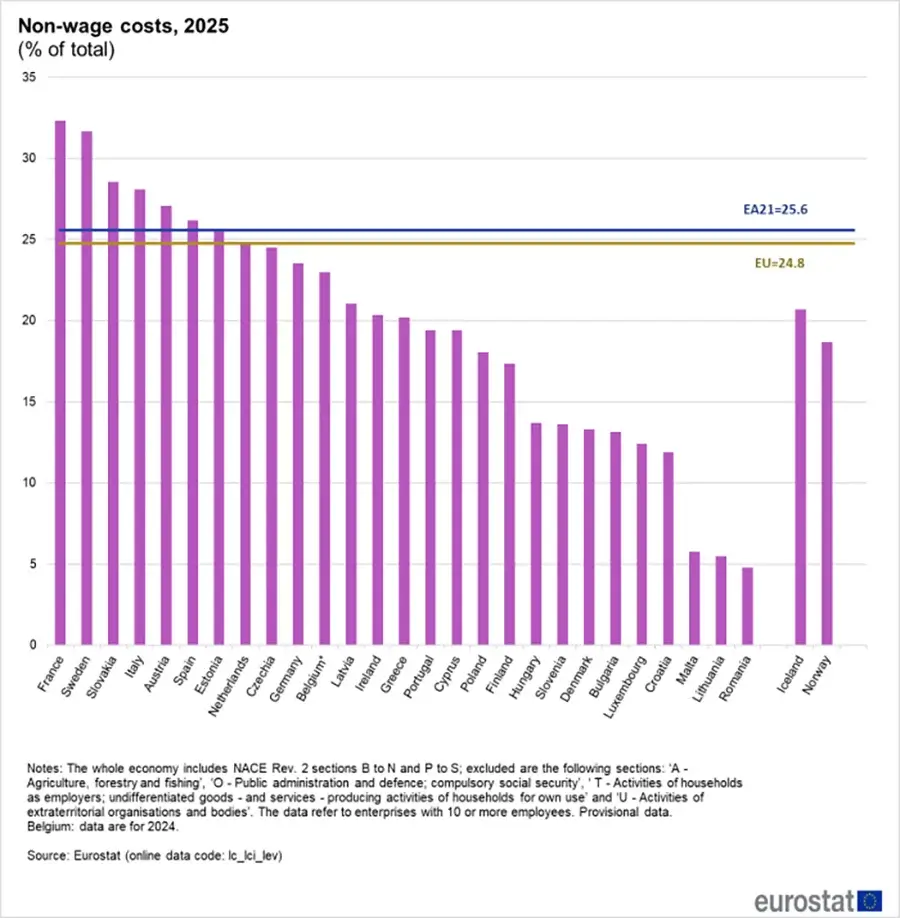
Labor costs include wages and employer social contributions. Non-wage costs accounted for 24.8% in the EU and 25.6% in the Eurozone. Eurostat data covers companies with at least 10 employees.
The lowest share of non-wage costs was observed in Romania (4.8%), Lithuania (5.5%), and Malta (5.8%), while the highest was in France (32.3%), Sweden (31.7%), and Slovakia (28.6%).
Economic Significance: Inflation and Investment Factor
Analysts at International Investment note that labor cost indicators are key for assessing inflationary pressure and the overall state of the economy. Rising employer costs, including social contributions and taxes, can lead to higher final prices if not accompanied by productivity growth.
Eurostat data is also used to analyze country competitiveness, guide investment decisions, and shape economic policy. With ongoing labor shortages and demographic constraints, further wage growth is expected, along with a gradual but uneven narrowing of disparities between EU countries.