







 Poland Poised to Hold Rates at 3.75%
 Ljubljana's Million-Euro Deals Are Increasingly About Land
 Reform UK Reworks Its Offer to Wealthy Foreigners
 US Introduces Visa Bonds of Up to $20,000 for Tourists From 50 Countries
 Portugal Secures €1.5 Billion for Social Housing
 Mortgage Lending in Georgia Increased by Nearly 50%
Paraguay Turns Tourism Into a Record
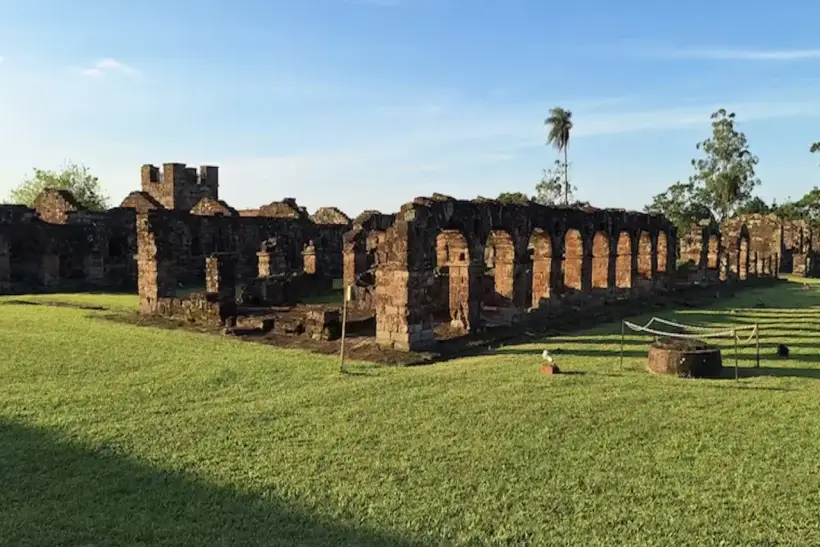
Paraguay has moved to the top of the global tourism growth table after receiving 1.303 million international tourists in January-March 2026, with arrivals up 46% from a year earlier. For the premium travel market, the shift is material: a country long treated as a transit stop between Argentina and Brazil is beginning to see stronger demand for quality hotels, nature itineraries, business travel and cultural routes.
Paraguay Leads Global Tourism Growth
In the first quarter of 2026, Paraguay ranked first among destinations with the fastest growth in international arrivals. UN Tourism said global international tourist arrivals rose 2%, while Paraguay increased by 46%, ahead of New Caledonia, El Salvador, Mongolia, Palau, Uzbekistan, Tonga, Anguilla, Ireland and Brunei. South America declined by about 1% over the same period, making Paraguay’s performance a clear outlier in the region.
The result is also notable because Paraguay was already the fastest-growing destination in the first quarter of 2025, when arrivals rose 53%. In 2026, the country repeated that performance in a tougher environment, as global travel slowed amid uncertainty and regional markets failed to deliver a broad South American upswing.
Where the Visitors Are Coming From
Paraguay received 1,303,250 tourists in the first three months of 2026. The strongest flows were concentrated in border and regional destinations: Itapúa received 945,430 visitors, Presidente Hayes 209,170 and Alto Paraná 73,208. The data suggest that the boom is still driven less by long-haul leisure travelers from Europe or the Middle East and more by neighboring markets, land crossings, short stays, shopping trips, family visits and regional mobility.
The 2025 structure of inbound tourism was similarly regional. Paraguay’s tourism authority reported 3.657 million international visitors for the year, including 2.030 million overnight tourists and 1.628 million same-day visitors. Argentina accounted for 79.98% of arrivals, Brazil for 10.14%, the United States for 1.09%, and all other countries for about 9% combined.
Hotel Demand Is Starting to Tighten
The increase in inbound travel has coincided with strong domestic tourism. In January 2026, average occupancy across hotels and other accommodation reached 80%, with Paraguayan guests forming the majority of demand. Tourism officials identified Cordillera, Alto Paraná, Itapúa, Guairá and Asunción as major destinations, a pattern that matters for luxury travel because foreign and domestic demand are increasingly competing for the same quality room supply.
In January, the Itaipú Tourist Complex received 98,084 visitors, the Yacyretá dam 4,269, and the Jesuit Missions of the Guaranis 12,064. Natural attractions received 13,703 visitors, while cultural sites drew around 2,409 people. Those numbers point to Paraguay’s positioning: not mass beach tourism, but a mix of nature, water, rural routes, cultural heritage and business travel into Asunción.
Luxury Travel Finds a New Market
My Paraguay Stay links the surge in arrivals to changing conditions in the higher-end travel segment. Travelers who once could book quality rooms and tailored itineraries at short notice are now more likely to face limited availability in Asunción, Encarnación and the Chaco. For premium travel, that makes early booking more important, especially around business events, long weekends and regional holidays.
In Asunción, demand is concentrated around business districts, the riverfront and hotels with reliable connectivity, meeting facilities and corporate service standards. In Encarnación, river-view rooms and access to the Jesuit Missions are central to higher-end itineraries. In the Chaco, the constraint is capacity: remote estancias and nature lodges have limited rooms, long access routes and little ability to absorb sudden group demand.
The State Is Planning for a Longer Cycle
Paraguay is trying to convert the sharp rise in visitor numbers into a long-term tourism strategy. In 2023, the country presented its 2023-2030 master plan for sustainable tourism development, positioning Paraguay as an authentic and sustainable destination built around water, rural experiences, ethnic and cultural integration, natural heritage and better service quality.
In June 2026, Tourism Minister Jacinto Santa María said at Expo Real Estate Paraguay that the country aims to increase visitor flows to 10 million by 2037. For investors, that points to demand for hotels, hospitality infrastructure, transport, tour services and projects that can connect business-focused Asunción with nature and culture destinations.
Tourism Revenues Need Better Conversion
In 2025, Paraguay’s tourism receipts were estimated at about $1.422 billion, including $1.363 billion from overnight tourists and $58.5 million from same-day visitors. The gap highlights the central challenge: the country needs to increase the share of visitors who stay overnight and spend more on accommodation, restaurants, transport, excursions and services, rather than relying mostly on short land-border trips.
For the premium segment, the risk is that demand outpaces supply quality. Border regions are receiving large visitor flows, but they do not always have enough high-end hotels, trained staff or transport reliability. Asunción is better positioned for business travel, but major events can quickly reduce the availability of quality rooms and push up prices.
As International Investment experts report, Paraguay’s main risk is not a lack of visitors but the quality of conversion from arrivals into durable revenue. If the country remains mainly a short-stay land-border destination for Argentines and Brazilians, the headline growth rates will look impressive but deliver limited value for hotel investment. If the government and private sector can raise overnight stays, improve service quality and connect Asunción, Itapúa, Alto Paraná and the Chaco into clear premium itineraries, Paraguay has a rare chance to occupy the niche of an upscale but still uncrowded South American destination.
FAQ
Why did Paraguay become the world’s fastest-growing tourism destination in 2026?
Paraguay recorded a 46% increase in international arrivals in the first quarter of 2026. Growth was driven by regional travel, border mobility, demand from Argentina and Brazil, competitive prices and a low comparison base.
How many tourists visited Paraguay in January-March 2026?
Paraguay received 1,303,250 tourists in the first quarter of 2026. The largest flows were recorded in Itapúa, Presidente Hayes and Alto Paraná.
What does the boom mean for luxury travelers?
Luxury travelers should book hotels and tailor-made itineraries earlier. Quality room supply is limited in Asunción, Encarnación and the Chaco, while demand rises during business events, holidays and long weekends.
Which Paraguay destinations are most relevant for travelers?
Key destinations include Asunción, Encarnación, the Jesuit Missions of the Guaranis, the Itaipú complex, the Yacyretá dam, the Chaco and nature-based routes. Paraguay is positioning itself around culture, nature, rural tourism and business travel.
Is Paraguay already a mainstream luxury destination?
No. Paraguay is still an emerging premium market. Its advantage is that it remains less crowded than many South American destinations, while its weakness is the limited hotel and transport infrastructure outside major centers.