













Oil Drives Philippine Peso Back to Record Low
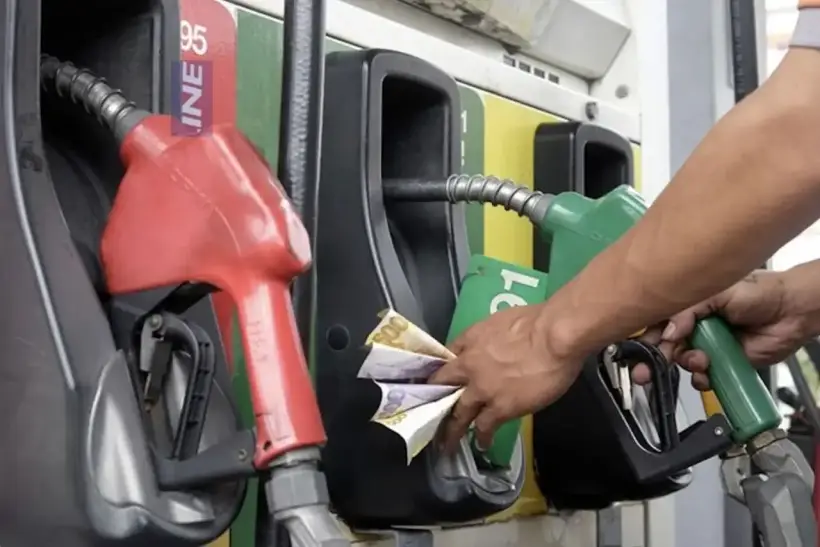
The Philippine peso has returned to its record closing low of 61.75 per dollar as a renewed rise in global oil prices increases demand for US currency. More expensive energy is adding to import costs, inflation and the country’s external deficits. The central bank has sufficient reserves to smooth abrupt moves, but weak economic growth limits its ability to keep raising interest rates.
Philippine peso matches its record closing low
The peso weakened by half a centavo on July 22, 2026, closing at 61.75 per dollar. The level matched the all-time closing low first recorded on May 18.
The decline coincided with a renewed increase in crude prices as the conflict between the US and Iran intensified. Brent futures rose about 2.1% to $91.11 a barrel, their highest level in roughly a month. West Texas Intermediate traded close to $90 during the following session.
Higher crude prices have a direct effect on the Philippine currency. Importers require more dollars to pay for fuel, increasing demand for the US currency. A weaker peso then raises the domestic cost of every dollar-denominated shipment.
BNY reports possible currency intervention
BNY strategist Geoff Yu said the Philippine central bank had reportedly sold dollars after the peso returned to 61.75. The wording indicates market reports rather than officially disclosed transaction data.
BNY’s iFlow system showed investor holdings of the peso approaching their lowest level of 2026. The bank also argued that the currency lacks the interest-rate support available to some other emerging-market currencies.
Foreign-exchange intervention can slow a disorderly move, but it cannot remove the underlying pressure. BNY identified higher oil prices, a wider current-account deficit and inflation pass-through as the central risks.
Energy imports increase demand for dollars
The Philippines is particularly exposed to higher oil prices because of its dependence on imported fuel. Imports of mineral fuels, lubricants and related products reached $1.75 billion in May 2026, representing 13.1% of total merchandise imports.
Overall imports increased by 21.9% from a year earlier to $13.36 billion, while exports rose by 7.6% to $7.87 billion. The merchandise-trade deficit consequently widened by 50.5% to $5.48 billion.
The increase in imports also included electronic components, machinery and production materials. Mineral-fuel imports alone rose by $458.7 million from May 2025, illustrating how energy costs are affecting the external accounts.
The balance-of-payments deficit has widened
The pressure extends beyond merchandise trade. The Philippines recorded a balance-of-payments deficit of $5.3 billion in the first quarter of 2026, equivalent to 4.5% of gross domestic product. A year earlier, the deficit was $3 billion, or 2.6% of GDP.
The current-account deficit widened to 4.8% of GDP from 3.7%. The central bank attributed the deterioration to more expensive imports, external-debt repayments, weaker foreign direct investment and reduced financial inflows.
Higher travel receipts, remittances from overseas Filipino workers and business-process-outsourcing revenue provided support, but were insufficient to offset the larger outflows.
Foreign-exchange reserves have declined
Gross international reserves stood at $104.74 billion at the end of June, down from $112.61 billion in January. That represents a decline of approximately 7%.
The remaining buffer is still substantial. It covers about 6.8 months of imports of goods and payments for services and primary income. It is also equivalent to about 3.66 times the country’s short-term external debt on a residual-maturity basis.
Reserve changes do not exclusively represent intervention. Government payments, foreign-currency deposits, investment income and valuation changes in gold and securities also affect the total.
The reserve position gives the central bank capacity to address abrupt exchange-rate movements and maintain foreign-currency liquidity. Defending a specific peso level for an extended period would nevertheless require repeated reserve use without reducing importers’ underlying demand for dollars.
Inflation remains above the target range
Headline inflation eased to 6.4% in June from 6.8% in May, remaining well above the central bank’s 2% to 4% tolerance range.
The slowdown was driven mainly by transport inflation, which declined to 12.8% from 16.2%. Food inflation eased to 5.4% from 5.8%.
Core inflation, which excludes selected volatile food and energy items, accelerated to 4.4% from 4.1%. This suggests that price pressure is spreading beyond fuel and a limited group of food products.
Another increase in crude prices may reverse part of the improvement in transport inflation. Peso depreciation also raises the local cost of imported medicine, fertiliser, animal feed, equipment, food ingredients and consumer goods.
BSP raised its policy rate to 4.75%
Bangko Sentral ng Pilipinas began 2026 by reducing its key rate to 4.25% in an attempt to support domestic demand. Its policy direction changed after oil prices and inflation increased sharply.
The central bank raised the target reverse-repurchase rate by 25 basis points to 4.5% in April and delivered another quarter-point increase to 4.75% in June. The overnight deposit and lending rates now stand at 4.25% and 5.25%.
Higher rates may support the peso by improving returns on domestic financial assets. They also increase borrowing costs for households and companies, potentially weakening investment, construction and consumption.
Weak growth complicates the policy response
The Philippine economy expanded by only 2.8% year on year in the first quarter of 2026, down from 5.4% a year earlier. Household consumption increased by 3%, while gross capital formation declined by 3.3%.
Services grew by 4.5%. Industry contracted by 0.1%, while agriculture, forestry and fishing declined by 0.2%. Imports of goods and services increased by 6.1%.
This combination of weak growth and high inflation limits the central bank’s room for manoeuvre. Another rate increase might support the currency and contain inflation expectations, but it could further suppress domestic investment and demand.
Currency weakness has mixed effects
The clearest result of a weaker peso is more expensive imports. Companies pay more for fuel, machinery, components and raw materials, and may pass those costs to consumers.
Businesses with unhedged dollar debt face higher servicing expenses because they need more pesos to repay the same amount of dollar-denominated interest and principal.
Exporters, business-service companies and remittance recipients may benefit because each dollar converts into more pesos. That advantage diminishes when depreciation also produces higher domestic inflation.
Families receiving money from abroad may obtain more local currency but still face higher transport, food, electricity and imported-goods prices.
Oil remains the main near-term risk
The peso’s next move will depend on crude prices, developments in the Middle East, US interest-rate policy and capital flows into emerging markets.
Lower oil prices would reduce importers’ demand for dollars and ease pressure on the trade balance. Stronger remittances, exports and foreign investment could also support the currency.
A continued oil rally would increase the import bill and could keep the peso close to record lows. Crossing a particular exchange-rate level would not by itself constitute a currency crisis. The pace of depreciation, reserve adequacy, dollar liquidity and banking-system stability are more important indicators.
As International Investment experts report, the peso’s weakness reflects a combination of external and domestic pressures. The oil shock is increasing demand for dollars, while the impact is being amplified by trade deficits, weaker financial inflows and inflation above the target range. International reserves allow the central bank to smooth volatility, but intervention cannot eliminate the country’s dependence on imported energy. Further rate increases may provide temporary currency support, yet they would add pressure to an economy that grew by only 2.8% in the first quarter. A durable recovery in the peso will require lower oil prices, moderating inflation and an improvement in the external balance.