







read also
 Vietnam Mortgage Surge Pushes Homes Out of Reach
 Lithuanian Apartment Prices Accelerate Across Major Cities
 London Flats Lose Value Ahead of Leasehold Reform
 Construction of the Batumi–Sarpi Highway Begins in Georgia
 Baltic Property Investment Accelerates in 2026
 Hong Kong and Singapore Renew Their Expat Rivalry
Luxury Real Estate in Paris Under Pressure: Taxes, Budget and Capital Outflow
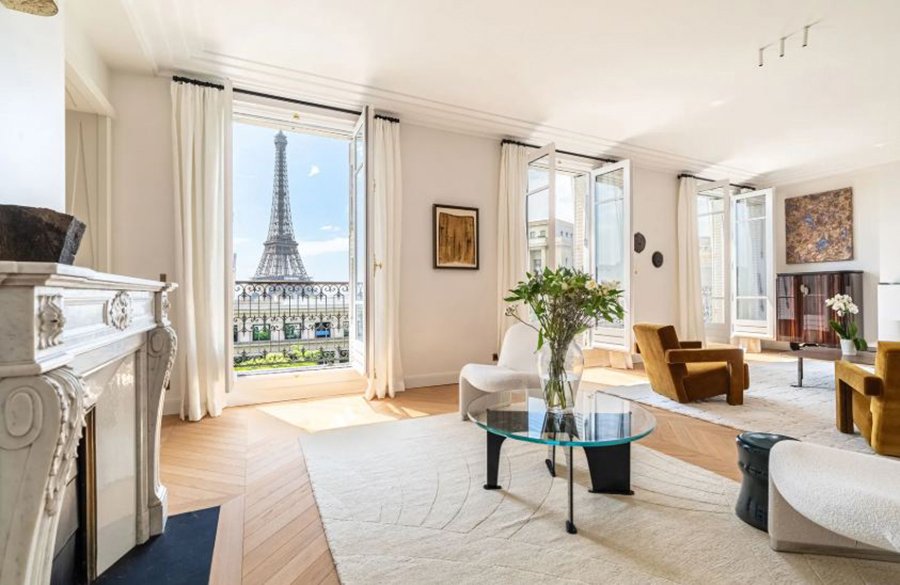
Photo: Barnes
The Paris luxury real estate market is facing growing uncertainty due to political instability and rising anti-wealth sentiment, reports Bloomberg, citing Barnes. Many property owners are planning to sell their assets and leave France. One of the key reasons is the discussion of a possible tax increase for the wealthiest individuals.
Taxes and Capital Outflow from Paris real estate market
Barnes operates in 22 countries and holds more than a quarter of the luxury real estate market in Paris. Last year, it recorded a 22% increase in the number of transactions in the French capital and its surrounding areas — the highest figure in the past two decades. A similar trend was observed in the segment of properties priced above €1 million.
Richard Tzipine, head of Barnes’ Paris operations, said that many clients are considering selling their properties and planning to leave France amid discussions about higher taxes for the most affluent. There are no precise estimates of the scale of the potential outflow yet, but Italy, Switzerland, Luxembourg and Israel are mentioned as possible relocation destinations. Barnes defines ultra-high-net-worth individuals as those with a net worth of at least $30 million.
France currently applies a special tax on very high incomes, setting a minimum effective tax rate for the wealthiest citizens. The mechanism was introduced as part of budgetary measures and is intended to ensure that high incomes are not taxed below a certain threshold.
According to Financial Times data, in 2025 revenues from this tax amounted to around €400 million instead of the planned €1.9 billion. In the draft budget for 2026, expected revenues are estimated at about €650 million, nearly €1 billion below initial forecasts, increasing pressure on the government to find additional sources of funding.
Political debates over the introduction of a full-fledged wealth tax are also ongoing in France. One of the most discussed proposals is the so-called “Zucman tax” — a minimum 2% levy on assets exceeding €100 million. However, the National Assembly rejected this initiative, and it was not included in the 2026 budget. At the same time, discussions about tightening the tax burden on the wealthiest remain part of the budget agenda.
State Budget and Political Crisis
Analysts note persistent difficulties in adopting state budgets in France since the snap elections of 2024. No party secured a majority in the National Assembly. At the end of 2025, the process reached a deadlock and temporary financial mechanisms had to be used. In early 2026, the draft budget still lacks stable parliamentary support, and its продвижение is accompanied by a series of no-confidence votes.
In an attempt to secure the backing of the Socialists, the government is revising certain provisions of the budget, including social spending and affordable housing measures, but no compromise has been reached so far. The authorities are
preparing to once again invoke Article 49.3 of the Constitution, which allows the budget to be adopted without a vote in the National Assembly.
Challenging economic conditions and frequent changes of prime ministers have intensified political instability, leading to a noticeable slowdown in activity on the luxury real estate market since October last year.
The Ultra-Rich and Competition Between Cities
Foreign buyers, especially wealthy Americans, continue to show interest in properties in Paris. This remains one of the few positive factors and provides grounds to expect sustained activity in 2026.
Barnes defines ultra-high-net-worth individuals as those with a net worth of at least $30 million. In 2023, the number of transactions in the premium segment fell by 15%, and in 2024 by a further 3% amid higher borrowing costs and mass protests. In 2025, a recovery emerged after a two-year downturn. Price dynamics in the Paris luxury segment remained neutral: after a combined decline of about 10% over the previous two years, prices have barely changed.
The French capital still ranks among the top ten most sought-after destinations for ultra-wealthy buyers, but other cities are gradually moving ahead. In 2025, the leaders of the Barnes city index were Madrid, Milan, Dubai, Miami and Marbella.
Conclusion
Analysts at International Investment note that the combination of political instability, a prolonged budget crisis and ongoing debates over taxes for the wealthiest is creating a structural risk for the Paris luxury real estate market. Even with sustained interest from foreign buyers, France is increasingly perceived as a less predictable jurisdiction for capital allocation, while competition from other European and global cities is intensifying. Under these conditions, the future dynamics of the premium segment will depend less on economic factors and more on political decisions and the state’s fiscal policy.