







 Vietnam Mortgage Surge Pushes Homes Out of Reach
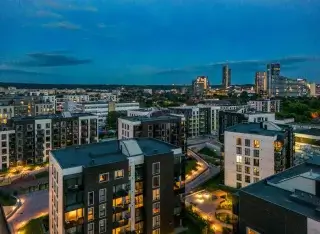 Lithuanian Apartment Prices Accelerate Across Major Cities
 London Flats Lose Value Ahead of Leasehold Reform
 Construction of the Batumi–Sarpi Highway Begins in Georgia
 Baltic Property Investment Accelerates in 2026
 Hong Kong and Singapore Renew Their Expat Rivalry
Mass sales of squatted apartments in Spain

Owners are getting rid of occupied properties
Apartments occupied by squatters are increasingly being put up for sale across Spain. These properties have become a noticeable part of housing supply, Idealista reports. The largest share is concentrated in Catalonia. Owners prefer to dispose of problematic assets rather than go through lengthy and complex eviction procedures.
Why owners sell squatted apartments
One of the key reasons lies in legislative specifics, particularly in Catalonia. Lawyers note that regional regulations create additional obstacles for owners and extend eviction timelines. Differences between regional and national rules increase legal uncertainty and lead to a growing number of court disputes.
The length of legal proceedings is also a major factor. Evictions require time and financial resources, and results are not guaranteed in the short term. At the same time, owners of vacant properties may face additional obligations, including requirements to offer social rental options.
A significant share of such properties belongs to banks and investment funds that acquired them following mortgage defaults. Selling allows these institutions to reduce the number of distressed assets and avoid further costs related to maintenance and legal proceedings.
Who buys squatted apartments
The main buyers are investors and professional market participants familiar with the legal complexities of such transactions. They are attracted by the opportunity to acquire property at reduced prices, with discounts reaching up to 50% below market value. They expect to gain full control of the asset after resolving the legal situation.
Some transactions involve the squatters themselves. In certain cases, large owners, including banks and funds, sell the property to the people already living in the apartment. This allows them to resolve the situation faster and avoid legal costs associated with eviction.
Another common structure is debt transfer. The buyer acquires the financial obligation rather than the property itself, with the intention of resolving the situation and eventually gaining control of the asset. This approach helps financial institutions reduce distressed portfolios while allowing investors to enter the market with lower capital requirements.
Where most of these apartments are located
Catalonia ranks first in Spain in terms of the number of squatted apartments offered for sale. According to Idealista data for the third quarter of 2025, the region accounts for 39% of all such properties in the country — a total of 8,926 apartments and houses.
At the provincial level, the highest figures are recorded in Barcelona, Tarragona, Lleida, and Girona. In each of these provinces, the share of such properties exceeds the national average. Provincial capitals stand out in particular. In Girona, nearly one in ten apartments on the market is occupied by squatters, while in Tarragona the figure is close to 9%. The share is lower in Lleida and Barcelona but remains significant.
Around 80% of all illegally occupied properties in Catalonia are concentrated in the province of Barcelona. The region remains the largest market for such housing in Spain. Experts note that these figures only reflect properties already listed for sale, and the actual number of occupied homes may be significantly higher.
Earlier, Idealista reported that in the third quarter of 2025, Spain had 23,010 squatted properties listed for sale. This represents about 3% of total housing supply. The largest concentrations were found in Barcelona, Madrid, and Seville, as well as Murcia, Malaga, and Valencia.
How owners resolve the problem through sales
For many owners, selling has become the primary way to deal with illegal occupation. This is driven not only by the length of court proceedings but also by additional obligations imposed on owners of vacant properties. In some cases, they are required to offer social rental options, which complicates regaining full control of the asset.
Some transactions are reached through agreements between the parties. In certain cases, properties are sold either to current occupants or to investors willing to resolve the situation independently. Experts note that such solutions allow owners to avoid legal costs and speed up the resolution process.
At the same time, banks and investment funds use sales to reduce distressed asset portfolios. Rather than managing such properties over extended periods, they prefer to dispose of them, even if it means accepting lower returns.
Why this market continues to grow
According to Spain’s Ministry of the Interior, 16,426 cases of illegal occupation were recorded in 2024, up 7.4% year-on-year. On average, around 45 new cases are reported daily. Experts believe the real number may be higher, as some owners resolve situations without involving authorities.
The growth in squatted properties offered for sale is linked to broader housing market conditions. Limited housing supply, rising rents, and tighter mortgage conditions have pushed more people out of the traditional housing market, increasing the risk of illegal occupation.
Ownership structure also plays a role. A large number of vacant properties are held by banks, funds, and institutional owners. These units may remain unused for extended periods, increasing their vulnerability to occupation.
In this context, selling becomes a practical solution for owners. It allows them to recover part of the asset’s value and avoid prolonged legal and financial uncertainty. This, in turn, supports the expansion of this segment and attracts investors willing to work with distressed properties.
Impact on Spain’s housing market
The growing number of squatted apartments is already affecting Spain’s housing market structure. Owners, concerned about illegal occupation, are increasingly withdrawing properties from the rental market or selling them earlier than planned. This reduces available housing supply and increases pressure on the market.
Experts estimate that the total number of occupied properties in Spain could reach 80,000. In 2024 alone, more than 16,000 new occupation cases were recorded, with a significant share concentrated in Catalonia. Authorities have introduced measures to accelerate evictions, but these do not apply to certain categories, including tenants who stopped paying rent. In such cases, legal proceedings can take years.
Analysts at International Investment note that only a portion of investors are willing to enter this segment. Most view the legal risks and uncertainty surrounding property rights protection in Spain as significant deterrents, prompting many market participants to reconsider their investment strategies.