













US Pending Home Sales Rose in February
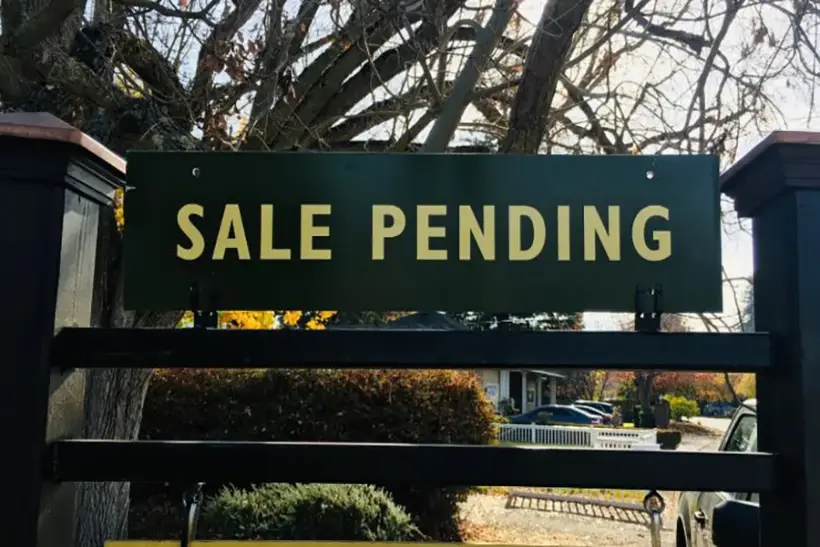
The US housing market received another sign of life in February 2026. The pending home sales index, which tracks signed contracts for existing homes that have not yet closed, rose 1.8% from January. The National Association of Realtors said improved affordability helped lift new contract activity, although the recovery still looks fragile and remains highly dependent on mortgage-rate movements.
Lower mortgage rates helped support homebuyer demand
The main catalyst for February’s gain was lower mortgage rates during much of the month. Freddie Mac data show that the average 30-year fixed mortgage rate fell to 5.98% in the week of February 26 after 6.00% a week earlier, and it remained well below levels seen in early 2025 when rates were above 7%. That temporary improvement in borrowing conditions helped bring some buyers back into the market before financing costs turned higher again in March.
The rise in signed contracts does not mean a full market turnaround
Even with the positive monthly gain, it is still too early to describe the US housing market as fully recovered. NAR said better affordability only partly unlocked pent-up demand, and Chief Economist Lawrence Yun warned that conditions could reverse if higher oil prices push mortgage rates upward again. In that sense, February’s rebound in contracts looks more like a temporary opening created by softer rates than a definitive end to the market’s long stagnation.
US regional housing demand remained uneven
The national headline was positive, but the regional picture was mixed. Pending home sales increased in the Midwest, South and West, while the Northeast posted a decline. NAR also noted that parts of the Northwest continued to be held back by the combination of higher home prices and limited supply. That means the US market is still highly fragmented, with local affordability and inventory conditions playing a larger role in shaping buyer behavior.
Existing-home sales also improved in February
The increase in signed contracts came alongside stronger closed sales. NAR reported that existing-home sales rose 1.7% in February from the prior month to a seasonally adjusted annual rate of 4.09 million. The median existing-home price was $398,000, up just 0.3% from a year earlier, while inventory stood at 3.8 months of supply. That combination of modest price growth and slightly better affordability helped the market at a time when mortgage rates briefly dipped below the psychologically important 6% area.
Why the US housing market remains so rate-sensitive
The challenge is that even small changes in mortgage rates can quickly alter buyer decisions. By March 12, the average 30-year mortgage rate had already climbed back to 6.11%, while market estimates in mid-March showed rates moving into the 6.2% to 6.35% range. That suggests the positive effect seen in February could prove temporary if more expensive borrowing once again erodes affordability just as the spring selling season intensifies. For the US housing market, the issue is not only the level of rates, but also their volatility.
Pent-up demand in the US is still there, but it is being released slowly
Lawrence Yun said there is still sizable pent-up demand in the market, especially among first-time buyers, but that demand does not convert into purchases immediately. Households need time to build credit, save for down payments and work through existing lease commitments. The labor market is also sending mixed signals. NAR said job gains have been sluggish in recent months, even though the country still has roughly 6 million more jobs than before the pandemic. That leaves a market with a relatively solid macro backdrop, but still-limited household confidence for major purchases.
US housing market outlook for spring 2026
February’s data strengthen the case for a modest spring thaw in US housing, but they do not remove the main risks. If mortgage rates remain above 6%, part of the improvement could fade quickly. If financing costs stay closer to February’s lows, the market may continue a gradual recovery supported by pent-up demand and more stable pricing. For now, the most accurate description is not a boom, but a cautious unfreezing after a prolonged period of weak activity.
As International Investment experts report, the February rise in US pending home sales shows that the American housing market remains extremely sensitive to even small improvements in financing conditions. A short-lived drop in mortgage rates can revive demand, but without a more durable decline in borrowing costs and further gains in supply, the market is unlikely to move into a fast and broad recovery. For investors and homebuyers, that means spring 2026 may bring more deals, but not necessarily a full new growth cycle.