











Serbian real estate market reaches record turnover
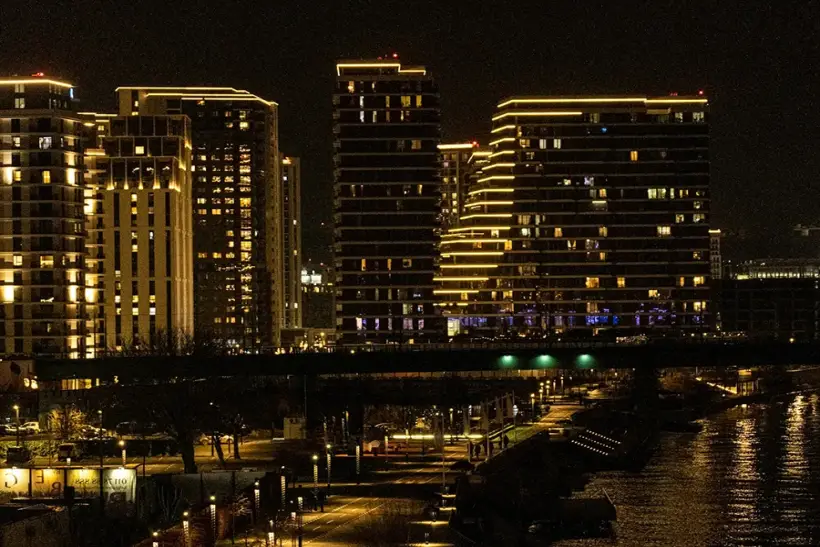
The Serbian real estate market has reached a new historical peak: in the fourth quarter of 2025, total transaction volume amounted to €2.4 billion. This is 9% higher than in the same period of 2024 and represents the highest level ever recorded by the Republic Geodetic Authority (RGZ).
Active residential markets in Serbia
The largest share of transactions in Serbia during Q4 2025 was concentrated in residential property. Apartment sales accounted for nearly €1.4 billion, or 61% of total turnover. This segment continues to define overall market dynamics, while houses, commercial properties, and land plots make up a smaller share and have a more limited impact on overall statistics.
Belgrade remains the most active market, with the number of concluded purchase agreements increasing by 10.9%. Kragujevac recorded a more moderate increase of 5.8%, indicating localized growth without overheating. At the same time, Novi Sad and Niš saw a decline in transaction volumes of 8.7% and 6.5% respectively. Despite lower activity, prices did not show a significant correction and remain stable or continue to increase within a moderate range.
Overall, the market demonstrates a clear asymmetry: demand is increasingly concentrated in major cities, while regional centers lose part of their transaction volume but maintain price levels due to limited supply.
The most expensive real estate transactions in Serbia
The highest-priced residential properties are traditionally sold in Belgrade’s central districts. In Savski Venac, a 90 sq. m apartment was sold for €1.4 million. The same area also recorded the highest price per square meter in the country — €15,298, marking a national record for the Serbian real estate market.
Several other notable transactions were also recorded in this district. The most expensive house was sold for €1 million, while the price of a single garage space reached €60,000. These figures reflect not only high housing costs but also the premium value of supporting infrastructure in central urban areas.
In the commercial segment, the largest transaction was recorded in Stari Grad, where a non-residential property was sold for €2.75 million.
Price dynamics across Belgrade districts
The most pronounced increase in housing prices was recorded within Belgrade, where certain municipalities show accelerated price growth driven by limited supply and strong demand.
In Rakovica, secondary housing prices increased by 23%. In Zemun, growth reached 22%, while in Zvezdara prices rose by 21%. These areas are considered more affordable parts of the capital, yet they recorded the strongest price growth during the reporting period, indicating a shift in demand toward peripheral districts.
New Belgrade stands out separately. The average price of new-build apartments here reached €3,520 per square meter. Prices are driven by ongoing residential development and a high share of premium projects, which set benchmarks for the entire district.
Mortgage transactions and demand structure in Serbia
One of the key structural changes in the market is the growing role of mortgage financing. In Q4 2025, 14% of all real estate transactions in Serbia were financed through loans, indicating increased participation of bank lending in overall activity.
In the apartment segment, the share of mortgage purchases is significantly higher. According to RGZ, 31.8% of all residential transactions were completed using housing loans. In Belgrade, this figure reaches almost 40%, making the capital the main center of mortgage-driven demand and reflecting higher reliance on bank financing.
The rise in credit-based transactions is seen as one of the key factors sustaining market activity amid high property prices. At the same time, a substantial share of buyers continues to use cash, resulting in a mixed demand structure without clear dominance of a single purchasing model.
General trends in the Serbian real estate market
The Serbian real estate market continues to show upward momentum, with annual price growth estimated at 5.7–6%. However, according to Global Property Guide, gross rental yields in the country stand at 5.63%. After accounting for maintenance, taxes, utilities, and marketing costs, net yields fall below 4%. Periods of vacancy, which are common in the residential market, can reduce returns further. In Belgrade, gross rental yields are slightly higher than the national average at around 6.29%, translating into net returns of just over 4%. In Novi Sad, gross yields are 4.97%, or roughly 3% net.
Analysts from International Investment note that the market is not considered one of the most attractive investment destinations. An additional risk factor is the limited transparency of the property registration system in Serbia, where a significant number of unregistered or legally unclear properties still exist.
At the same time, the market remains attractive to foreign buyers, largely due to the possibility of obtaining Serbian residency through real estate acquisition. Rising migration flows in recent years have contributed to additional demand and supported overall price growth in the housing sector.