







Rental and Housing Market in Serbia 2026: How Russians Changed Prices and Demand
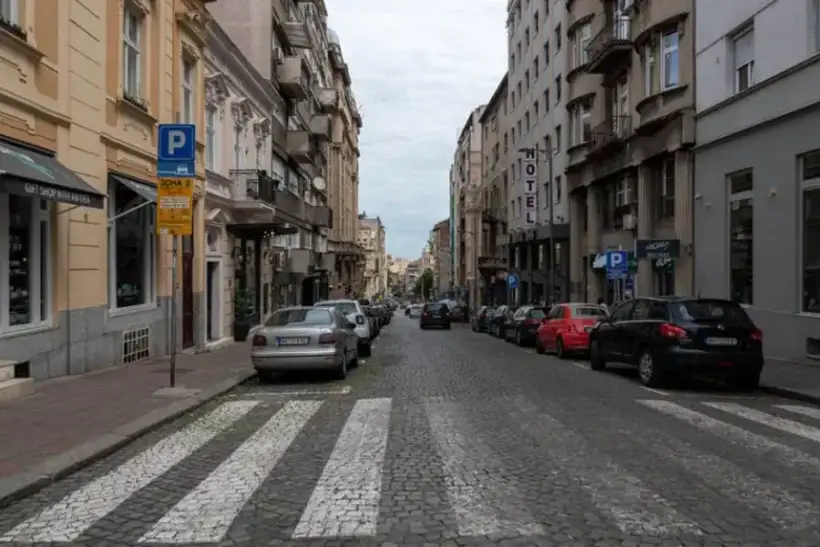
The housing purchase and rental market in Serbia has been changing following the departure of part of the Russian population. Peak levels were reached in 2022 amid large-scale migration. Prices then remained elevated due to active buying and strong demand for rentals, but in 2026 a cooling trend has been observed, according to the B92 portal.
Rental price dynamics in Serbia
Changes in 2022
In Belgrade, studio rents increased from €250 in Q1 2022 to €350 in Q4. One-bedroom apartments rose from €300 to €500, two-bedroom units from €450 to €800, and three-bedroom apartments from €600 to €1,000. Novi Sad saw similar trends, though increases for smaller units were more modest — around €80–100. The sharpest rise was in larger apartments, with three-bedroom rentals increasing from €400 to €700.
Etagi.com director Dobrica Ilić noted that in 2022 the market quickly lost balance. Property owners raised prices in response to sharply increased demand from a large number of arriving Russians and Ukrainians.
Why rents started to decline
In 2026, according to 4zida.rs, rental rates have decreased but remain higher than before the large-scale migration linked to the outbreak of the war in Ukraine. In Belgrade, a studio rents for around €380 per month, a one-bedroom apartment for €450, and a two-bedroom for €700. In Novi Sad, studios rent for about €280, one-bedroom units for €300, two-bedroom apartments for €450, and three-bedroom apartments for €650.
Dobrica Ilić explains the decline by the fact that many Russians signed one-year leases, uncertain about how long they would stay in Serbia. At the same time, many landlords replaced previous tenants in pursuit of higher payments from incoming relocants from Russia. After a year, a significant share of tenants returned to Russia or moved to other countries, leaving a large number of vacant apartments. This increased competition and forced landlords to adjust prices downward.
He also emphasized that the widespread belief that Russians are willing to pay any price for housing is inaccurate. They are now well familiar with the Serbian real estate market and actively compare offers.
Where Russians rent housing in Serbia
Tenants rarely change apartments. Their choice depends on arrival time and lease conditions. Early waves of relocants mostly focused on central urban areas, while today they increasingly choose more distant and affordable districts.
There is continued interest in residential complexes with developed infrastructure — gyms, shared spaces, and coworking areas. When budgets allow, the “Belgrade Waterfront” area is also considered.
It is noted that Russians are accustomed to long distances and are comfortable commuting by car to work or school. Many prefer suburban houses, often viewed as a “dacha” format. Quiet surroundings, family atmosphere, and privacy remain priorities. Around 90% of tenants have pets, most often cats or dogs.
Where Russians buy property in Serbia
In Belgrade, the price per square meter was about €1,300 in Q1 2019, while today it is roughly €2,000 higher on average. In Novi Sad, the increase is also significant — from €1,225 to €2,830.
Russians most often buy property in Novi Sad and Belgrade. However, interest is growing in quieter cities such as Subotica and Zrenjanin, valued for their calm pace and natural surroundings. Other popular locations include Pančevo due to its proximity to the capital and Niš, considered a key city in southern Serbia. In Niš, over the first eight months of the local office’s operation, strong demand was recorded for houses in suburban and rural areas.
Around 20–30% of those who moved to Serbia, according to estimates, decide to purchase property. Some later relocate to other European countries or return to Russia. Those who remain mostly prefer new-build apartments, although houses generate the strongest interest, especially outside urban areas toward Kosmaj and Avala.
Buyers often choose compact properties up to 150 sq. m with one or two bedrooms and an additional guest room. Land plots of 200–500 sq. m are preferred, allowing proximity to nature while remaining close to cities. There is also steady demand for older houses intended for renovation. Larger homes sell more slowly due to higher total costs.
What matters when buying property in Serbia
The property purchase process in Serbia is generally not considered complicated. An additional incentive is the possibility of obtaining temporary residence, followed by permanent residency, and later citizenship, although the latter is more complex.
Restrictions also shape buyer choices. Foreign citizens may purchase only existing properties with an official address, as residence registration is required. This significantly reduces available options, while the most attractive listings sell quickly.
Differences in administrative practices also play a role. Russian buyers are used to paying taxes immediately after signing a purchase agreement. In Serbia, the process is different — often requiring a waiting period for tax authority approval, which creates uncertainty and concerns about possible penalties or additional charges.
What Russians lack in the Serbian real estate market
The main difference lies in the format of residential complexes. In the countries where many buyers come from, such developments have existed for over 30 years and offer fully integrated living environments: shops, restaurants, cafés, landscaped courtyards, security, and shared facilities. This condominium-style model is still in an early stage in Serbia and is seen as lacking.
Budget remains a decisive factor. Older buyers are more likely to stay in Serbia, as they adapt more easily due to linguistic and cultural similarities and limited access to property in Western Europe. For younger buyers, Serbia is less often a long-term destination.
Infrastructure and administrative systems are also seen as less developed compared to many Western countries. Differences in technological habits are noted as well, with some Russian buyers perceiving more advanced digital solutions at home.
Buyers with higher budgets sometimes compare property prices in Belgrade with other countries. In particular, some argue that a €350,000 property in Belgrade may be less attractive than alternatives such as Cyprus, where similar budgets can also provide residency options.
Outlook for the Serbian real estate market
Analysts at International Investment note that a new large-scale wave of migration from Russia to Serbia is unlikely. However, relocation flows within the region may shift, primarily due to Montenegro, where conditions for business and real estate transactions have sharply tightened. As a result, many Russian citizens are considering other destinations, including Serbia and Georgia.
Established Russian-speaking communities abroad continue to influence market dynamics, easing integration for newcomers and supporting demand for local housing. This creates an additional layer of stable demand.
For investors, Serbia is not considered a high-yield market. Rental returns remain modest, and risks exist due to a significant share of informal housing stock. The country is therefore more often viewed as a destination for residency and long-term living rather than pure investment.