







 Vietnam Mortgage Surge Pushes Homes Out of Reach
 Lithuanian Apartment Prices Accelerate Across Major Cities
 London Flats Lose Value Ahead of Leasehold Reform
 Construction of the Batumi–Sarpi Highway Begins in Georgia
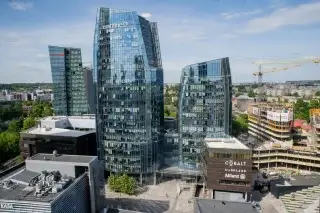 Baltic Property Investment Accelerates in 2026
 Hong Kong and Singapore Renew Their Expat Rivalry
Montenegro Sets €150,000 Property Threshold for Residency

Montenegro Formalises Property-Linked Residence Route
Montenegro has overhauled its immigration framework through amendments to the Law on Foreigners, formally introducing a structured property-based residence pathway while tightening fiscal rules for foreign business owners. The amendments were adopted by parliament on the final day of 2025 and entered into force on January 17.
At the centre of the reform is a newly codified minimum threshold. Third-country nationals seeking temporary residence based on real estate ownership must now demonstrate that their property has a taxable value of at least €150,000, as determined by the Tax Authority’s transfer tax assessment.
Previously, no statutory minimum applied, allowing foreigners to obtain residence through property purchases of any value. The reform effectively gives the pathway the characteristics of a residence-by-investment scheme.
Conditions, Renewal Rules and Employment Restrictions
Applicants must prove both ownership and actual use of the property, and all related tax obligations must be settled. Residence granted under this category is valid for one year and renewable.
The permit does not authorise employment or business activity in Montenegro. It functions strictly as a residence status rather than a labour market entry route.
The €150,000 threshold is lower than the government’s initial €200,000 target outlined in November 2025 nationality law amendments. Following parliamentary debate, lawmakers opted for the lower amount, potentially broadening the eligible investor base.
Foreign nationals who secured property-based residence before the reform are grandfathered in and may renew their permits without meeting the new valuation requirement.
Montenegro’s standard naturalisation path requires 10 years of continuous legal residence, comprising five years on a temporary permit followed by five years of permanent residence. The country does not recognise dual citizenship.
New €5,000 Tax Floor for Foreign Entrepreneurs
In parallel, the law introduces a minimum annual tax obligation for certain foreign company owners. Executive directors and registered entrepreneurs holding more than 51% ownership in a Montenegrin company may renew their integrated work and residence permits only if the company has paid at least €5,000 in taxes and social contributions during the previous year.
Authorities state that the measure addresses loopholes whereby foreign nationals established low-activity companies solely to secure residence rights. In the months preceding the reform, officials began cross-checking data on inactive and insolvent foreign-owned companies.
The €5,000 requirement does not apply to EU citizens or nationals of Iceland, Norway, Liechtenstein and Switzerland, nor to permanent residents, minority shareholders below 51%, or those holding permits on alternative grounds such as family reunification. The law also explicitly recognises same-sex partners within the definition of eligible family members.
After the Closure of the Citizenship-by-Investment Program
The new property-linked residence pathway follows the closure of Montenegro’s citizenship-by-investment program at the end of 2022. Launched in 2019, the scheme offered citizenship in exchange for €450,000 investments in coastal or capital projects, or €250,000 in northern regions, plus a €200,000 government donation.
Approximately 1,100 applications were submitted, generating more than €400 million in investments and budget contributions. However, sustained pressure from the European Union, which has consistently scrutinised citizenship-by-investment programs in candidate countries, ultimately led to its termination.
EU Accession and Long-Term Viability
Montenegro has been negotiating EU accession since 2012 and is widely regarded as the frontrunner among Western Balkan candidates. Prime Minister Milojko Spajić has expressed expectations that the country could join the bloc by 2028.
If accession materialises, the property-linked residence route may represent a comparatively affordable entry point into what could become the EU’s newest member state. Its long-term sustainability, however, will depend both on accession timelines and on the European Commission’s evolving stance toward investor-linked residence frameworks.
As International Investment experts note, Montenegro’s reform signals a calibrated shift from loosely structured residency incentives toward a more regulated model aligned with EU compliance standards, potentially enhancing credibility while narrowing speculative entry routes.