







 Asunción Property Market Accelerates as Construction Booms
 Egypt Expands Aviation for Tourism Growth
 Latvia’s Residence Permits for Real Estate to Be Abolished from September 15
 Egypt Prepares New Law for Property Developers
 Young Japanese Buyers Turn to 50-Year Mortgages
 Argentina Narrows Tourism Gap as Arrivals Rise
Abu Dhabi Real Estate Market: Rising Home Prices and Rent Freeze
Khaleej Times
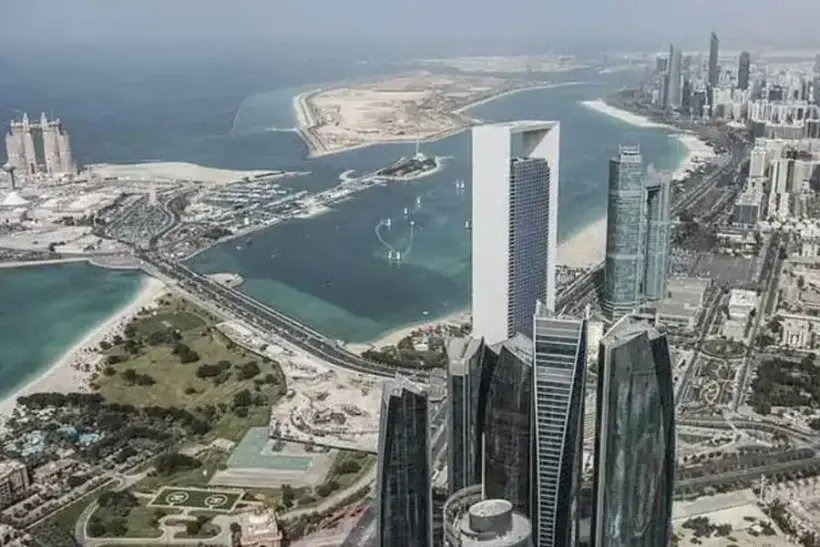
Residential property values in Abu Dhabi rose 17.8% year-on-year in the second quarter of 2026. However, market momentum became more subdued: quarterly price growth fell to its lowest level in two years, while the total number of transactions declined. At the same time, the authorities froze rents for residential, commercial and industrial properties, Khaleej Times reported.
Abu Dhabi House Price Trends
The ValuStrat Price Index for Abu Dhabi’s freehold residential market reached 151.1 points. It increased by 2.1% during the quarter, the weakest growth recorded in the past two years. Therefore, the 17.8% rise over 12 months largely reflects strong appreciation in previous periods, with the pace becoming more moderate by mid-2026.
Apartments remained the main driver: their values increased by 24.1% annually and 2.9% quarterly. Villa prices rose by 12% and 1.3%, respectively. According to ValuStrat, Abu Dhabi remains at an earlier stage of its property cycle than Dubai. Relatively affordable prices continue to attract owner-occupiers. However, price growth varies significantly across different areas.
Al Reef recorded the strongest annual increase in apartment prices at 41.6%. Values rose by 24.7% on Al Muneera Island, 22% on Al Reem Island, 21.8% in Al Bandar and 18.3% on Saadiyat Island. Al Reef also led the villa segment, with prices increasing by 27.9%. Villa values rose by 12% on Saadiyat Island and 4.6% in Al Raha.
Abu Dhabi Property Sales
The dominance of off-plan property became the market’s defining feature. Abu Dhabi recorded 6,061 off-plan transactions in the second quarter, 156% more than a year earlier. Properties under construction accounted for 84% of all residential sales.
However, the overall market did not expand. A total of 7,206 transactions were registered during the quarter, down 8% from the previous three months. Therefore, the sharp rise in off-plan sales cannot be regarded as evidence of equally strong activity across all segments.
The slowdown was particularly pronounced in the secondary market. The number of ready-home transactions declined by 28.3% to 1,145. At the same time, their average price rose by 10.9% to AED 1,442 ($393) per square foot, equivalent to approximately AED 15,520 ($4,226) per sq m. The average transaction value increased by 18.8% to AED 2.8 million ($762,000).
On the primary market, the average price reached AED 2,104 ($573) per square foot, equivalent to approximately AED 22,650 ($6,167) per sq m. This was 21.2% higher than a year earlier but 4% lower than in the first quarter. The average transaction value increased by 25.9% to AED 4.4 million ($1.2 million). This trend partly reflects developers’ focus on large premium projects: average purchase budgets are rising not only because of changes in the price per square foot but also due to the composition of supply. Across the entire market, the average transaction value reached AED 4.14 million ($1.13 million).
Residential Rents in Abu Dhabi
Residential rents in Abu Dhabi rose by 4.7% year-on-year but remained broadly unchanged from the first quarter. The average asking rent stood at AED 163,700 ($44,600) per year. Apartments were offered at an average of AED 122,500 ($33,400), while villas averaged AED 260,000 ($70,800) annually.
Overall stability did not mean that there was no pressure in individual categories. Studio rents recorded the strongest growth at 13.8%. Rents for one-bedroom apartments increased by 7.7%, while four-bedroom villas rose by 7.2%.
The Abu Dhabi authorities temporarily prohibited rent increases in June, towards the end of the reporting quarter. Consequently, the quarterly stabilisation of rents cannot be fully attributed to the new restriction. The main effect of the freeze is expected to appear in leases renewed after its introduction.
Rent Freeze Strengthens Tenant Protection
The rent freeze in Abu Dhabi applies to residential, commercial and industrial properties and will remain in force until further notice. Previously, landlords could increase rents by up to 5% annually, provided they notified tenants at least two months in advance. Lease renewals must now be registered without any increase.
Compliance is enforced through Tawtheeq, Abu Dhabi’s mandatory tenancy contract registration system. It automatically blocks a contract if the new rent exceeds the previous year’s rate. The restriction applies even if a tenant agreed to a 5% increase before the freeze was introduced.
Ben Crompton, Managing Partner at Crompton Partners, considers protection against rent increases following an eviction to be the most significant part of the decision. Previously, a landlord could evict an existing tenant and offer the property to a new occupant at the prevailing market rate. The property can now only be re-let at the previous rent.
The duration of the restrictions has not been specified. No retrospective adjustments or compensation have been announced for contracts renewed before the rules changed. Farooq Syed, CEO of Springfield Properties, believes the new framework applies only to contracts registered after the freeze was introduced. In his view, predictable costs will help residents and businesses plan their budgets more confidently and support confidence in the market.
Office Shortage in Abu Dhabi
Conditions in the commercial property market appear tighter than in the residential sector. Office rents in Abu Dhabi’s main business districts increased by 27.3% year-on-year and 11.4% quarter-on-quarter. Average occupancy in central business district office buildings reached 90%.
Office asking prices rose by 16.3% to an average of AED 2.7 million. The median asking price stood at AED 1,666 per square foot. Extending the rent freeze to commercial property limits costs for existing tenants, although the shortage of high-quality space remains unresolved.
Supply is expected to increase through the expansion of Al Maryah Island. Mubadala Investment Company and developer Aldar Properties plan to invest AED 60 billion in the project. The development is expected to add more than 16 million square feet of mixed-use space and expand the commercial capacity of Abu Dhabi Global Market.
Demand also remains strong in the industrial and logistics segments. Occupancy at Khalifa Economic Zones Abu Dhabi has reached approximately 98%. According to ValuStrat, the supply of modern Grade A warehouses is failing to keep pace with demand from manufacturing, e-commerce, pharmaceutical and food companies.
What This Means for Investors
International Investment analysts note that Abu Dhabi property values continue to rise, but the market is no longer experiencing uniform acceleration. Quarterly house price growth has slowed, overall sales have declined, and activity has become concentrated in off-plan properties and premium projects. Meanwhile, the shortage of high-quality offices and warehouses is supporting significantly faster rental growth in the commercial sector.
The rent freeze effectively separates the dynamics of asset values from the income they generate. Residents and businesses receive temporary protection from rising costs, while landlords cannot automatically translate higher market prices into higher rents. For investors, this means that rising Abu Dhabi property values do not currently guarantee a comparable increase in income, particularly if the restrictions remain in force for an extended period.