







 Covivio Hotels Revenue Grows 4.7% as European Markets Split
 Lithuanian Apartment Prices Accelerate Across Major Cities
 Georgia's Tourism Revenue Hits Record High
 Norway's Sovereign Fund Commits €1.5bn to European Warehouses
 Market Rout of October 2026: Can Branded Hotels Protect Capital?
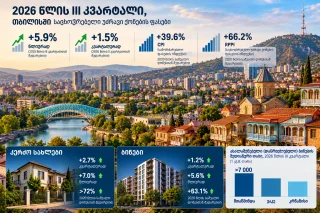 Residential Property Prices in Tbilisi Rise by 5.9% Year-on-Year
Thailand Property 2026: Foreign Buyers Shift to More Expensive Condos
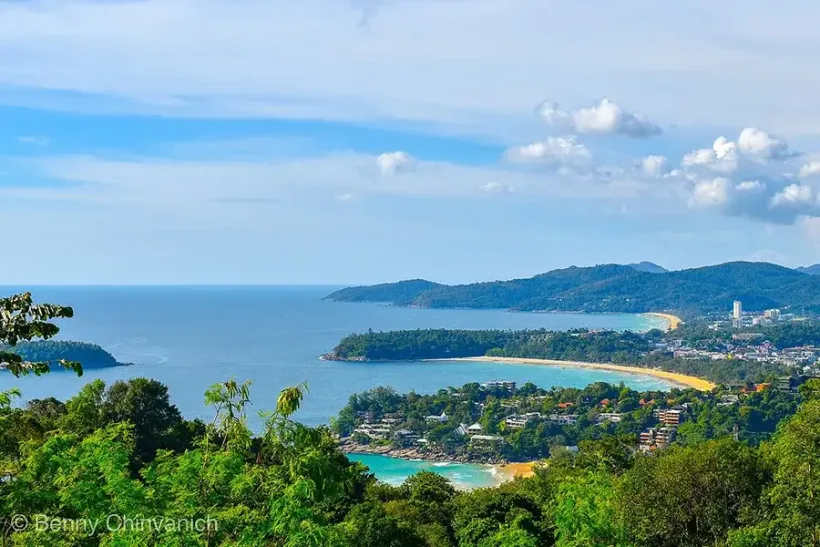
Фото: Bennypc, Wikimedia Commons, CC BY-SA 4.0.
Thailand’s foreign property market is changing more in composition than in headline volume. Foreign buyers took ownership of 6,533 condominium units in the first half of 2026, down 8.8% year on year. Their combined transfer value fell much less, by 1.5% to THB28.27 billion, while the average transferred unit was worth THB4.3 million.
The second quarter already showed a recovery. Foreign buyers took ownership of 3,292 condos, up 1.4%, while transfer value jumped 20.2% to THB14.8 billion. Transferred floor area rose 8.1%. REIC data therefore point to a recovery driven more by the value of transactions than by the number of units.
For investors, that distinction matters. Chinese demand remains the largest but is declining. Russian buying is expanding rapidly and is concentrated in Phuket and Chonburi. The broader housing market is also growing in Phuket and Rayong, while Koh Samui remains a separate, villa-led investment market.
China remains first, but demand is weakening
Chinese nationals took ownership of 1,813 condominium units in the first half of 2026 worth THB6.87 billion. Unit volume fell 23.8% and transfer value declined 27.7%. The average unit was worth about THB3.8 million and measured 38.2 square metres.
Russian buyers moved in the opposite direction. They acquired 842 units, up 50.4%, while transfer value rose 75.9% to THB3.60 billion. The average transfer was worth THB4.3 million for 41.8 square metres. Russia moved into second place by both units and value.
REIC also shows a more diverse upper end of the market. Among the ten largest foreign buyer groups, US buyers recorded the highest average transfer value at THB6.6 million per unit, while Indian buyers purchased the largest units at an average of 72.1 square metres.
Phuket value is rising faster than transaction volume
Phuket is one of Thailand’s strongest regional markets, but the data need to be separated carefully from foreign-buyer statistics.
In the first quarter of 2026, the province recorded 2,548 residential ownership transfers, including both Thai and foreign buyers. That was 17.9% higher than a year earlier. Transfer value rose much faster, by 34.9% to THB10.37 billion. REIC linked the gap to activity in higher-priced housing.
Supply is expanding at the same time. CBRE reported that new condominium project launches in H1 2026 were 44.8% higher than in H2 2025. Developers also launched 16 villa projects containing 224 units. Passenger arrivals at Phuket International Airport fell 1.4% year on year over the same period.
For investors, strong transfer values and rapidly expanding supply make province-wide averages less useful. Location, project stage, remaining foreign quota and competing stock at completion all matter.
Chonburi and Pattaya retain scale
Chonburi remains the main residential market in the Eastern Economic Corridor and one of Thailand’s most important destinations for foreign buyers through Pattaya.
The province recorded 15,928 residential ownership transfers in the first half of 2026, up 15.1%, while value increased 8.8% to THB39.25 billion. Condominiums accounted for 6,329 transfers.
These are whole-market figures rather than foreign-only transactions. Foreign demand nevertheless remains important to Chonburi. Together with Phuket, it is one of the main destinations for the rapidly growing Russian market, while Chinese buyers continue to be active despite the broader decline in Chinese transfers.
Pattaya therefore remains a more mass-market condominium destination than Phuket or Koh Samui, with higher transaction volume and a broader price range.
Rayong is growing faster than Chonburi
Rayong recorded even faster transaction growth in the first half of 2026. Residential ownership transfers increased 20.2% to 6,165 units, while value rose 21.7% to THB13.32 billion.
The investment case is different from Phuket. REIC says the EEC recovery is still being led mainly by low-rise housing. Rayong demand is therefore more closely tied to industrial employment, infrastructure and the eastern economic corridor than to international resort demand.
That distinction matters for the search cluster “Phuket Rayong Samui property transfer growth.” All three markets can appear in the same search, but their underlying demand drivers are very different.
Koh Samui remains a villa-led market
Koh Samui cannot be analysed through the same condominium-transfer lens as Pattaya or Bangkok because villas account for a much larger share of international demand.
Colliers estimated the island’s residential market at more than THB53.2 billion across 113 projects in early 2026. Holiday villas represented almost THB30 billion, while foreign buyers accounted for an estimated 85–90% of demand, particularly in the higher-end segment.

Koh Samui. Foreign residential demand is much more villa-led than in Thailand’s large condominium markets. Photo: Vyacheslav Argenberg, Wikimedia Commons, CC BY 4.0.

The structure makes Samui less comparable with national foreign-condominium statistics. The island remains highly international, but buying a villa involves a more complicated ownership structure than purchasing a foreign-quota condominium.
Russian demand is reshaping resort markets
Russian purchases are one of the clearest shifts in 2026. Unit transfers rose 50.4% in the first half, while value increased 75.9%.
Demand is concentrated mainly in Phuket and Chonburi. That makes Russian buyers increasingly important to resort projects and partly offsets weaker Chinese activity.
The concentration also creates a separate risk. Currency moves, banking restrictions, flight connectivity and cross-border payment rules can affect demand. Current growth rates should not be treated as a permanent long-term assumption.
China no longer defines the market alone
China remains the largest foreign buyer group, but both unit count and value fell by almost one quarter.
That matters most for projects designed around large-scale Chinese demand. At the same time, the foreign buyer base is broadening. Russia, Myanmar, the United States, Taiwan, France, the United Kingdom, Germany, Australia and India all rank among the largest groups.
For higher-priced property, a more diverse buyer base may matter more than a rapid return of mass Chinese demand. For mainstream projects in Bangkok and Chonburi, Chinese demand remains a major sales factor.
Foreign condominium ownership is capped at 49%
Foreign nationals can own units directly in a registered condominium, but the combined foreign-owned floor area must not exceed 49% of the total unit area in the building.
The limit is based on floor area rather than unit count. Before transfer, buyers need confirmation from the condominium juristic person that foreign quota remains available.
Land follows a much stricter regime. Foreigners generally cannot acquire land on the same terms as Thai citizens. A narrow exception allows acquisition of up to one rai, around 1,600 square metres, for residential purposes where at least THB40 million is invested, the investment is maintained for at least five years and permission is obtained from the Minister of Interior.
Villa purchases in Phuket and Koh Samui therefore require separate due diligence on the land, building, lease and ownership structure.
Company scrutiny has tightened
Legal structure matters more in 2026 because Thailand has strengthened controls on nominee arrangements. From August 1, the Department of Business Development expanded checks on companies with foreign participation and introduced additional bank-document requirements when such companies are formed or their ownership structures are changed.
The department identifies Chonburi, Rayong, Surat Thani, Phuket and other tourism and investment centres as higher-risk areas for continued monitoring. Foreign participation in a company is not itself illegal, but using Thai nationals as nominal shareholders to circumvent ownership restrictions is prohibited.
For a foreign property buyer, a condominium purchased within the legal foreign quota is therefore much more straightforward than a company structure created only to control land or a villa.
Fewer foreign buyers do not mean a cheaper market
The first-half figures do not show foreign capital abandoning Thailand. They show demand being redistributed.
Foreign condominium transfers fell 8.8% by unit count, but total value declined only 1.5%. In Q2, transfer value rose 20.2% while unit volume was almost flat. Chinese demand is weakening, Russian buying is expanding and higher-priced resort markets continue to attract capital.
Regional statistics also need careful interpretation. Phuket and Rayong growth figures cover the entire housing market, not only foreigners. Koh Samui is much more dependent on villas, which are not captured by foreign condominium data.
For investors in 2026, the useful unit of analysis is no longer “Thailand property” as a whole. It is the combination of location, property type, legal structure and new supply. Phuket, Pattaya, Rayong and Koh Samui sit in the same country but now represent very different investment cases.
FAQ: Thailand property for foreign buyers in 2026
Are foreigners buying less property in Thailand?
By condominium unit count, yes. Foreign transfers fell 8.8% in the first half of 2026 to 6,533 units. Total value declined only 1.5%, while Q2 transfer value rose 20.2% year on year.
Who buys the most condos in Thailand?
Chinese nationals remain the largest foreign buyer group. Russia has moved into second place and is recording the strongest growth among the major markets.
Where are Russian buyers purchasing property in Thailand?
The strongest Russian demand is concentrated in Phuket and Chonburi, including Pattaya.
Is Phuket property still growing in 2026?
Yes. Total residential ownership transfers in Phuket increased 17.9% in Q1 2026, while value rose 34.9%. These figures include both Thai and foreign buyers.
What is happening in the Rayong property market?
Residential ownership transfers rose 20.2% in the first half of 2026 and value increased 21.7%. Growth is more closely tied to low-rise housing and the EEC economy than to foreign resort condominiums.
What is happening in the Koh Samui property market?
Koh Samui remains a highly international market where villas account for a large share of residential investment. Condominium-transfer statistics therefore describe only part of the island.
Can foreigners buy a condo in Thailand?
Yes. Foreigners can own units directly in registered condominiums as long as the combined foreign-owned floor area remains within the 49% quota.
Can foreigners buy villas and land?
Direct foreign ownership of land is heavily restricted. Villa purchases require separate due diligence on land rights, the building and the ownership or lease structure.