







 Hotels Return to Investors’ Priority List
 Tbilisi Hotel Market Enters a New Phase: Rising Demand, Global Capital, and Higher Costs
 Tourist Visits to Kakheti Increase by 21.7%
 France’s Property Market Slows Ahead of the 2027 Presidential Election
 Cipriani Batumi: Italian Luxury Hospitality Brand Enters Georgia
 Vietnam Real Estate: The Price Boom Gives Way to a Slowdown
Yerevan Real Estate: Rising Prices and the Risk of Overheating
B24
Yerevan real estate prices continue to climb despite a construction boom. Since the end of 2025, the average price per square meter has risen by 23.5%, according to Armenia's Cadastre Committee. The rapid increase has prompted concern at the Central Bank, which has warned of a risk of market overheating.
Yerevan Housing Prices by District
Over the past 12 months, the average price per square meter in apartment buildings across the capital rose by 20.3%. This figure differs from the increase measured since the end of 2025 because the periods are not the same. The differences between districts are even more pronounced, with price growth rates varying more than twofold.
Since the end of 2025, apartment prices in Yerevan have risen fastest in Shengavit (+29.2%), Erebuni (+29%), Nor Nork (+28.8%), Nork-Marash (+28.7%) and Malatia-Sebastia (+28.3%). Prices increased by 12.7% in Kentron and 18.6% in Arabkir. The Cadastre Committee provides these district-level figures.
Change in average price per sq. m since the end of 2025
|
District |
Price increase |
|
Shengavit |
+29.2% |
|
Erebuni |
+29.0% |
|
Nor Nork |
+28.8% |
|
Nork-Marash |
+28.7% |
|
Malatia-Sebastia |
+28.3% |
|
Arabkir |
+18.6% |
|
Kentron |
+12.7% |
Despite slower price growth, the city center remains the most expensive part of Yerevan. In August, the average price per square meter reached AMD 993,000 in Kentron, AMD 735,700 in Arabkir and AMD 505,000 in Shengavit. Sharp percentage gains in relatively affordable neighborhoods have not eliminated price differences across the city.
Apartment Sales in Yerevan
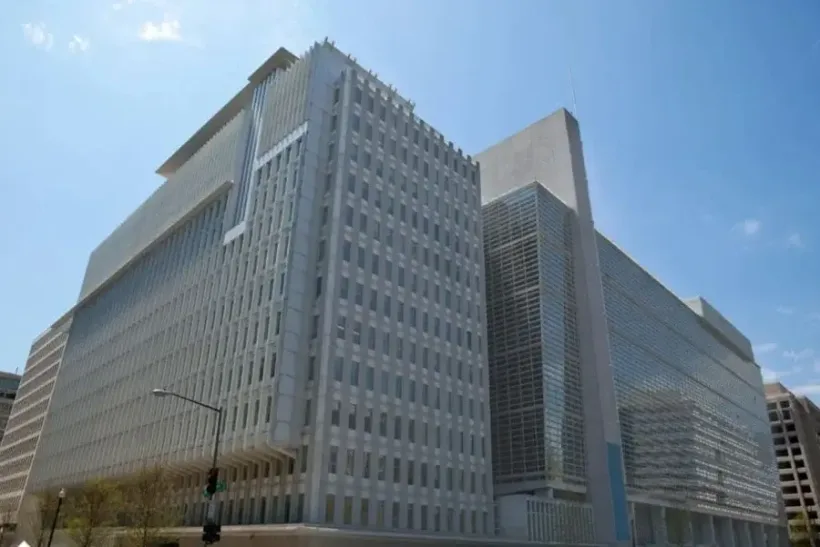
Apartment sales in Yerevan nearly doubled in July 2026 compared with the same month of 2025, according to the World Bank. The organization identifies buyers from Russia and members of the Armenian diaspora among the factors behind the recovery. Activity in the capital remains strong despite an expanding pipeline of new homes.
However, it would be misleading to attribute rising prices solely to foreign buyers. Demand is also driven by the housing needs of local residents, mortgage availability and a desire to invest savings in property. Official statistics do not reliably isolate each group's contribution to the total number of transactions.
The arrival of new residents supports both rentals and sales, but depends on external circumstances. Changes in living or working conditions may lead some prospective buyers to postpone a purchase or leave the country. This matters to developers because residential projects launched today will be marketed and completed over the coming years.
Mortgages in Armenia
After a prolonged slowdown, mortgage lending in Armenia has accelerated again. The Central Bank reports growth in both the housing loan portfolio and new lending. The share of borrowers with two or more mortgages is also increasing. This may indicate investment purchases, although the number of loans alone does not reveal the purpose of each transaction.
Consumer loans secured against real estate add to household debt. Some have repayment terms similar to mortgages but are recorded separately. If household incomes weaken, difficulties servicing these loans could affect banks even without a sharp fall in property values.
Government support for homebuyers has also changed. Income tax refunds on mortgage interest generally ceased to apply to new loans in Yerevan after January 1, 2025, although exceptions remain for certain projects approved earlier. The incentive previously made new-build apartments more affordable and reduced borrowers' costs. The restrictions are set out in Armenia's Tax Code.
Armenia's Construction Boom
Armenia built 5.09 million sq. m of housing in 2020–2025, compared with 2.39 million sq. m in 2006–2011. These figures cover the entire country and cannot be applied directly to Yerevan. The Central Bank has highlighted the rapid expansion of residential construction in Armenia while assessing risks to the financial system.
Construction activity remained high in 2026. In July, the value of construction work rose by 26.5% compared with the same month in 2025, while the sector's debt to banks exceeded AMD 1 trillion by August. Both figures cover Armenia as a whole and show the scale of the industry's reliance on bank financing.
The increase in supply has yet to stop apartment prices from rising, but new homes reach the market well after construction begins. Projects started during a period of strong demand could be completed under less favorable economic conditions. If sales slow, developers may need to offer discounts, more flexible installment plans or other benefits to attract buyers.
Rental Yields in Armenia
Higher apartment prices do not necessarily lead to higher rental yields in Armenia. In May 2026, Central Bank Governor Martin Galstyan pointed to a rising ratio of purchase prices to rents. When property values rise while rental rates fall, investment returns become less attractive, he noted.
For investors seeking recurring rental income, this implies a longer payback period. If rents remain unchanged while acquisition costs rise, the percentage return on the investment declines. Properties bought after a steep price increase warrant particular scrutiny, since further appreciation is not guaranteed.
Advertised rental rates alone are not enough to assess returns. Maintenance costs, taxes and possible periods of vacancy must be deducted from rental income. Comparing net earnings with the full purchase cost helps investors judge a property without relying on a quick resale.
Risk of Market Overheating
On October 20, the Central Bank decided to raise the countercyclical capital buffer for banks to 2.25% of risk-weighted assets. A previously approved 2% requirement is due to take effect on February 1, 2027, followed by the new level on May 1. The measure aims to strengthen banks against potential losses, including those arising from a downturn in Armenia's real estate market.
Central Bank Governor Martin Galstyan has not ruled out a decline in housing prices. He emphasized, however, that a sharp fall is not inevitable. He also declined to describe the current situation as a "bubble".
Concern stems from three overlapping trends: faster mortgage lending, rising borrowing by developers and an expanding housing stock. As long as buyers remain active, new developments can find demand. If transactions weaken, oversupply may lengthen selling times and force some companies to revise their prices.
Outlook for 2027
In 2027, the market's direction will depend on demand and the pace of new housing completions. Continued migration and accessible mortgage credit could keep prices rising, although another increase of the recent magnitude is not assured. If new supply outpaces sales, slower price growth and longer marketing periods are more likely.
A more pronounced price correction is possible if buyer numbers decline or financing conditions tighten. Its impact is likely to vary by district and property type. Apartments in convenient locations with steady rental demand may prove more resilient than mass-market developments where many similar units come up for sale at once.
Analysts at International Investment believe that buying an apartment in Yerevan solely in the hope of further price gains is becoming an increasingly risky strategy. Buyers should consider the actual transaction price, net rental yield and volume of future housing supply nearby. Central Bank warnings do not mean a downturn is inevitable, but they underline the need for more cautious investment assessments.
Frequently Asked Questions
How much does real estate cost in Yerevan in 2026?
Since the end of 2025, the average price per square meter has risen by 23.5%. In August 2026, it stood at AMD 993,000 in Kentron, AMD 735,700 in Arabkir and AMD 505,000 in Shengavit.
Which Yerevan districts have seen the fastest price growth?
Shengavit (+29.2%), Erebuni (+29%) and Nor Nork (+28.8%) lead the ranking. Prices in Kentron rose by 12.7%.
Why is the Central Bank warning of an overheated market?
The regulator points to faster mortgage lending, higher debt in the construction sector and a rapid increase in housing supply.
Who can still claim a mortgage interest tax refund in Yerevan?
From January 1, 2025, most new mortgages in the capital no longer qualify. Exceptions remain for certain construction projects approved before the change.
What should investors check before buying an apartment in Yerevan?
The final purchase price, net rental yield after costs and vacancies, and the amount of housing under construction nearby. Rising property values alone do not guarantee a profit.