







 Vietnam Mortgage Surge Pushes Homes Out of Reach
 Lithuanian Apartment Prices Accelerate Across Major Cities
 London Flats Lose Value Ahead of Leasehold Reform
 Construction of the Batumi–Sarpi Highway Begins in Georgia
 Baltic Property Investment Accelerates in 2026
 Hong Kong and Singapore Renew Their Expat Rivalry
Swiss Luxury Prices Hit a Ceiling
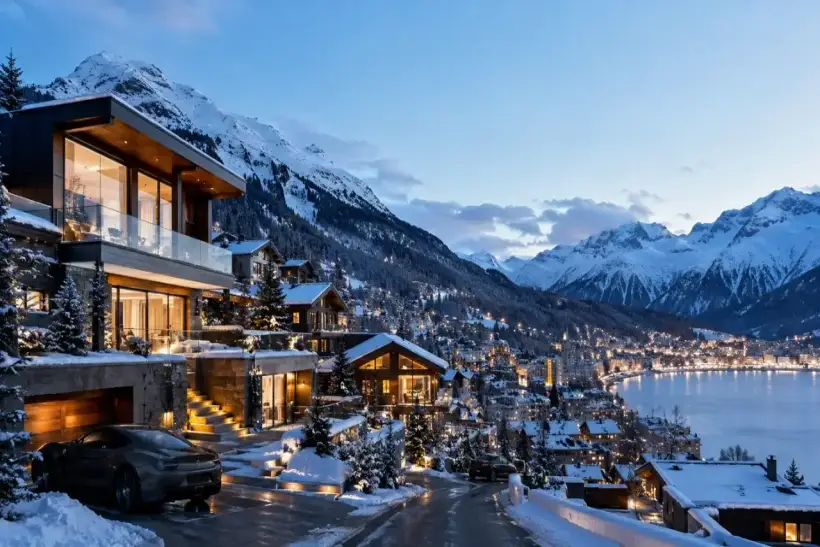
The Swiss luxury property market kept rising in 2025, but the pace weakened. According to finews.com, UBS analyzed 31 prime Swiss locations and found average price growth above 3%, while Alpine luxury markets rose 6%.
Swiss luxury real estate slows after years of gains
UBS Chief Investment Office Global Wealth Management said luxury homes in Switzerland rose less than the broader owner-occupied housing market in 2025. The slowdown reflects not a collapse in demand, but the limits of affordability after years of sharp price increases.
St. Moritz remains Switzerland’s most expensive luxury location, with average prices near CHF 52,000 per square meter. Gstaad and Verbier follow at roughly CHF 45,000 per square meter. Outside the Alps, Cologny on Lake Geneva leads at about CHF 43,000 per square meter, while Küsnacht is the priciest location on Lake Zurich at around CHF 37,000 per square meter.
Alpine resorts keep their premium
Luxury homes in Alpine regions are now about 40% more expensive than five years ago. UBS links the trend to wealthy foreign buyers with low price sensitivity and to the growing treatment of mountain holiday homes as investment assets.
A 150-square-meter condominium in a strong Swiss luxury municipality with high-end finishes now typically costs CHF 4 million to CHF 5 million. Single-family homes with plots above 1,000 square meters quickly move beyond CHF 10 million.
Wealth supports demand, affordability narrows the buyer pool
Strong equity markets have lifted private wealth. Switzerland now has nearly 10,000 taxpayers with assets above CHF 10 million, about 50% more than in 2019.
Yet high prices are cutting into affordability, especially for luxury condominiums in the mid-single-digit million-franc range, where mortgage affordability rules still matter.
Geneva, Zurich, Zug and Ticino diverge
In Zurich and Zug, demand is driven mainly by high-income expatriates. Slower employment growth weakened demand in Zurich in 2025, while Zug kept stronger momentum.
Around Lake Geneva, demand from the Middle East is expected to increase slightly, supported by the success of commodity trading firms. In Ticino, prices stagnated, but wealthy arrivals from Italy and Lugano’s financial sector helped prevent broader declines.
Global capital returns to stable luxury markets
A strong Swiss franc has pushed St. Moritz to the top of the international luxury ranking, ahead of Monaco and Aspen. In all three locations, average luxury prices stand at no less than $60,000 per square meter, while six-digit prices are no longer rare in the best micro-locations.
As experts at International Investment report, Switzerland’s luxury market is entering a more selective phase: global capital still values stability, but price growth is no longer automatic. For investors, liquidity, micro-location and buyer depth now matter more than the national brand alone.
FAQ
Why are Swiss luxury property prices still rising?
Prices are supported by foreign capital, political stability, limited supply and wealth growth among high-net-worth buyers.
What is Switzerland’s most expensive luxury property market?
St. Moritz leads the national ranking, while Cologny on Lake Geneva is the most expensive non-Alpine location.
Why is the market slowing?
Prices have risen sharply, affordability has weakened and several primary-residence markets around Lake Geneva and Lake Zurich have reached a plateau.
What is the outlook for 2026?
UBS expects weaker price growth than in previous years, especially in markets where demand is more exposed to economic conditions and mortgage affordability rules.