







read also
 Australia’s Spring Auctions Rise but Remain Well Below 2025
 Number of Foreigners Holding Turkish Residence Permits Exceeds 1.27 Million
 Demand from Russian Tourists for Holidays in Georgia Rises by 20–25%
 Montenegro Property Buying Costs in 2026
 Four in Ten Companies Would Not Choose Slovakia
 Gulf Countries Prepare Unified Tourist Visa
Rising Terrorism Risks in Turkey: Security Operations and Tighter Safety Measures
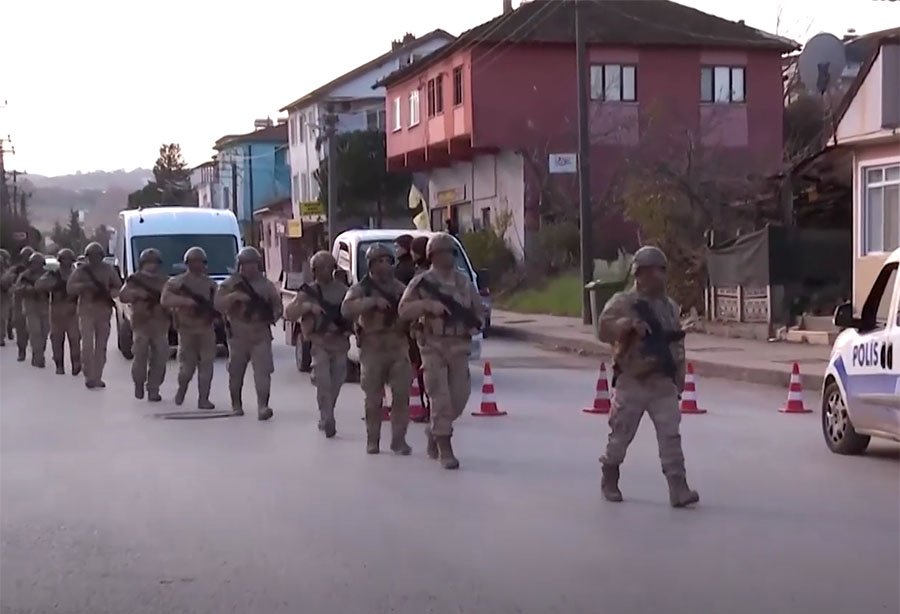
Photo: Reuters
The end of 2025 in Turkey has been marked by rising security risks amid ongoing terrorist threats. The country is conducting a large-scale campaign against suspects linked to the “Islamic State”: on December 29, police officers and militants were killed during one of the operations, Reuters reports. The situation remains complex, with authorities stating that pre-emptive measures and enhanced controls will continue during the New Year holiday period.
Gunfight in Yalova
Early in the morning on December 29, security forces carried out a special operation in the northwestern Turkish province of Yalova. The area around a house where “Islamic State” militants were hiding was sealed off, and a police helicopter was deployed over the site. The armed confrontation lasted nearly eight hours. According to Interior Minister Ali Yerlikaya, three police officers and six militants were killed in the operation. Eight police officers and one member of the security forces were injured. Authorities said all the killed militants were Turkish citizens. Five women and six children were evacuated from the building.
The operation in Yalova was part of a broader nationwide campaign. On the same day, Turkish security forces conducted simultaneous raids at 108 addresses in 15 provinces. Over the past month, 138 people suspected of links to the “Islamic State” have been detained, including 115 individuals previously accused of planning attacks during the Christmas and New Year holiday period.
The Istanbul Chief Public Prosecutor’s Office had earlier reported that “Islamic State” militants were planning attacks during festive events, including against non-Muslim groups. These findings prompted the expansion of counterterrorism operations and the tightening of security measures in several regions of the country.
The peak of the group’s activity in Turkey occurred between 2015 and 2017, when attacks were carried out on civilian targets, including a nightclub in Istanbul and the city’s main international airport, killing dozens of people. In subsequent years, large-scale attacks were largely avoided, but security forces continue preventive actions amid signs of renewed IS activity on the international stage.
Security Measures in Istanbul
Amid intensified counterterrorism efforts, Istanbul authorities announced expanded security measures ahead of the New Year holidays, Hürriyet Daily News reports. Additional police, gendarmerie and coast guard units have been deployed across the city. Particular attention is being paid to shopping malls, airports, bus terminals, transport hubs, entertainment venues and central squares where large crowds are expected.
Inspections are being carried out at more than 1,600 locations, with over 50,000 personnel involved in maintaining public order, supported by ground vehicles, maritime patrols and helicopters. Emergency services have been placed on high alert. A separate set of measures focuses on economic security: ahead of peak consumer demand, inspections in shopping centers and retail outlets have been intensified, including checks for unjustified price increases.
Authorities have also introduced temporary restrictions on the entry of heavy trucks and construction vehicles into central districts of Istanbul from the morning of December 31 until noon on January 1. These measures aim to reduce traffic congestion and enhance safety in areas with large gatherings of people.
Weather conditions may further complicate the situation. According to meteorologists, a cold Arctic front is approaching the city, potentially bringing sub-zero temperatures and turning rain into snow during nighttime hours.
Recommendations for Tourists
Against this backdrop, several European countries have issued warnings about increased risks when traveling to Turkey. Germany’s Foreign Ministry urged its citizens to exercise “particular caution” when visiting the country, especially during the New Year holiday period, citing the persistent terrorist threat.
The advisory stresses that the period around New Year is considered symbolically significant and potentially vulnerable from a security perspective. German authorities advise against non-essential travel to areas near Turkey’s borders with Iraq and Syria, including several southeastern provinces.
Tourists are also advised to avoid mass events, large crowds, public squares, popular tourist sites, as well as areas close to government and military facilities. The German Foreign Ministry notes that the potential threat exists nationwide, urging travelers to remain vigilant at all times. At the same time, the Russian Union of Travel Industry notes that as of December 31 no incidents affecting tourists in Turkey have been recorded, while standard safety precautions are still recommended.
Conclusion
Analysts at International Investment note that the intensification of counterterrorism operations at the end of 2025 points to increased activity by Islamic State cells within Turkey. The scale of the campaign — dozens of simultaneous raids, hundreds of detentions and armed clashes resulting in casualties — indicates that the threats have moved beyond isolated incidents and required a systemic response from the security services.
At the same time, the authorities’ actions are preventive in nature and aimed at averting attacks during a period of mass celebrations and heightened population mobility. Enhanced security measures in Istanbul and other major cities, along with international travel warnings, create a background of elevated risk without indicating a loss of control over the situation. As a result, Turkey ends the year in a tense but manageable environment, where the key factor remains the effectiveness of the state’s preventive measures.