












GCC Outbound Tourism Surges
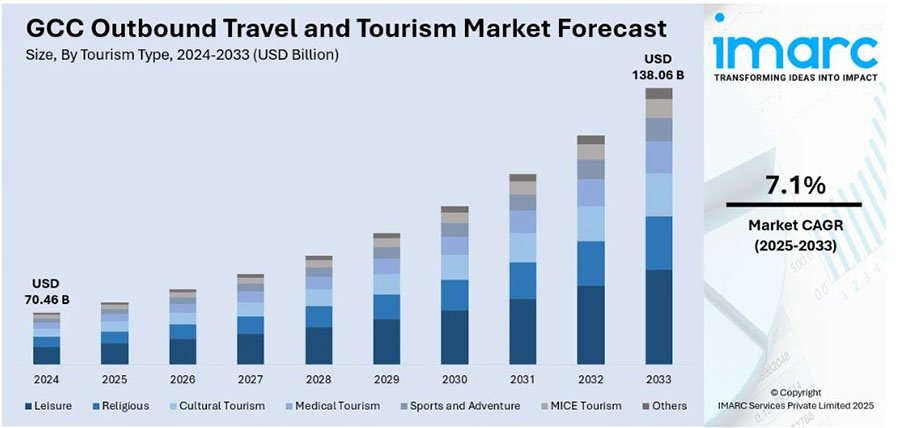
Photo: Imarcgroup.com
Outbound tourism from the Gulf Cooperation Council is entering a period of exceptional expansion. According to IMARC Group, the market is expected to grow from $70.46 billion in 2024 to $138.06 billion by 2033, nearly doubling in size over the next decade. This growth corresponds to a compound annual growth rate of 7.1% between 2025 and 2033.
Such momentum positions the GCC as one of the world’s fastest-growing sources of international travel demand and a key driver of global tourism flows.
Strategic location and aviation strength
The GCC’s geographic position at the crossroads of Europe, Asia and Africa underpins its role in global travel. Combined with advanced aviation infrastructure and extensive direct flight networks, this has made international travel both efficient and accessible for residents of the region.
Liberalised visa policies further enhance the appeal of GCC travellers, who are increasingly viewed as high-value visitors by destinations worldwide.
Rising demand for premium experiences
Outbound travellers from the Gulf are increasingly seeking more than traditional luxury holidays. Demand is shifting toward cultural immersion, gastronomy, heritage travel and wellness-focused experiences. This evolution reflects a broader preference for personalised and meaningful journeys rather than purely resort-based tourism.
As a result, GCC travellers are reshaping international tourism demand by prioritising authenticity, depth and experiential value.
Budget airlines and digital transformation
The rapid expansion of low-cost carriers across the region has played a pivotal role in making international travel accessible to a broader demographic. Competitive pricing and new routes to Europe, Asia and Africa have empowered middle-income families, young professionals and students to travel abroad more frequently.
At the same time, digital booking platforms and travel apps have transformed how trips are planned. Greater transparency, ease of comparison and real-time access to services have boosted confidence and stimulated further demand.
Airport hubs and the Unified GCC Tourist Visa
Major regional airports in Dubai, Doha and Abu Dhabi have evolved into world-class hubs, combining expanded capacity with high-end passenger services. These developments reduce friction in travel and encourage repeat international journeys.
The introduction of the Unified GCC Tourist Visa represents a major step toward seamless regional mobility. By enabling travel across all six GCC states through a single digital application, the initiative is expected to strengthen both intra-regional and outbound tourism.
Global impact of GCC travel growth
As outbound tourism from the GCC accelerates, international destinations are increasingly competing for travellers from the region. With high spending power and a growing appetite for diverse experiences, GCC tourists are set to play a central role in shaping global tourism trends.
As reported by International Investment experts, the rapid expansion of GCC outbound tourism reflects a structural shift in the region’s economic and social dynamics. For global tourism markets, the GCC is becoming a strategic source of demand, with its travellers driving innovation in premium, cultural and experience-led travel worldwide.