







 Vietnam Mortgage Surge Pushes Homes Out of Reach
 Lithuanian Apartment Prices Accelerate Across Major Cities
 London Flats Lose Value Ahead of Leasehold Reform
 Construction of the Batumi–Sarpi Highway Begins in Georgia
 Baltic Property Investment Accelerates in 2026
 Hong Kong and Singapore Renew Their Expat Rivalry
Airlines Reroute Flights Around the Middle East
New global air corridors emerge amid conflict
Escalating conflict in the Middle East has forced airlines worldwide to dramatically adjust their flight paths. With large portions of regional airspace closed, carriers have begun relying on alternative routes across Southern Europe, the Caucasus and North Africa.
As a result, countries including Saudi Arabia, Greece, Egypt, Georgia, Oman and Cyprus have rapidly emerged as key diversion hubs for international aviation traffic.
These nations now serve as crucial transit points for flights connecting Europe, Asia and other global destinations, helping airlines maintain operations while avoiding high-risk airspace.
Southern corridor runs through Egypt, Saudi Arabia and Oman
One of the main alternatives is the Southern Bypass corridor, which allows airlines to route flights south of the conflict zone while maintaining links between Europe and Asia.
Key hubs along this corridor include Cairo, Jeddah and Muscat. Cairo has become a major diversion point because of its strategic geographic position connecting Africa, Europe and the Middle East.
Jeddah in Saudi Arabia has also emerged as a critical transit hub, handling both commercial flights and humanitarian evacuation operations as airlines adjust to the changing aviation landscape.
Muscat in Oman has become another essential node in the new network of flight routes, supporting diverted flights and acting as a regional logistics hub.
Northern corridor connects Eastern Mediterranean and Caucasus
A second route has developed through the Eastern Mediterranean and the Caucasus, forming what aviation analysts describe as the Northern Bypass corridor.
Athens and Larnaca have become important operational centers for diverted flights and evacuation traffic. Airlines are increasingly using these airports as temporary transit points for passengers affected by flight disruptions.
Georgia has also strengthened its role in global aviation logistics. Tbilisi Airport is now being used as a staging location for aircraft repositioning and temporary operational support.
Istanbul continues to serve as one of the largest regional aviation hubs, providing additional capacity for airlines needing to reroute flights between Europe and Asia.
Global aviation faces widespread disruption
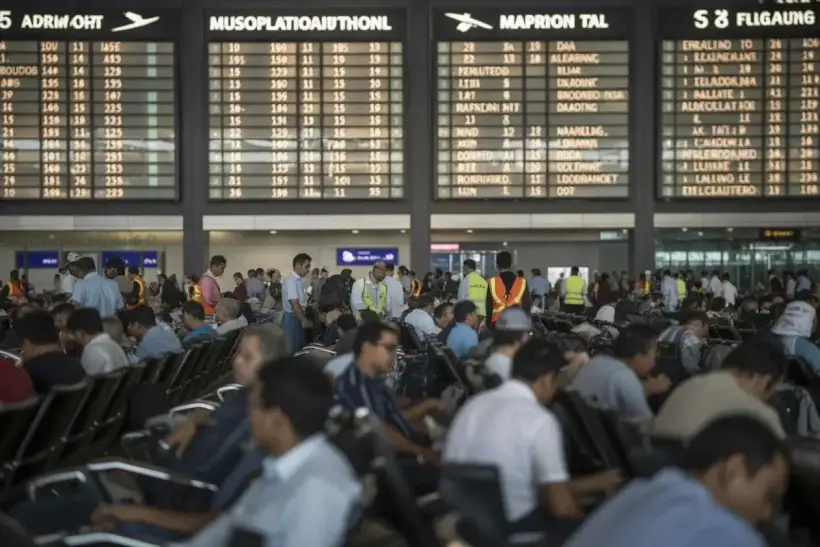
The airspace closures have triggered major disruptions across global aviation networks. In the first days of March 2026 alone, more than 700 flights were canceled worldwide.
Thousands of additional flights were forced to take longer detours, increasing flight times and fuel costs. Airlines have had to revise schedules and introduce additional stopovers on long-haul routes.
The reduced number of available routes has also led to sharp increases in airfares. Industry data suggests ticket prices on some affected routes have surged dramatically as airlines struggle to manage capacity and operational constraints.
Airlines adjust strategies to new routing reality
Major global carriers including Lufthansa, Emirates, Air India and British Airways have begun restructuring flight schedules and temporarily suspending services to some regional hubs.
Air traffic control systems and major airports along the diversion corridors are also facing increased pressure as rerouted flights create congestion.
Aviation analysts say the current disruption represents one of the biggest operational challenges for the global airline industry since the COVID-19 pandemic.
As International Investment experts report, the rapid reconfiguration of global flight routes highlights how vulnerable aviation networks remain to geopolitical crises. Countries located near conflict zones but outside restricted airspace are quickly becoming strategic aviation hubs that help maintain international connectivity.