







 Vietnam Mortgage Surge Pushes Homes Out of Reach
 Lithuanian Apartment Prices Accelerate Across Major Cities
 London Flats Lose Value Ahead of Leasehold Reform
 Construction of the Batumi–Sarpi Highway Begins in Georgia
 Baltic Property Investment Accelerates in 2026
 Hong Kong and Singapore Renew Their Expat Rivalry
New entry rules in Europe have triggered chaos at airports and flight delays
Daily Mail
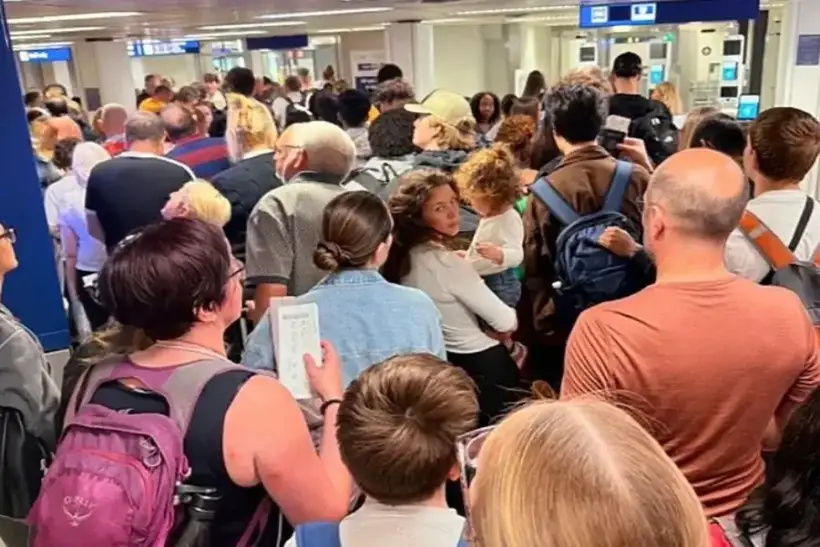
European airports have faced widespread disruptions after the full rollout of the new EU border control system, the Entry/Exit System (EES), which requires biometric registration for passengers from non-EU countries. At several major hubs, long queues formed, many travellers missed their flights, and families with children were left stranded in terminals for hours. Airlines and airports are blaming each other for the disruptions, Daily Mail reports.
New Entry System (EES)
At the centre of the disruption is the Entry/Exit System (EES), which replaces passport stamps with biometric registration. Citizens of non-EU countries, including the United Kingdom, are now required to provide fingerprints and photographs when entering the Schengen Area, which comprises 29 European countries.
The same procedure is repeated on exit, and industry participants note that data processing can take hours. Airports say this has led to bottlenecks, with passengers physically unable to reach boarding gates in time and remaining stuck in passport control queues even after their flights had departed.
The system was launched in October 2025 and became mandatory on 10 April, increasing pressure on border infrastructure. In the longer term, EES is expected to speed up checks through automation and pre-collection of traveller data. However, the rollout has already triggered further disruption, similar to earlier issues in the autumn.
Queues, fainting passengers and disrupted flights
The most severe disruptions were reported in Geneva, Lisbon and Malta. In Brussels and Amsterdam Schiphol, passengers reported delays of up to two hours and a shortage of open border control booths.
In Milan, conditions were particularly difficult. At Linate Airport, passengers waiting up to three hours in overcrowded and hot terminals reportedly fainted or experienced severe discomfort. Witnesses described elderly travellers and parents with young children collapsing or becoming visibly unwell.
A major incident involved an easyJet flight to Manchester, where around 100 passengers missed boarding while stuck in passport control queues. The crew was forced to depart without them due to flight duty time limits. The airline later said the situation was beyond its control, while also calling the delays “unacceptable”.
Missed flights and limited compensation
Personal accounts have drawn further attention to the issue. Seventeen-year-old Kiera told the BBC she arrived at the airport well in advance but became trapped in a long queue. She only learned she had missed her flight at the checkpoint. The next available departure required a nearly 20-hour wait and cost the family hundreds of pounds, while compensation from the airline amounted to around £12.
In another case, Vicky Chapman from Wirral was stranded in Milan with her five-year-old son, partner and relatives. She said passengers were repeatedly moved between services without clear information on when they could travel. The family had to pay for accommodation and wait several days to return home.
Adam Lomas, travelling with his wife and infant child, said he was unable to reach the airline directly and was left dealing only with automated systems. His family also had to arrange accommodation and new tickets independently.
Aviation industry reaction: “mess” and “catastrophe”
easyJet said passengers were informed in advance of the new requirements and advised to arrive earlier at airports to allow time for biometric checks. The airline also urged border authorities to use available resources more effectively to reduce congestion.
Ryanair chief executive Michael O’Leary strongly criticised the rollout, calling it a “catastrophe” and a “mess”. He argued that European authorities were effectively creating additional barriers for British tourists after Brexit by forcing them into long queues. He warned that the system had already caused significant disruption and could worsen until fully stabilised.
Airport operators point to a shortage of trained staff and technical challenges in implementing the new system. As a result, each side is effectively blaming the other for the disruption, while passengers bear the consequences of the crisis.
Expert reaction to EES rollout
Aviation expert Sally Gethin said the system rollout was “not going well” and was creating serious difficulties for travellers. She noted that large-scale technological changes in complex infrastructure inevitably involve teething problems, but said the current situation appears particularly strained due to bureaucratic pressure and insufficient preparation.
She also stressed that many travellers appear to have been poorly informed about the new rules, suggesting that authorities could have done more to communicate the changes.
Former UK and EU diplomat Rupert Joy, who was caught up in delays in Lisbon, described the situation as “complete chaos”, adding that passengers were missing flights even when arriving at airports well in advance.
What happens next
The International Air Transport Association (ACI) and several aviation industry groups have proposed a temporary suspension mechanism that would allow the system to be paused during periods of overload to prevent large-scale disruptions. However, the proposal has not yet been adopted by regulators.
The European Union expects that once the transition period is complete, the new system will speed up border checks and improve security. In practice, the rollout has exposed significant organisational and technical challenges despite years of preparation. The reform, intended to streamline travel procedures, has so far produced the opposite effect — congested airports and widespread disruption to air travel across Europe.