







 Vietnam Mortgage Surge Pushes Homes Out of Reach
 Lithuanian Apartment Prices Accelerate Across Major Cities
 London Flats Lose Value Ahead of Leasehold Reform
 Construction of the Batumi–Sarpi Highway Begins in Georgia
 Baltic Property Investment Accelerates in 2026
 Hong Kong and Singapore Renew Their Expat Rivalry
Oman Air resumes flights to Dubai and Manama
Travel And Tour World
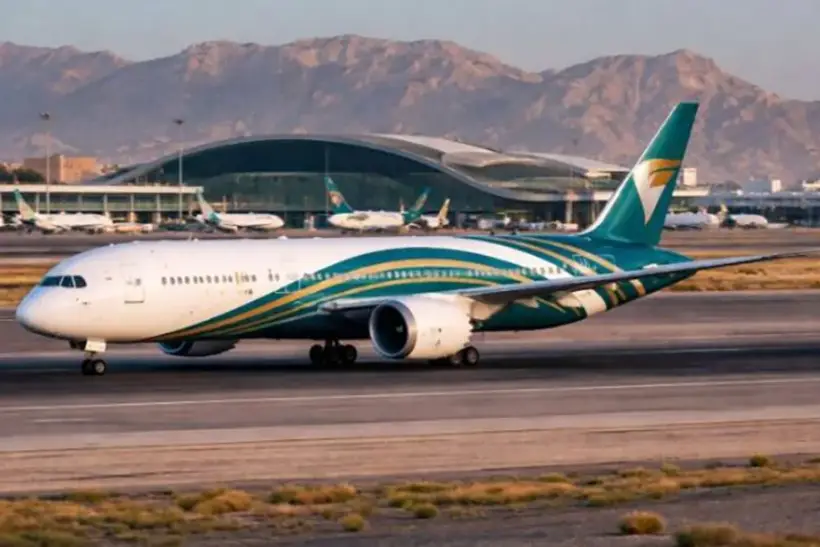
Oman Air has partially restored regional air connectivity by resuming flights on several key routes. The move comes amid a gradual recovery of the aviation sector from disruptions caused by airspace restrictions and tensions in the Middle East. However, some routes remain suspended, leaving uncertainty for passengers, according to Travel And Tour World.
Return of key routes from Oman
Since 18 April 2026, the carrier has restarted services on three important routes: Muscat–Dubai, Muscat–Manama, and Muscat–Khasab. These connections are considered strategic for both business travel and tourism, linking Oman with major regional hubs.
The resumption of flights to Dubai is particularly significant, as the city remains one of the world’s main international hubs for business and travel. The direct link strengthens trade ties, tourism flows, and cultural exchange between Oman and the UAE.
Flights to Manama restore an important connection with Bahrain, a long-standing economic partner of Oman in the Gulf region. Meanwhile, the Muscat–Khasab route again provides access to the Musandam Peninsula, a popular destination for both domestic and international tourism. Tickets are now available for booking, improving travel flexibility.
Some destinations remain suspended. Flights to Doha, Kuwait City, and Baghdad are suspended at least until 30 April 2026 due to ongoing restrictions and safety concerns.
Recovery of aviation in the Gulf region
Oman Air’s network restoration is part of a broader recovery process across the Gulf aviation sector. Major carriers such as Emirates, Qatar Airways, and Etihad Airways are also gradually resuming routes and adjusting operations to evolving conditions.
Iran announced a partial reopening of its airspace on 18 April, the same day it received its first passenger flight from Oman. Six airports have already resumed operations, and Mashhad restarted international services from 20 April. Airports are operating under limited hours until 25 April, while airlines must obtain new permits as previous approvals were revoked.
Russia has also allowed flights to Iran and the UAE. In the United Arab Emirates, air traffic is gradually recovering, although capacity remains limited, fares are rising, and the number of available flights is still restricted. Services have also resumed in Israel, Bahrain, and Syria.
Iran–US negotiations
On 20 April, Iran agreed to return to negotiations with the United States, according to Axios. The decision came on the final day of a two-week ceasefire. Earlier, the Islamic Revolutionary Guard Corps (IRGC) stated talks were not possible without lifting the blockade of the Strait of Hormuz.
CNN reported that US President Donald Trump extended the ceasefire by one day and warned of severe consequences if Iran refused a deal, adding that a peace agreement would prevent the country from developing nuclear weapons.
Analysts at International Investment note that the situation remains unstable. While the partial reopening of routes is a positive signal for the market, travellers and businesses are still advised to account for ongoing risks when planning trips to the Middle East.