







 How Ukraine’s New-Build Housing Market Has Changed Over Four Years
 European Prime Rents Rise as Property Yields Turn Higher
 The Most Expensive Airlines in Europe in 2026
 Housing Prices in Italy Reach a Two-Year High
 Travellers Increasingly Choose Cooler Scandinavia
 Serbia Property Sales Decline as Transaction Value Rises
Bahrain Reopens Its Airspace
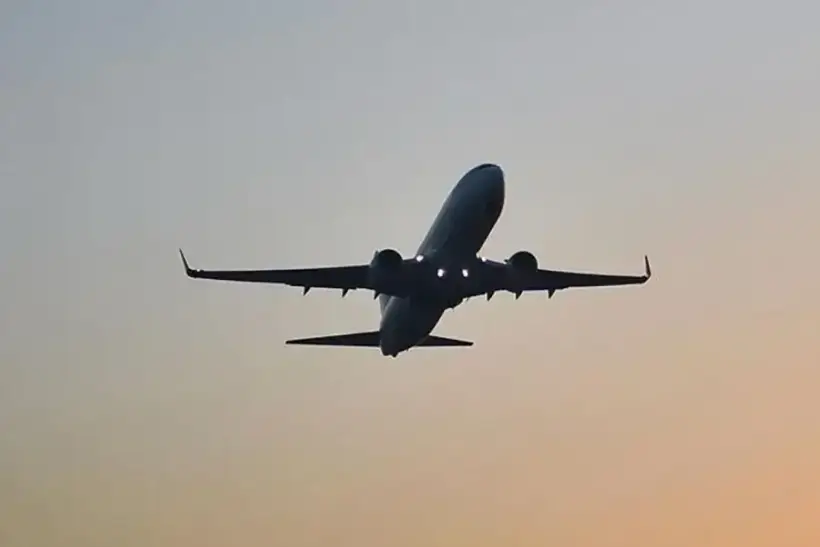
Bahrain’s Civil Aviation Affairs announced on April 8 the resumption of the country’s airspace operations. The airspace had been closed for security reasons since February 28, when the military conflict between the U.S., Israel, and Iran began. Although Bahrain did not participate in the conflict, it was targeted by hundreds of drone and missile attacks.
Iran Conducted 600 Strikes on Bahrain
The Civil Aviation Affairs of Bahrain’s Ministry of Transport and Telecommunications reaffirmed its commitment to maintaining uninterrupted air traffic in accordance with the highest safety standards. Authorities believe that risks have sharply decreased following the ceasefire agreement reached on the night of April 8.
Reuters reports that Iran previously carried out targeted strikes on facilities in Bahrain, including an Amazon cloud computing center. According to official data, Iran launched over 600 drone and missile attacks, resulting in at least two fatalities. Infrastructure was also damaged, including a desalination plant, an oil refinery, and an aluminum factory. Iran also repeatedly targeted the headquarters of the U.S. Fifth Fleet.
As a member of the UN Security Council, Bahrain actively worked on a resolution to protect shipping through the Strait of Hormuz following the outbreak of the conflict. At the same time, some of the country’s population showed support for Iran: AP reports demonstrations in Bahrain during which participants threw Molotov cocktails and set vehicles on fire.
Since the beginning of the war, at least 41 people, including migrant workers, have been arrested for posting photos that authorities labeled as showing “Iranian aggression” or for expressing sympathy with it. Some have been charged with treason, a crime punishable by life imprisonment or the death penalty.
Airports in Other Middle Eastern Countries
On April 8, Syria fully restored air traffic and key aviation infrastructure. Damascus International Airport resumed arrivals and departures according to the approved schedule. The reopening followed a comprehensive inspection and coordination with regional and international aviation safety authorities. Iraq’s Civil Aviation Authority (ICAA) also announced the immediate resumption of air traffic and the operation of all commercial airports.
From April 9, Israel reopened its airspace and fully restored operations at Ben Gurion International Airport in Tel Aviv. Airlines Arkia, Israir, and El Al announced plans to expand flights both domestically and internationally, including to EU capitals, Batumi, Tbilisi, Moscow, and long-haul destinations. The return of foreign carriers will be gradual: some companies, including Wizz Air, Etihad, and Air Canada, postponed resuming flights until mid-April or later, citing safety concerns and adherence to the two-week ceasefire.
Will There Be Peace in the Middle East?
The ceasefire is fragile. Israel has intensified bombings in Lebanon, reports The Guardian, while Iran has again halted the passage of oil tankers through the strategically important Strait of Hormuz in response. There have also been calls to include Lebanon in the ceasefire agreement.
Tensions continue, and the ceasefire could be broken at any moment. Nevertheless, the U.S. and Iran continue preparations for negotiations scheduled for April 10 in Islamabad. Experts warn that the global economy and Persian Gulf countries will take a long time to recover, but the consequences could have been significantly worse in the event of a larger-scale war, which Donald Trump had previously threatened.