







 Vietnam Mortgage Surge Pushes Homes Out of Reach
 Lithuanian Apartment Prices Accelerate Across Major Cities
 London Flats Lose Value Ahead of Leasehold Reform
 Construction of the Batumi–Sarpi Highway Begins in Georgia
 Baltic Property Investment Accelerates in 2026
 Hong Kong and Singapore Renew Their Expat Rivalry
Queues at European airports: EES system struggles to handle demand
The Guardian
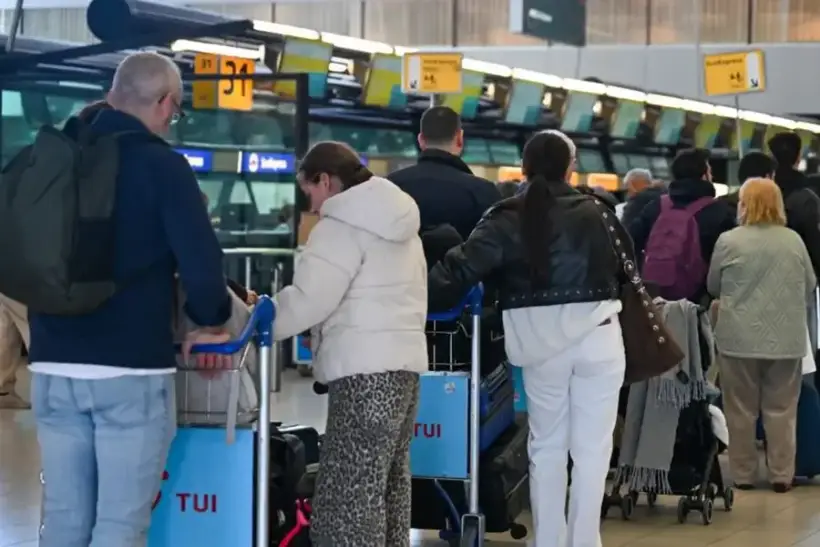
Airports across Europe continue to experience disruptions and long queues following the full rollout of the Entry/Exit System (EES), The Guardian reports. Some passengers are missing flights due to chaos in terminals. With the summer season approaching, pressure is increasing.
Challenges in implementing EES in Europe
The system was gradually introduced across the Schengen area starting in October 2025 and became mandatory on April 10, 2026, significantly increasing the burden on border control. The new rules apply to 25 of the EU’s 27 member states, as well as Iceland, Norway, Liechtenstein, and Switzerland.
Many airports have seen queues stretching for hours, as data processing takes longer than expected and passengers fail to clear border control in time for boarding. Delays have been reported in Geneva, Lisbon, Malta, Brussels, and Amsterdam Schiphol, with waiting times reaching two hours or more.
The situation has been particularly severe at Milan Linate Airport. Passengers spent up to three hours in overcrowded terminals during hot weather, reporting poor conditions and, in some cases, fainting. The disruption has also affected specific flights: around 100 passengers missed an easyJet flight to Manchester after failing to clear passport control in time. The aircraft departed without them due to crew working time limits.
The situation at European airports remains tense. Queues at border control continue to disrupt flight schedules. Key issues include fingerprint recognition failures, malfunctioning kiosks, and the need to repeat registration at different stages of a journey.
Missed flights at European airports
A London resident, Georgia, faced a four-hour delay at Pisa Airport on April 10. Five months pregnant at the time, she described the experience as extremely difficult due to the lack of staff, poor information, and long queues in a hot, enclosed corridor. No dedicated assistance was provided for passengers with children, and water was only distributed at the very end of the queue. She was forced to sit on the floor due to feeling unwell. Following the incident, she canceled a planned trip to Paris and is now reconsidering future travel in Europe.
Stuart MacLennan from Oban, Scotland, traveled with his family and spent about two and a half hours in line in Málaga due to several flights arriving simultaneously. On the return journey, the wait reached three and a half hours. He said the experience has made him reluctant to travel through major European airports again.
A 75-year-old traveler, David from Durham, encountered similar issues at Fuerteventura Airport while traveling to Gran Canaria. He reported long queues, a lack of seating, and particular difficulties for elderly passengers forced to stand for extended periods. Passenger flow organization was poor, and access to restrooms was limited.
Technical failures at European airports
Dave Giles, an IT manager from Raunds (Northamptonshire), missed his flight from Copenhagen on April 12 after attending a music festival with his family. He described a queue of around 80–100 people and only three operational kiosks, one of which soon stopped working. Staff attempted to delay the flight, but boarding closed just minutes before he reached the checkpoint. He had to purchase new tickets, pay for accommodation, parking, and car rental, with total losses estimated at £1,800–£2,000. His insurance refused to cover the costs, while the airline denied responsibility.
Dylan Thomas, an HR specialist from Lincolnshire, experienced delays twice — in Madeira and on his return from Brussels via Eurostar. He reported two-hour waits and non-functioning kiosks, many still wrapped in plastic. As a result, checks were carried out manually, significantly slowing the process.
Retired volunteer Paul Coleman from Southend-on-Sea and his wife Nicolette spent about three hours at Kraków Airport in February. Due to camera failures, staff resorted to taking photos of passengers using mobile phones. According to Coleman, no explanations or apologies were provided.
Industry disputes over the causes of disruptions
Airlines and airports offer differing explanations for the disruptions. easyJet says it warned passengers to arrive earlier and points to inefficiencies in border control operations. Ryanair CEO Michael O’Leary described the situation as a “catastrophe” and a “shambles,” arguing that the new rules create additional barriers for British travelers.
Airport operators cite staff shortages and technical challenges in implementing the system. Aviation expert Sally Gethin described the rollout as unsuccessful and noted that passengers were poorly informed about the changes. Former UK and EU diplomat Rupert Joy, who experienced delays in Lisbon, called the situation “complete chaos.”
Industry bodies, including Airports Council International, have proposed allowing temporary suspension of the system during peak periods to ease pressure. The EU expects that after an adjustment phase, EES will speed up border checks and improve security, but for now its rollout has led to congestion and operational disruptions across European airports.
What’s next
Analysts at International Investment note that the transition to digital border control systems has proven more complex than expected. Instead of accelerating procedures, the initial phase has resulted in overloaded airports, system failures, and a rise in missed flights. Responsibility for the disruptions remains unclear, shared between airlines, airports, and border authorities.
As the peak travel season approaches, pressure on infrastructure is expected to increase. Without rapid technical and operational improvements, delays risk becoming systemic. While the EU maintains that EES will eventually streamline border control and enhance security, current experience suggests that, without further adjustments, the system will continue to pose challenges for both passengers and the aviation industry.