







 Egypt Prepares New Law for Property Developers
 Young Japanese Buyers Turn to 50-Year Mortgages
 Argentina Narrows Tourism Gap as Arrivals Rise
 Seattle Luxury Housing Loses Its Former Momentum
 The World’s Strongest Passports for Travel, Living and Investment
 Russian Developers’ Debt Nearly Doubled in a Year
Vietnam Tightens Outbound Tours
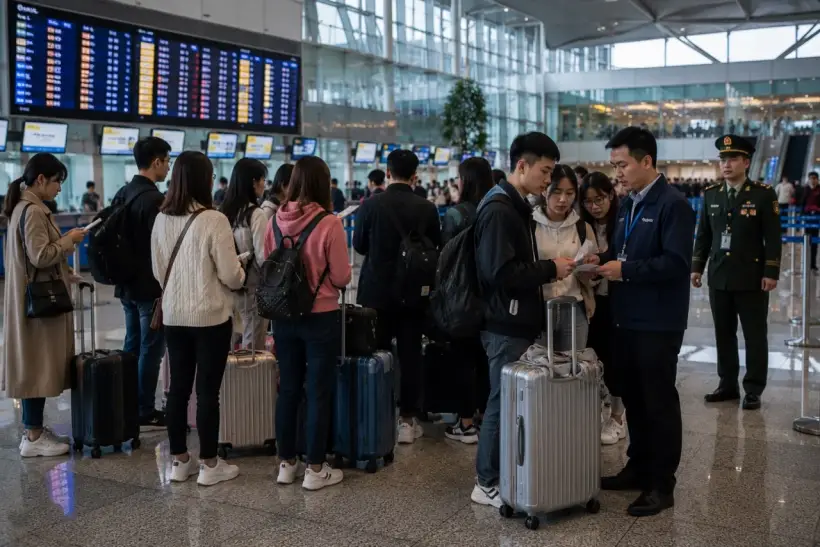
Vietnamese tourism authorities have warned tour operators against allowing outbound travel packages to be used for illegal migration, unauthorized residence or undocumented work abroad, as outbound travel surges and regulators demand tighter customer screening, closer group monitoring and faster incident reporting.
Outbound tours have become a migration-risk channel
Vietnam’s tourism market is facing a new challenge as international travel recovers. Organized overseas tours, designed as a legal channel for leisure, study and cultural exchange, are increasingly being treated by authorities as a potential route for irregular migration. The concern is that some travelers leave Vietnam in a group, then abandon the itinerary, overstay abroad or attempt to work without authorization.
Vietnam News reported that the National Tourism Authority of Vietnam has instructed tour operators not to organize, broker or facilitate outbound travel packages used for illegal immigration, unauthorized residence or undocumented work. The regulator told companies to strengthen customer checks before, during and after each trip and to identify signs that clients may intend to overstay or work illegally.
For the industry, this marks a shift from ordinary tour sales to a stricter compliance model. Compliance means an internal control system designed to help a company follow the law, reduce risks and prevent violations. For tour operators, the issue is no longer only routes, tickets and hotels, but also the traveler’s migration intent.
Outbound growth has raised regulatory attention
Vietnamese outbound travel is expanding quickly. Vietnam News, citing the statistics office, reported that about 6.7 million Vietnamese citizens traveled abroad in 2025, up 26.4% from the previous year; 1.3 million trips were recorded in the fourth quarter alone. At that scale, even a small share of violations becomes visible to destination countries and damaging to the reputation of the national tourism sector.
The growth reflects broader changes in income, consumer habits and access to international destinations. Vietnamese travelers are taking more trips across Asia, buying group packages and using visa-free regimes, electronic visas and packaged offers. But scale also makes control harder: more groups mean more pressure on tour operators, guides, overseas partners and consular services.
For the state, the issue extends beyond tourism. If citizens repeatedly violate residence rules abroad, destination countries may tighten visa procedures, increase document checks or reduce trust in Vietnamese tour groups. That would affect not only violators but also ordinary travelers.
Operators are responsible for itineraries and group conduct
The regulator’s position strengthens the responsibility of companies, tour leaders and licensed guides. Tours must be operated strictly within a company’s license and registered itinerary. Group leaders are expected to monitor travelers throughout the trip, coordinate with foreign partners and local authorities and contact Vietnamese diplomatic missions when incidents occur.
Customer briefing is also becoming more important. Companies must explain the laws of Vietnam and destination countries, including entry rules, residence requirements, public order and standards of conduct abroad. Pre-trip guidance is therefore becoming more than a formality; it is now part of legal risk management.
For tour operators, the risk is both financial and reputational. If a traveler disappears from a group, overstays or violates labor rules in a destination country, the company may face regulatory scrutiny, partner distrust and licensing concerns.
Fines make liability material
Vietnam had already strengthened administrative responsibility in the tourism sector at the start of 2026. Vietnam News previously reported that under a new decree, travel companies handling foreign tourists who abscond and remain illegally in Vietnam, or Vietnamese tourists who stay abroad unlawfully, can face fines of up to VND40 million, or about $1,520.
The amount may not look large for major operators, but its significance is broader. The penalty establishes a legal principle: a travel company cannot fully disclaim responsibility for a group after selling the tour. If a firm repeatedly fails to screen customers, control itineraries or respond to incidents, authorities may treat that as a breach of professional duties.
For small and mid-sized operators, even a moderate fine can be painful, especially if it comes with reputational damage, complaints, inspections or licensing risk. The new approach will therefore push companies toward more selective customer screening.
Tourism law provides the control framework
The legal basis for tighter oversight already exists. Vietnam’s 2017 Law on Tourism regulates tourism resources, tourism products, business activities, the rights and obligations of tourists, companies and state agencies. It sets principles for domestic and international tourism development, protection of tourist and business interests and promotion of Vietnam’s image.
For outbound tours, this matters because the service does not end with the sale of a package. A company licensed for international travel services is responsible for organizing the itinerary, providing guidance, supplying accurate information and operating within the law. If a tour is used as a cover for illegal migration, it undermines the licensing model itself.
The state is effectively reminding the market that an overseas tour is a regulated service, not a convenient wrapper for labor migration. Any attempt to turn a package tour into a way around immigration rules can damage the entire sector.
Unauthorized work abroad threatens the country’s reputation
Vietnam’s main risk is not only isolated overstays. The deeper issue is that if tours become a pathway into informal labor markets abroad, destination countries may start treating tourist groups as a migration risk. That weakens Vietnam’s position in visa talks, labor agreements and tourism cooperation.
Unauthorized work also makes citizens vulnerable. People who remain abroad without permission often lack legal protection, employment contracts, health insurance and access to official support channels. They can become dependent on brokers, employers or debt arrangements.
The warning to tour operators therefore has both reputational and social purposes. Authorities are trying to cut off a channel through which a tourist trip can become a risky migration strategy.
Tourism recovery depends on trust
Vietnam is also a major inbound tourism market. The National Tourism Authority reported that the country received more than 9.2 million international visitors in the relevant 2026 period, up 21.3% year on year; 85.2% arrived by air, China was the largest source market with 2.36 million arrivals, followed by South Korea with more than 1.9 million.
The data show how important reputation is for the whole tourism ecosystem. Inbound and outbound tourism are linked through air routes, visa policy, international partnerships and trust in documents. The more actively Vietnam receives foreign visitors and sends citizens abroad, the more important rule compliance becomes.
For tour operators, this creates a new reality. A fast-growing market can no longer be judged only by sales volume. It must also demonstrate risk management, especially where tourism services intersect with migration law.
Customer screening will become stricter
In practice, the new requirements could change how outbound tours are sold. Companies may look more closely at documents, travel history, trip purpose, financial capacity, group composition, destination choice and the likelihood of return. Operators will be particularly cautious on routes where disappearances or unauthorized work have previously occurred.
This may complicate tour purchases for some customers. Operators may ask more questions, require additional proof and reject suspicious applicants. For legitimate tourists, this may feel bureaucratic, but for companies it is a way to protect their licenses.
Low-cost group tours, light-itinerary trips, destinations with demand for low-skilled labor and offers marketed as “tourism plus work” are likely to face the closest scrutiny. These are the structures regulators are most likely to view as higher risk.
Guides are becoming a control point
Licensed guides and tour leaders are becoming central to enforcement. They are closest to travelers, see group behavior, notice absences, delays, suspicious contacts and attempts to leave the itinerary. Authorities are therefore expecting active monitoring, not passive accompaniment.
That creates a professional burden. Guides must provide service, solve logistical problems, work with partners and monitor migration risks. In disputed situations, they may need to act quickly: record a traveler’s absence, contact the company, local authorities, the consulate and the National Tourism Authority.
The industry may need to raise training standards. Guides will need not only route knowledge and language skills, but also a basic understanding of immigration rules, crisis protocols and documentation.
The main risk is damage to legal tourism
Tighter control may create tension between business and regulators. Tour operators may argue that they cannot fully control an adult abroad. That is true: a company is not a police authority. But regulators are asking for something else — reasonable screening, documented risk management, itinerary discipline and fast response.
The balance will be difficult. A soft regime preserves loopholes for brokers and irregular migration schemes. An overly harsh regime could raise tour costs, slow sales and create excessive suspicion toward ordinary customers.
As International Investment experts report, Vietnam is facing a typical problem of a rapidly expanding travel market: citizens travel more actively, but part of demand begins to intersect with labor migration and grey brokerage schemes. The warning to tour operators looks unavoidable, but its effectiveness will depend not on the number of circulars, but on enforcement practice. If authorities can distinguish legitimate tourism from illegal labor-migration schemes, the market will become more resilient. If control becomes only bureaucratic paperwork, legal companies and ordinary tourists will bear the cost while real brokers move into less visible channels.