







 Vietnam Mortgage Surge Pushes Homes Out of Reach
 Lithuanian Apartment Prices Accelerate Across Major Cities
 London Flats Lose Value Ahead of Leasehold Reform
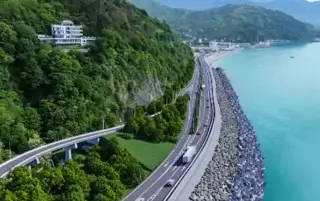 Construction of the Batumi–Sarpi Highway Begins in Georgia
 Baltic Property Investment Accelerates in 2026
 Hong Kong and Singapore Renew Their Expat Rivalry
Snow and snow drought reshape US winter travel
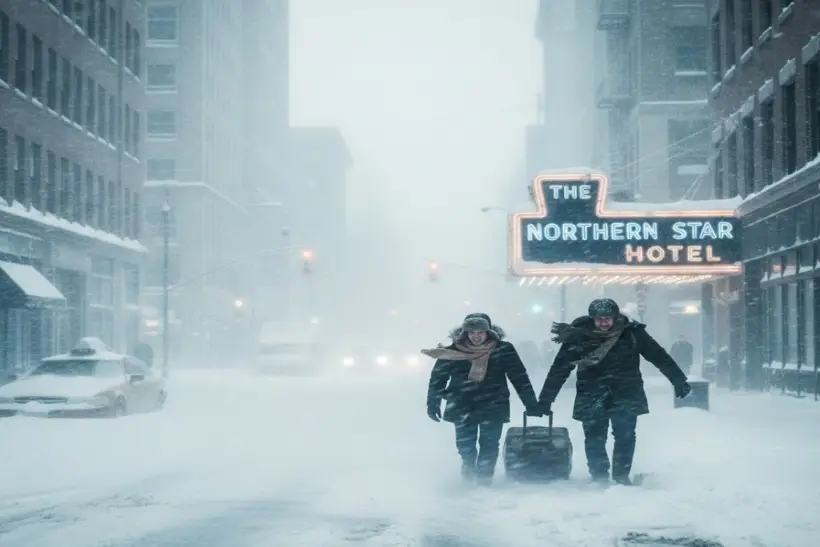
Winter 2026 splits the US into two weather economies
Winter 2026 is unfolding as a season of sharp contrasts for American tourism. Parts of the Northeast and Great Lakes continue to see disruptive snow events that complicate road travel and short breaks, while large areas of the West face unusually warm conditions and thin snowpack that undermine the reliability of winter sports at lower elevations. Recent reporting has described how a historically mild Western winter is already straining resort towns and seasonal businesses, even as other regions manage repeated storm impacts.
New England: storm cycles, travel disruption and cautious demand
Across the Interior Northeast and New England, NOAA’s Weather Prediction Center has highlighted a pattern of snow spreading through upstate New York and into New England, including Maine, with periods that can intensify enough to affect commuting and tourist transfers to mountain areas. In Massachusetts, state authorities issued preparedness guidance ahead of significant snow and extreme cold, encouraging behavior that reduces traffic pressure and reinforces the message that non-essential travel can quickly become risky. New York State likewise communicated a full-scale response posture during a major storm period in January 2026, including restrictions and warnings aimed at limiting travel.
For tourism, these conditions typically compress booking windows, increase cancellation sensitivity and push demand toward lodging that minimizes driving, especially for ski-oriented trips.
Vermont: winter visitors keep spending despite volatility
Vermont offers a useful benchmark for winter tourism resilience. Its Winter Visitor Tracking report shows that travel parties in paid lodging spend about $454 per day, while day trippers spend about $186 per day, with total trip spending for paid-lodging visitors around $1,770. Visitor sentiment remains exceptionally strong: 96% say they would recommend Vermont, and 95% report satisfaction with their visit.
That combination of repeat visitation, clear winter product and high satisfaction can soften the impact of short-term disruption, even when regional travel conditions are uneven.
The West: snow drought pressures lower-elevation winter products
In the West, the risk is not too much snow but too little. NASA has described snow drought conditions in early 2026 using snow water equivalent levels below the 20th percentile for the date, with the most acute impacts noted across states including Washington, Oregon, Colorado, Utah, Arizona and New Mexico. Drought.gov has reinforced the scale of the issue in recent updates, linking the pattern to monitoring data and emphasizing how widespread low snowpack conditions can be.
For the travel economy, this translates into shorter windows of “guaranteed winter,” higher operating costs, and a shift of demand toward higher-elevation resorts that retain snow more consistently.
Colorado and New Mexico: big tourism numbers, higher winter sensitivity
Colorado’s tourism office reported that tourism contributed $28.5 billion to the state economy and supported 188,210 jobs in 2024, with 95.4 million visitors recorded that year. New Mexico’s economic impact report states that 42.6 million visitors spent $8.8 billion in 2024, generating a total economic impact of $12.0 billion. These large baselines provide resilience, but they also mean that mountain communities dependent on winter revenue can feel snow volatility quickly.
Midwest and Great Lakes: lighter snow, steady but cautious mobility
In several Great Lakes and Midwest markets, winter travel may be less headline-driven than in New England, yet mobility risks remain meaningful when light snow and local bands affect roads. Minnesota’s visitor economy alone illustrates the scale: 81.6 million visitors spent $14.7 billion in 2024, generating a total economic impact of $24.7 billion. Iowa’s report notes 46.1 million visitors and $7.5 billion in visitor spending in 2024, with a total economic impact of $11.2 billion, underscoring why even “moderate” winter disruption matters.
What travelers and operators should expect next
Winter 2026 is pushing demand toward flexibility and reliability. In snow-hit states, travelers increasingly prioritize proximity to core activities, conservative driving plans and booking terms that reflect sudden warnings and restrictions. In the West, snow drought conditions encourage elevation-driven choices, shorter lead times, and backup itineraries that can deliver value even when slopes at lower elevations look more like late autumn than mid-winter.
As International Investment experts note, the 2026 season is redefining US winter tourism risk in two directions at once: the East is absorbing repeated logistics shocks from heavy snow events and travel advisories, while the West is confronting demand erosion in areas where snow scarcity undermines the winter promise, accelerating a market shift toward destinations that can offer more predictable conditions.