







read also
 Vienna Leads Rentals, Alpine Resorts Earn More
 US Prepares to Revoke Up to 200,000 Visas of Asylum Applicants
 Denmark Pushes EU Toward Tougher External Borders
 New-Build Home Prices in Russia Rise 34% in Three Years
 Singapore Core Inflation Hits Highest Since 2024
 High Prices Cool Hong Kong New-Home Demand
Вusiness / News / Analytics / Russia / USA / Kazakhstan / United Arab Emirates / Canada / Argentina / China 08.01.2026
OPEC Will Not Increase Oil Production Levels in the First Quarter of 2026
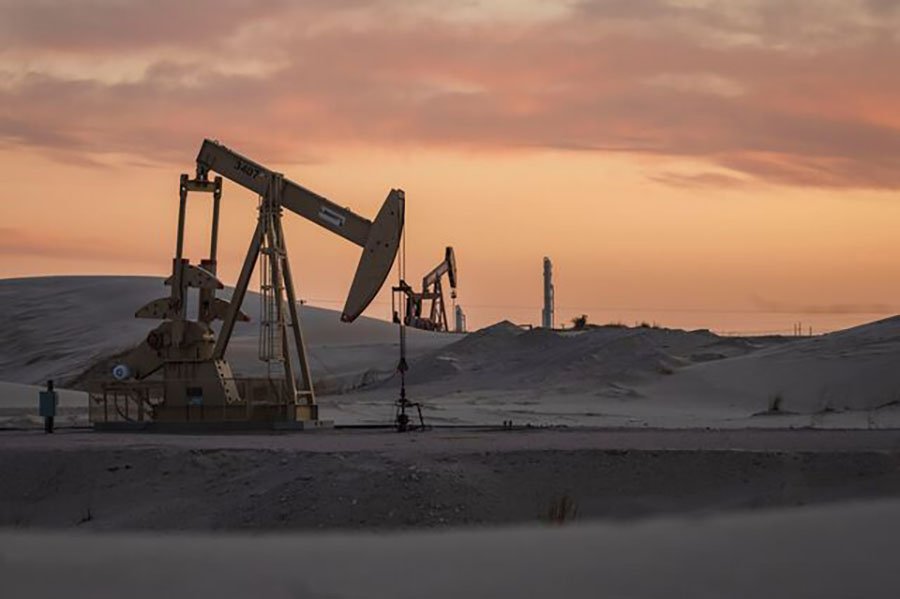
Photo: Bloomberg
Key OPEC members led by Saudi Arabia and Russia have agreed to keep oil production volumes unchanged through the end of the first quarter of 2026, Bloomberg reports. The alliance has opted for a wait-and-see approach amid a supply surplus and in anticipation of greater clarity around the situation in Venezuela.
Weak Prices and Excess Supply
Conditions in the global oil market remain strained amid low prices and expectations of a record supply surplus. Crude is trading near its lowest levels in almost four years, while analysts point to a combination of slowing demand and continued growth in production both within the agreement and beyond it.
Venezuela remains an additional source of uncertainty, as recent actions by the United States have influenced market expectations. At the same time, the detention of Venezuelan President Nicolas Maduro has not resulted in immediate disruptions to the country’s oil infrastructure. Key facilities, including the Jose port, the Amuay refinery and oil fields in the Orinoco Belt, continue to operate, while the global oil market as a whole is showing an ability to absorb this shock. Against the backdrop of weak demand and excess supply, the market has not seen a sharp price reaction, despite ongoing short-term volatility.
Venezuela: Potential Without an Immediate Impact
Venezuela holds the world’s largest proven oil reserves, but current production levels remain limited. The country currently produces about 800,000 barrels per day — roughly three times less than a decade ago and under 1% of global supply. Additional pressure on Venezuela’s oil sector has come from recent actions by Washington, including the interception and pursuit of tankers, which has led to a roughly 25% reduction in output in the key Orinoco Belt.
If the sanctions regime is eased, oil production in Venezuela could increase by around 150,000 barrels per day within a few months, according to estimates by Kpler. However, restoring production to levels of 2 million barrels per day or more would require major institutional reforms and substantial investment by international oil companies.
Geopolitical Factors and OPEC Strategy
Geopolitical risks facing the oil market are not limited to Venezuela. Tensions between Saudi Arabia and the United Arab Emirates have intensified amid the conflict in Yemen, where a Saudi-led coalition carried out airstrikes last week against a group backed by the UAE. At the same time, sanctions pressure on Russia persists, the war in Ukraine continues to affect supplies from Kazakhstan, and instability in Iran has been heightened by a currency crisis that has triggered a wave of protests.
In April 2025, the alliance began gradually returning to the market production that had been cut since 2023, seeking to regain lost market share. The total volume of these cuts was estimated at 3.85 million barrels per day, but the actual increase has fallen short of targets due to technical constraints in a number of countries and the need to offset earlier overproduction. At present, about 1.2 million barrels per day of these volumes remain inactive. Further steps are expected to be discussed at a meeting of eight member states of the agreement on February 1.
Rising Supply Outside the Agreement
Price dynamics reflect the current market balance. Brent crude futures in early January 2026 settled below $61 per barrel, down by about 18% over 2025, marking the steepest annual decline since the 2020 pandemic. Prices are under pressure from rising supply both from traditional exporters and new producers.
Guyana has boosted its oil exports to nearly 1 million barrels per day over the past four years, overtaking Venezuela. The UAE shipped the largest volumes of crude abroad in years in December. Brazil has reached a record 4 million barrels per day, production is rising in Canada, Argentina and China, and the United States is preparing to set a new all-time high in output as part of its energy independence policy.
Even sanctioned producers, including Russia, Iran and Venezuela, continue to find buyers, primarily in Asia, further reinforcing the oil surplus. According to Bloomberg, a total of about 1.3 billion barrels of crude are currently on global shipping routes, underscoring the scale of the supply glut.
Market Assessments and Outlook
Rystad Energy analyst Jorge Leon notes that under current conditions OPEC is prioritizing caution and flexibility, avoiding moves that could add uncertainty to an already volatile market. Political developments in Venezuela, in his view, add another layer of uncertainty but do not yet warrant a revision of the alliance’s strategy.
The International Energy Agency expects the market to face a supply surplus of around 3.8 million barrels per day in 2026. Traders also point to the risk of sustained overproduction, under which price dynamics will be driven more by the scale of supply growth than by short-term geopolitical factors.
Analysts at International Investment note that a combination of factors — rising output both within OPEC and beyond the agreement, the continued flow of sanctioned barrels and moderate demand growth — is creating a structurally oversupplied market environment. In this context, OPEC’s decision to pause further production increases appears aimed at limiting downward pressure on prices rather than signaling a shift toward a supply deficit.