







 Vietnam Mortgage Surge Pushes Homes Out of Reach
 Lithuanian Apartment Prices Accelerate Across Major Cities
 London Flats Lose Value Ahead of Leasehold Reform
 Construction of the Batumi–Sarpi Highway Begins in Georgia
 Baltic Property Investment Accelerates in 2026
 Hong Kong and Singapore Renew Their Expat Rivalry
Air traffic controllers strike in Spain: Seville and 13 other airports at risk
The Spain Post
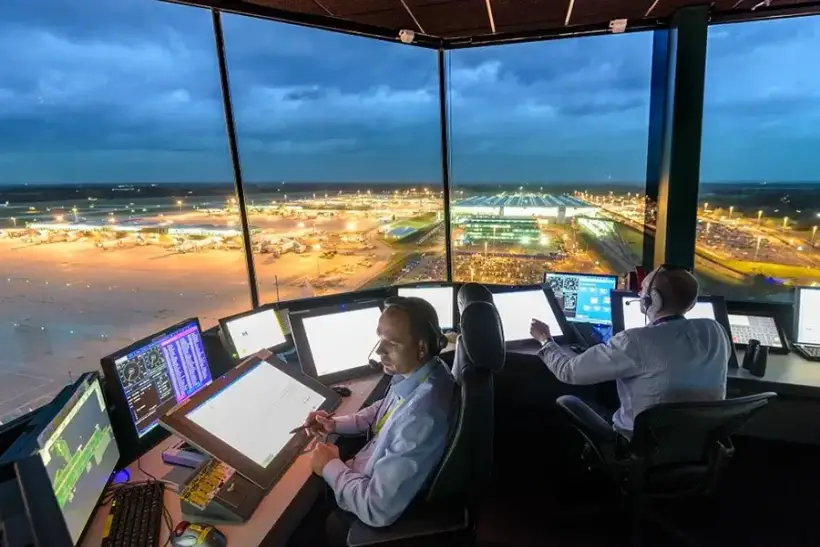
An indefinite strike by air traffic controllers in Spain could affect operations at 14 airports across the country, including Seville Airport. The action is set to begin on Friday, April 17, coinciding with the spring festival season and the final of the Copa del Rey football cup, a period of traditionally sharp increases in passenger traffic, reports ABC.
Strike ahead of peak season
The action was called by the unions Unión Sindical de Controladores Aéreos and Comisiones Obreras. They announced an indefinite strike involving air traffic controllers working in control towers operated by Saerco. The strike is scheduled to begin on Friday, April 17, just ahead of the Feria de Abril and the Copa del Rey final, when air traffic demand typically surges.
In addition to Seville Airport, 13 other airports across Spain are expected to be affected, including Jerez de la Frontera, as well as facilities in Madrid (Cuatro Vientos), the Canary Islands—Lanzarote, Fuerteventura, La Palma, El Hierro and La Gomera—and airports in Castellón, Burgos, Huesca, Ciudad Real, Vigo and A Coruña. Some of these handle cargo and charter flights, while others serve regional and tourist traffic.
Organizers are demanding increased staffing levels across all affected control towers, strict compliance with rest regulations, and working conditions aligned with safety and professional standards. If no agreement is reached, the strike could seriously disrupt air traffic in Spain during one of the busiest periods of the year.
Causes of the dispute: safety and working conditions
Controllers stress that the strike has no economic motivation and is not related to demands for higher salaries or additional time off. Instead, they argue it is a matter of flight safety and the need to normalize working conditions. In many towers, staffing levels have reportedly fallen below the minimum required to manage current traffic without overloading personnel.
The unions list several key grievances, including on-call duties with short notice, cancellation of previously approved holidays, shift assignments issued only days in advance, and insufficient staff rotation. They claim these practices violate collective agreements and may negatively affect air traffic safety.
In their official notification, the unions also accuse the company of reducing staff without adequately replacing those who left. An air traffic controller at Jerez Airport noted that traffic volumes have already returned to pre-pandemic levels, while staffing has not. “We simply don’t have enough people, and that is unacceptable for a system of this scale,” he said on condition of anonymity, fearing repercussions from management.
The unions emphasize that the issue is not about isolated incidents but a systemic crisis, resulting from years of staff reductions without sufficient replacement, leading to workload pressure and operational strain.
Negotiation attempts
USCA and CCOO representatives say they attempted to open negotiations with Saerco before calling the strike. However, meetings were repeatedly postponed or canceled by the employer. Management rejected the strike demands as financially unsustainable and pointed to competitive conditions in the tower services market. SAERCO competes with the state-owned operator Aena for contracts at regional airports and must maintain strict cost control to remain competitive.
The dispute then entered mediation through the Servicio Interconfederal de Mediación y Arbitraje, a mandatory step aimed at resolving disagreements before industrial action. The process began on April 10, when both sides held their first meeting to explore possible compromises.
Conclusion
The air traffic controllers’ strike could worsen conditions in European airports already experiencing significant disruptions following the full rollout of the Entry/Exit System (EES). The new biometric border control system, mandatory from April 10, 2026 for non-EU travelers, including those from the United Kingdom, has led to overcrowded terminals and long processing delays.
The most severe disruptions have been reported in Geneva, Lisbon, Malta, Brussels, Amsterdam and Milan. At Milan’s Linate Airport, passengers fainted due to long waits, while families with children were left stranded in control zones. In one incident, around 100 passengers on an easyJet flight to Manchester missed boarding and the aircraft departed without them due to crew duty-time restrictions.
Airlines and airports blame each other for the failures, citing staff shortages and the complexity of implementing the system. Ryanair CEO Michael O’Leary described the situation as a “catastrophe” and a “mess,” criticizing the rollout.
Analysts at International Investment note that, against this backdrop, the air traffic controllers’ strike in Spain affecting 14 airports, including Seville, increases the risk of further delays during the peak travel season. Together, these factors add pressure to Europe’s aviation system and raise the likelihood of schedule disruptions, with negative consequences for tourism and business travel.