











Global Oil Stocks Are Depleting at Record Pace Due to the War with Iran
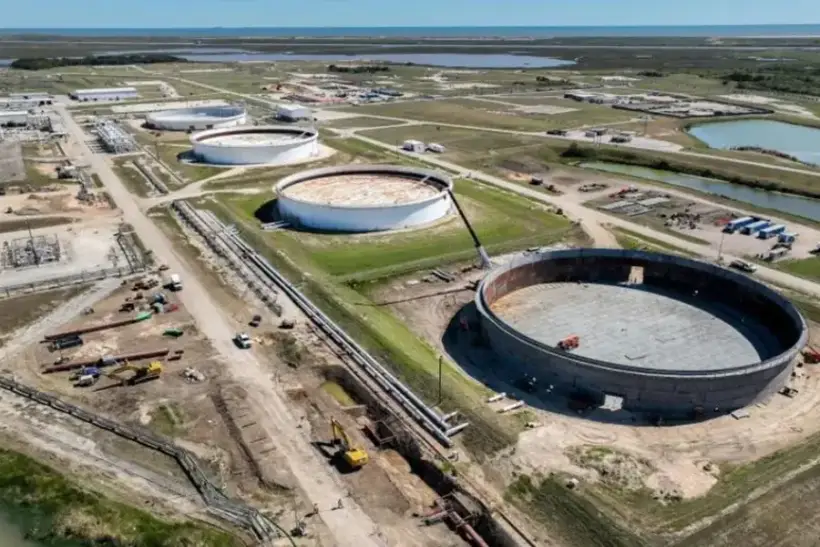
Global oil inventories are shrinking at an unprecedented speed due to the war around Iran and nearly two months of supply disruptions through the Strait of Hormuz — a key export route from the Persian Gulf. The rapid depletion of reserves is increasing the risk of a new price spike, fuel shortages, and pressure on the global economy, Bloomberg reports.
Pace of Decline in Oil Inventories
The global market is rapidly losing the buffer that usually helps absorb supply disruptions. According to Morgan Stanley, global oil inventories fell by around 4.8 million barrels per day between March 1 and April 25. This significantly exceeds the previous record quarterly drawdown tracked by the International Energy Agency (IEA). About 60% of the decline came from crude oil, with the rest from refined products.
Nearly two months after the effective closure of the Strait of Hormuz, the market has lost more than one billion barrels of supply. Prolonged disruptions have already begun to weaken global fuel demand, as high prices and supply shortages force consumers to cut purchases.
Chevron Corp. Chief Financial Officer Eimear Bonner said that a significant share of inventories and spare capacity has already been depleted. She estimates that fuel-import-dependent countries could face critical shortages as early as June–July. Goldman Sachs notes that visible global oil inventories have already approached their lowest levels since 2018. At the same time, the bank sees early signs of a slowdown in inventory draws, mainly due to weaker demand in China, the world’s largest oil importer.
Risk of Oil Shortages
Even if oil physically remains in storage tanks, not all volumes can be used. JPMorgan Chase & Co. Head of Global Commodities Research Natasha Kaneva explains that the global storage system has an “operational minimum” — a level below which pipelines, terminals, and storage facilities can no longer function properly.
Oil inventories act as a buffer for the global energy system, but not every barrel can be drawn. JPMorgan warns that if restrictions in the Strait of Hormuz persist, OECD countries could face “operational stress” as early as June and approach critical minimum levels by September.
Fuel Situation in Asia
Vortexa Ltd. Senior Market Analyst Xavier Tang notes that countries with limited domestic production and refining capacity are particularly vulnerable. Traders identify Indonesia, Vietnam, Pakistan, and the Philippines as key risk zones, where critical inventory levels could be reached within a month. Gunvor Group Head of Research Fredric Lasser says gasoline shortages are likely to be the first major issue, particularly in Pakistan, Indonesia, and the Philippines.
At the same time, Asia’s largest economies remain relatively stable. China and South Korea are considering resuming refined product exports previously restricted due to the crisis. Fuel storage levels in Singapore remain above seasonal averages. Kayrros reports that China’s oil inventories have even increased during the conflict.
Jet Fuel in Europe
In Europe, the main pressure point is the jet fuel market. According to Insights Global, jet fuel inventories in the Amsterdam–Rotterdam–Antwerp hub have fallen by one-third since the start of the war, reaching a six-year low. Research manager Lars van Wageningen notes that the decline has continued steadily since February. The approaching summer travel season typically increases jet fuel demand and accelerates inventory depletion in storage systems.
Experts say the most exposed countries are the United Kingdom, Germany, and France due to high passenger traffic and limited domestic production capacity.
Strategic Oil Reserves
Governments have already agreed on a record use of strategic reserves. The International Energy Agency is coordinating the release of 400 million barrels of oil from emergency stocks. The United States, acting as the “supplier of last resort” for the global market, has so far used about 79.7 million barrels out of the pledged 172 million. Full implementation of the plan could push the U.S. Strategic Petroleum Reserve to its lowest level since 1982. Germany has also re-offered oil and jet fuel previously unsold and says it is prepared to take additional measures if conditions worsen.
However, governments face a dilemma: the more oil is released to stabilize prices, the faster the protective buffer is depleted. Plains All American Pipeline LP CEO Willie Chiang expects countries to begin rebuilding strategic inventories after the conflict ends, potentially even above pre-war levels. This could create additional demand and keep prices elevated for an extended period.
Rising Oil Prices and Market Pressure
The war has already driven up oil and key fuel prices, increasing inflationary pressure and risks to the global economy. India has faced liquefied petroleum gas shortages, airlines have canceled flights, and gasoline prices have risen in the United States. Analysts at International Investment note that the global oil market is rapidly shifting into a zone of heightened vulnerability: inventories are shrinking, buffer capacity is eroding, and regional imbalances are widening.
The key risk now lies in the system’s ability to withstand further shocks without sharp price spikes. Under these conditions, the market becomes more sensitive to any political or logistical disruptions, and restoring balance could take months even after stabilization around the Strait of Hormuz. In the near term, the main pressure factor remains the combination of limited inventories and high supply uncertainty. This makes the energy market less predictable and increases dependence on decisions by governments and actions of major oil exporters and importers.