






 Six International Consortia to Compete for Tbilisi City Train Project: ADB Releases Shortlist
 Accor and Hard Rock Link Hotel Distribution and Loyalty
 Portugal Leads EU Rise in House Prices Relative to Income
 Tbilisi Districts: Where Are Prices Highest and Sales Strongest?
 Seoul Hotel Demand May Outpace Room Supply Until 2032
 Sweden Property Investment Climbs 40% in Nine Months
Over 15,000 Apartments for Sale in Batumi Residential Real Estate Market
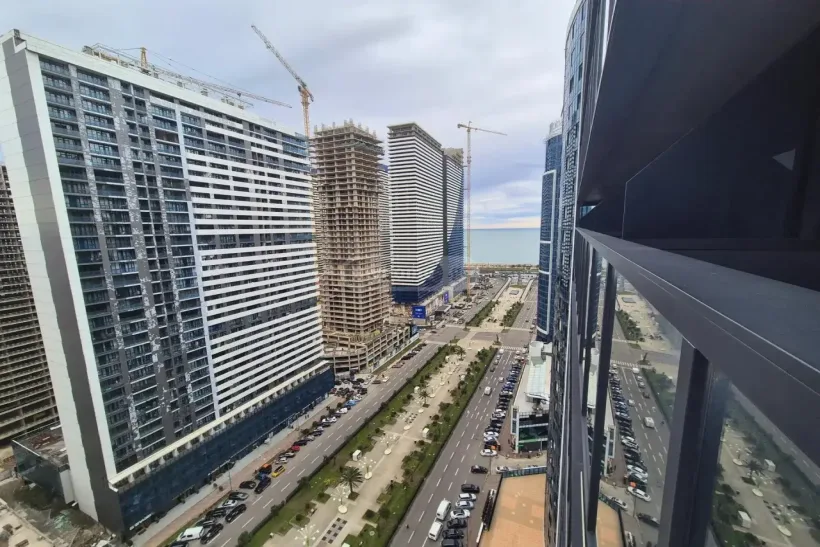
A substantial stock of apartments for sale has formed in the Batumi residential real estate market. In the projects surveyed by Galt & Taggart, their number stands at 15 354 units. At the same time, despite a 30% increase in developer sales, the large volume of new projects on the market and planned supply for the coming years create serious challenges for the sector in terms of competition and sustaining demand.
In parallel with the growth in demand in the Batumi residential real estate market, supply is also expanding substantially. Construction of new residential projects continues in the city, while the volume of apartments listed for sale in developer portfolios remains substantial. This circumstance is one of the most critical factors for future market development, as along with price and sales trends, how quickly the sector can absorb existing and future supply is becoming increasingly vital.
According to Galt & Taggart's 8-month review for 2026, based on a systematic survey conducted in September across more than 40 residential projects under construction, the number of apartments for sale reached 15 354 units. The study covered about 40% of the primary market and serves as one of the key sources for assessing the state of the Batumi development sector.
Number of apartments on sale has surged in recent years
According to the Galt & Taggart study, the volume of unsold apartments in the surveyed projects has increased sharply over recent years.
In 2022, this figure was 5 935 units, in 2023 — 11 597, in 2024 — 14 423, and in 2025 it reached 16 386 units. As of 8 months into 2026, the number of apartments for sale stood at 15 354.
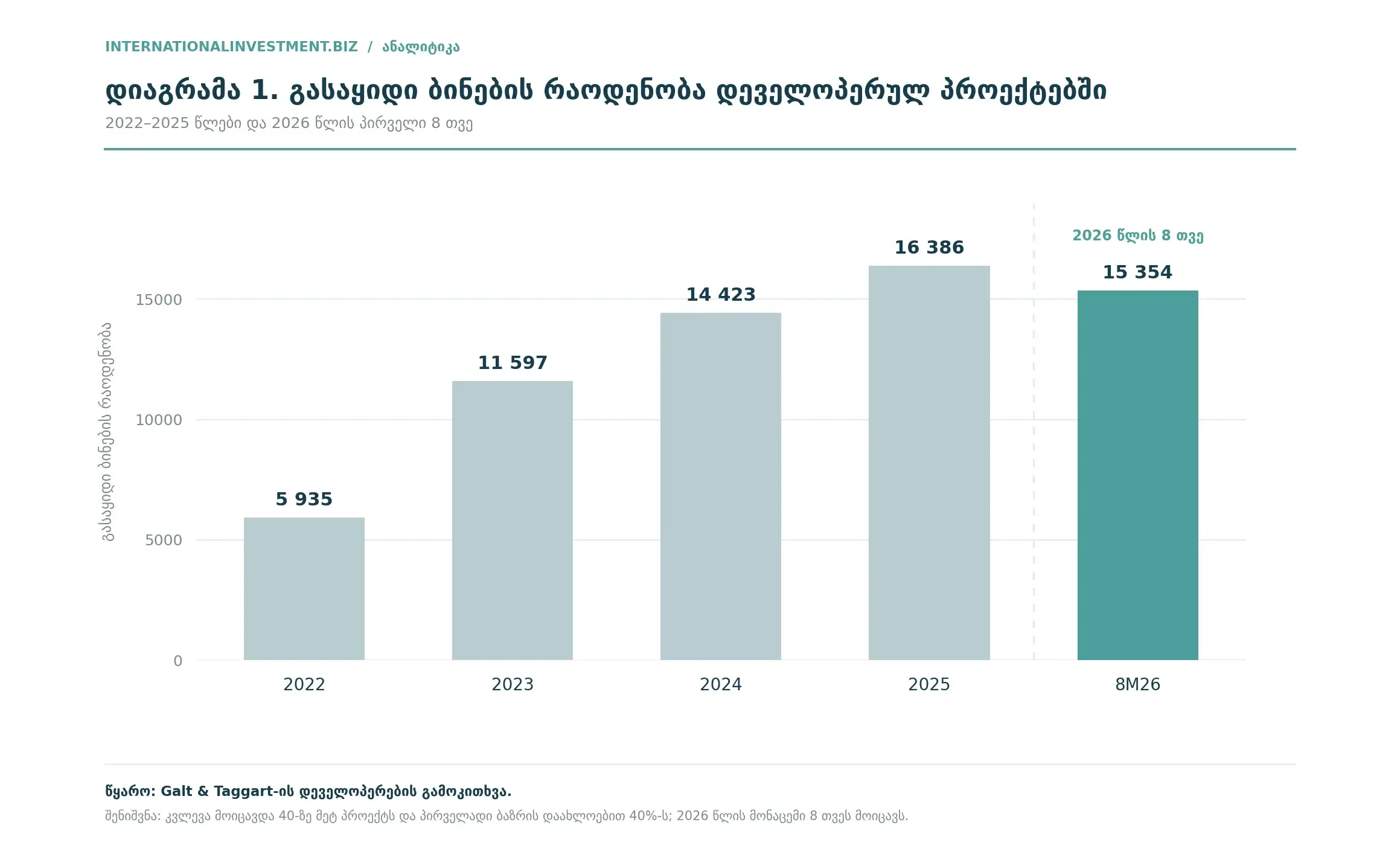
The figures show that the supply of available living space in the surveyed projects has expanded substantially since 2022. A particularly rapid surge was recorded in 2023, when the indicator nearly doubled compared to the previous year. Growth continued in subsequent years, albeit at a more moderate pace.
As for 2026, although the 15 354 apartments recorded as of August are below the 2025 figure, it still points to a substantial volume of supply on the market. That said, directly comparing full-year data for 2025 with the eight-month results of 2026 would be inaccurate.
At the same time, it is important to note that this figure reflects the number of apartments for sale specifically in the surveyed projects, rather than the total aggregate volume of the Batumi residential market.
Developer sales rose by 30%
Despite the substantial volume of supply, developer sales momentum remains positive.
According to the survey of projects selected by Galt & Taggart, during the first eight months of 2026, developers sold 3 273 apartments, compared to 2 518 units in the same period of 2025. Consequently, primary market sales in the surveyed projects grew by 30% year-on-year.
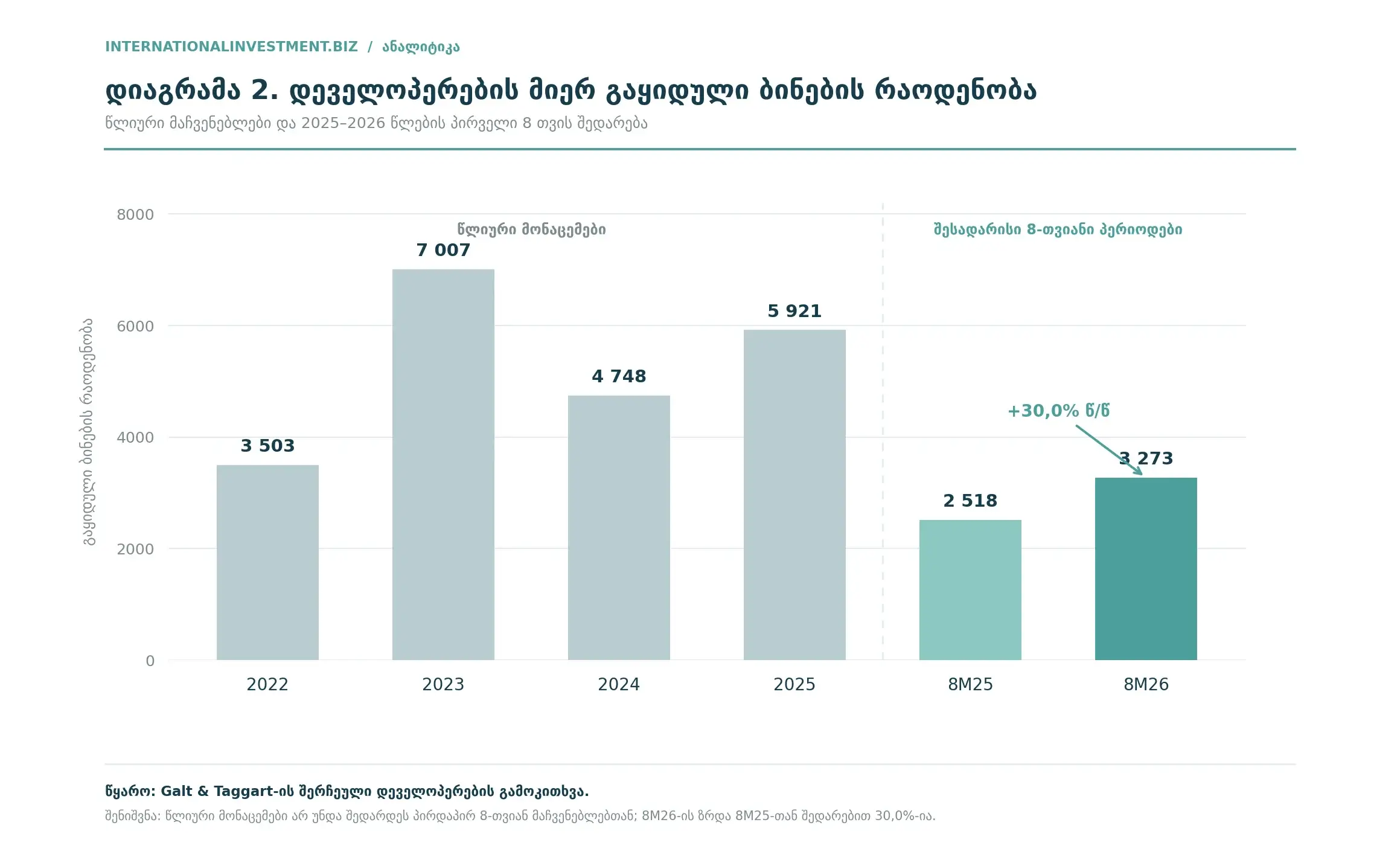
This is a significant indicator confirming that, despite the large volume of supply on the market, developers managed to boost sales.
However, sales growth alone does not imply rapid absorption of all market supply. For a comprehensive assessment, what matters is not only the volume of sold apartments, but also the launch rate of new projects, inventory dynamics, and construction completion timelines.
The study provides further insight into market conditions in this regard. In particular, the acceleration in primary market sales is taking place against the backdrop of developer inventory remaining at elevated levels.
What share of apartments remains unsold in upcoming projects?
Data on the distribution of apartments offered for sale by completion date warrant special attention.
According to Galt & Taggart, in projects scheduled for completion in 2026, 94% of apartments have already been sold, leaving only 6% for sale.
In projects due for completion in 2027, the share of sold apartments stands at 70%, with 30% remaining on the market.
As for later delivery dates — projects with completion in 2028–2030, 52% of apartments have been sold, while 48% are still up for sale.
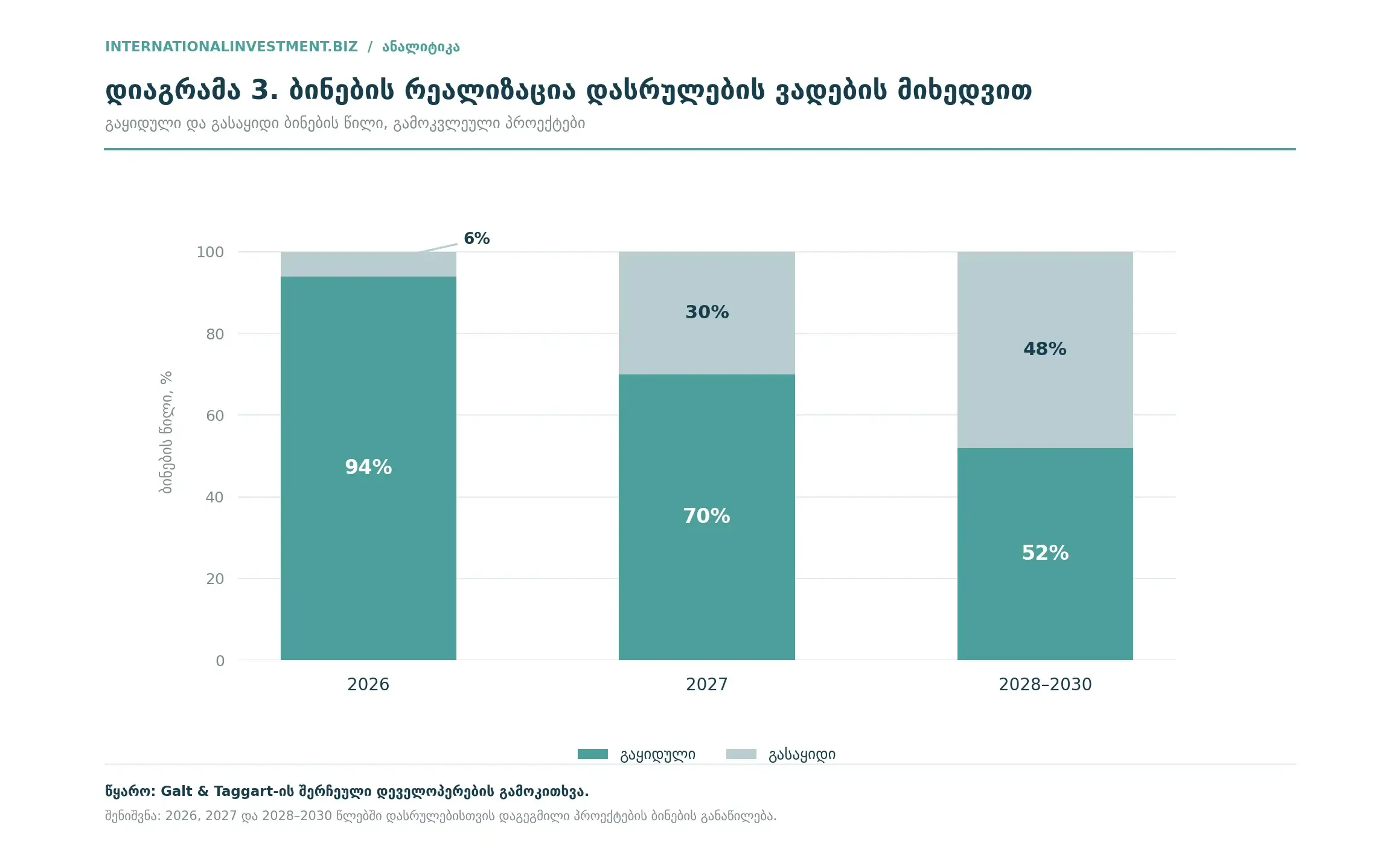
This picture highlights several key points. Specifically:
First, projects nearing completion show high absorption rates. In properties scheduled for delivery in 2026, most units have already been purchased, demonstrating steady demand in this category and high project liquidity.
On the other hand, in projects slated for delivery in 2028–2030, nearly half of the apartments are still in the sales pipeline. Consequently, developers will need to absorb a substantial volume of accumulated supply in the coming years.
This circumstance is particularly noteworthy given that new project launches continue and the prospect of additional market supply persists.
Rising supply will intensify competition among developers
The simultaneous presence of a large volume of supply and sales growth in the Batumi real estate market does not necessarily indicate an impending crisis of oversupply. Nonetheless, such a situation creates all prerequisites for heightened competition.
When numerous new projects enter the market, buyers enjoy wider choice. Accordingly, it becomes essential for developers not simply to launch a project and put units on sale, but to establish tangible competitive advantages.
In these conditions, decisive competitive factors may include project location, construction quality, adherence to completion schedules, infrastructure, functional layout parameters, and payment terms.
Pricing plays a particularly crucial role. Amid abundant supply, developers' price growth potential may be constrained — especially in projects whose product lacks clear differentiation from comparable market offerings.
At the same time, high-quality projects in prime locations with a clear investment concept have a much stronger chance of maintaining their competitive edge.
Will the market absorb the new supply?
One of the central questions for the future development of the Batumi residential real estate market will be the successful monetization of existing and planned projects.
According to Galt & Taggart, demand remained strong over the first eight months of 2026, and developer sales in the surveyed projects grew by 30% year-on-year. Nonetheless, the large volume of unsold apartments underscores the critical importance for the sector to maintain this momentum.
In current conditions, market sustainability will hinge on an interplay of factors: demand from domestic and international buyers, tourism growth, investment yield on real estate, project launch pace, and buyer purchasing power.
At the same time, an increase in listings should not be viewed solely as direct proof of market saturation. A definitive conclusion requires a comprehensive evaluation of new unit launch and sales rates, overall project scales, completed housing stock, vacancy levels, and genuine demand.
Sustained demand in Batumi is a positive sign, but for developers, the decisive factor is no longer merely breaking ground on new projects, but their timely and efficient commercialization.
Summarizing the findings of the study, the primary defining factor for the next phase of the Batumi residential real estate market will be demand's capacity to absorb current and upcoming supply. With over 15 thousand apartments offered for sale, maintaining competitiveness alongside sales growth is becoming a top priority for the development sector.
Source: Galt & Taggart — "Batumi Residential Real Estate: 8M 2026 Review", 5 November 2026.
InternationalInvestment.biz — English edition