







read also
 Fines for Illegal Rentals in Spain Reach €800,000
 Australia’s Spring Auctions Rise but Remain Well Below 2025
 Number of Foreigners Holding Turkish Residence Permits Exceeds 1.27 Million
 Demand from Russian Tourists for Holidays in Georgia Rises by 20–25%
 Montenegro Property Buying Costs in 2026
 Four in Ten Companies Would Not Choose Slovakia
Canada’s Air Travel Meltdown: 75 Cancellations, 864 Delays and Thousands Stranded Across Toronto, Montreal, Vancouver and Beyond
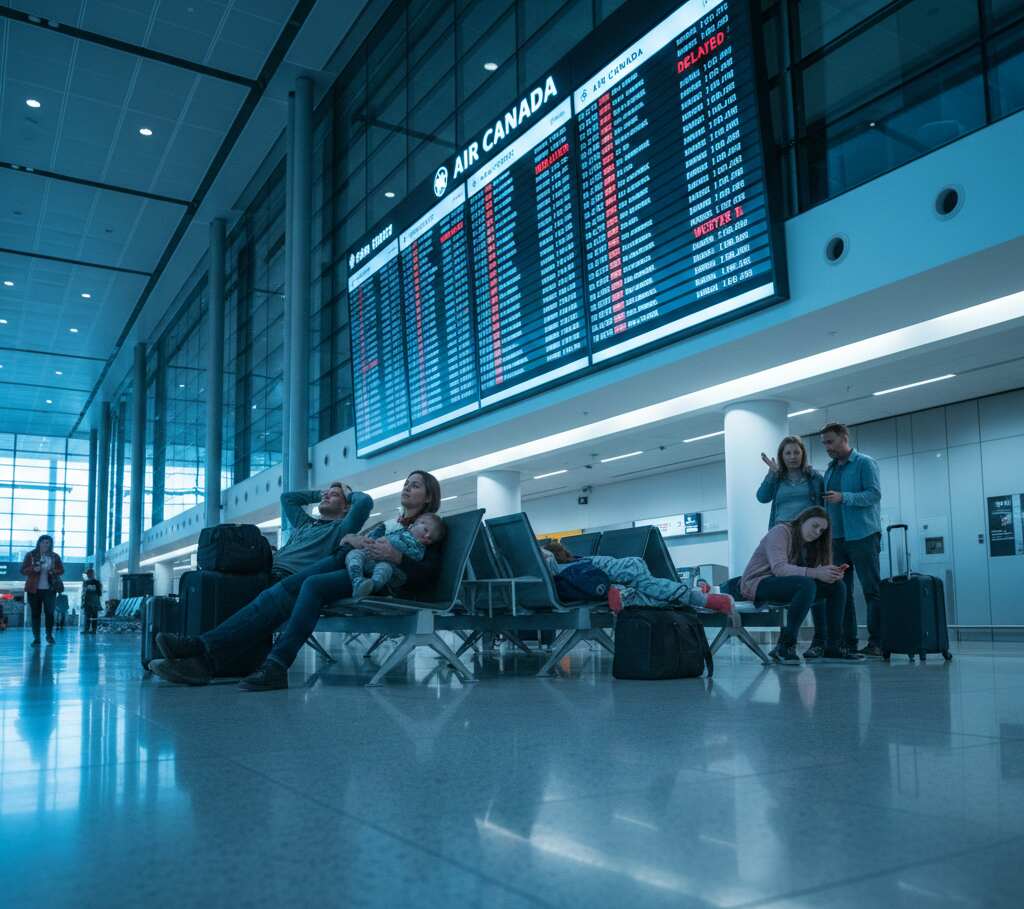
Canada’s aviation network faced severe operational turbulence today, as widespread delays and cancellations affected major international and regional airports. A total of 75 cancellations and 864 delays disrupted travel across the country, leaving thousands of passengers stranded, re-routed or significantly delayed. The strongest impact was observed in Toronto Pearson, Montreal–Trudeau and Vancouver International Airports, but the ripple effects reached Calgary, Ottawa, Edmonton and Kelowna, confirming that the disruption was national in scope.
The breakdown did not stem from a single carrier or singular operational factor. Instead, both Canadian flag carriers and international airlines experienced significant setbacks. WestJet, Air Canada, Envoy Air, SkyWest and several other operators contributed to the day’s unusually high number of irregular operations.
Toronto, Montreal and Vancouver: National Gateways Under Extreme Pressure
Toronto Pearson International Airport recorded the highest concentration of disruption, reporting 32 cancellations and an extraordinary 368 delays. The scale of operational slowdown suggests that capacity limits were severely tested, leading to cascading effects across connecting flights nationwide.
Further east, Montreal–Trudeau International Airport reported 14 cancellations and 151 delays, demonstrating that the impact stretched far beyond a single geographic region. Meanwhile, Vancouver International Airport registered 13 cancellations and 143 delays, underlining the dual-coast nature of the crisis.
Mid-sized airports such as Calgary, Ottawa, Edmonton and Kelowna were similarly challenged. Calgary logged nearly a hundred delays. Ottawa faced dozens of irregular operations, while Edmonton experienced notable interruptions. Kelowna, a key regional gateway in British Columbia, registered multiple cancellations and delays, signalling that no part of the network was immune to strain.
Disruption Across Major Airline Groups and International Carriers
The majority of operational setbacks were absorbed by Canada’s primary airline groups: Air Canada (including Jazz Aviation) and WestJet (including WestJet Encore). Air Canada and Jazz together reported 26 cancellations and more than 300 delays across major hubs. Toronto saw a heavy concentration of inconsistencies, with additional operational challenges emerging in Montreal, Vancouver, Calgary and Ottawa.
WestJet and WestJet Encore also reported substantial irregularities, totalling 27 cancellations and 110 delays. A particularly high proportion of cancellations in Kelowna was associated with WestJet Encore, indicating pressure on regional schedules.
International and smaller operators—including Envoy Air, Porter Airlines, SkyWest, United Airlines, Endeavor Air, PAL Airlines, Pacific Coastal Airlines and American Airlines—were similarly affected. Their involvement confirms that the operational strain extended far beyond domestic carriers, underscoring the systemic nature of the disruption.
Tourism and Economic Impact: A Wider Chain Reaction
The nationwide surge in delays and cancellations is expected to have a tangible effect on local tourism flows. Travellers heading to major Canadian cities, including Toronto, Montreal and Vancouver, faced interrupted itineraries, missed lodging nights, cancelled events and reduced spending activity.
In Alberta, delays in Calgary and Edmonton may lead to missed connections for passengers intending to visit national parks and regional attractions. Kelowna’s disruptions could impede access to the Okanagan Valley’s tourism and wine region. Business travel in Canada’s major economic hubs also suffered, with time-sensitive meetings disrupted or entirely missed.
Such widespread irregular operations test the resilience of Canada’s tourism economy and highlight the vulnerability of aviation-dependent markets to operational shocks.
What Impacted Travellers Should Do Now
Travellers affected by cancellations or delays are urged to retain all relevant travel documentation, including boarding passes, confirmations and airline-issued notices. Rebooking should be initiated as early as possible through official channels provided by Air Canada, WestJet, Porter Airlines, American Airlines and other carriers.
Passengers should also closely monitor updates provided through airline mobile apps, email alerts and airport announcements. Given the volume of delays at major hubs like Toronto and Montreal, real-time information is essential for navigating gate changes, new departure times and updated rebooking options.
Expert Conclusion by International Investment
“The Canadian aviation disruption illustrates the fragility of high-density air networks when multiple hubs experience simultaneous overload. Such systemic breakdowns highlight the need for infrastructure upgrades, staffing resilience and improved operational forecasting. For investors and regional economies, events like these underscore the importance of integrating aviation stability into broader economic and tourism planning.”
Tags: Canada, aviation, delays, cancellations, Toronto, Montreal, Vancouver, travel, Air Canada, WestJet