







 Vietnam Mortgage Surge Pushes Homes Out of Reach
 Lithuanian Apartment Prices Accelerate Across Major Cities
 London Flats Lose Value Ahead of Leasehold Reform
 Construction of the Batumi–Sarpi Highway Begins in Georgia
 Baltic Property Investment Accelerates in 2026
 Hong Kong and Singapore Renew Their Expat Rivalry
Japan’s Real Estate Market Enters a New Selection Era

Japan’s real estate market is gradually entering a new phase where property movement is increasingly defined by whether locations continue to be chosen by residents and investors. Newly released data from Japan’s Ministry of Land, Infrastructure, Transport and Tourism (MLIT) shows that overall transaction activity is recovering, yet structural differences across regions and property types are becoming more pronounced.
The market is evolving into a more selective environment in which real housing demand, infrastructure accessibility and long-term regional development prospects play a central role in shaping buyer decisions.
Transaction activity rebounds across Japan
Recent data from MLIT indicates that corporate-related real estate transactions across Japan increased by more than 4% compared with the previous month. Deals involving office and commercial properties have shown particularly clear signs of recovery.
The increase reflects improving investor confidence and a gradual normalization of business activity in the property sector. However, beneath the overall growth, regional differences are becoming increasingly visible.
The data suggests that the market is not moving uniformly, but rather developing distinct patterns depending on location and property type.
Tokyo and regional markets begin to diverge
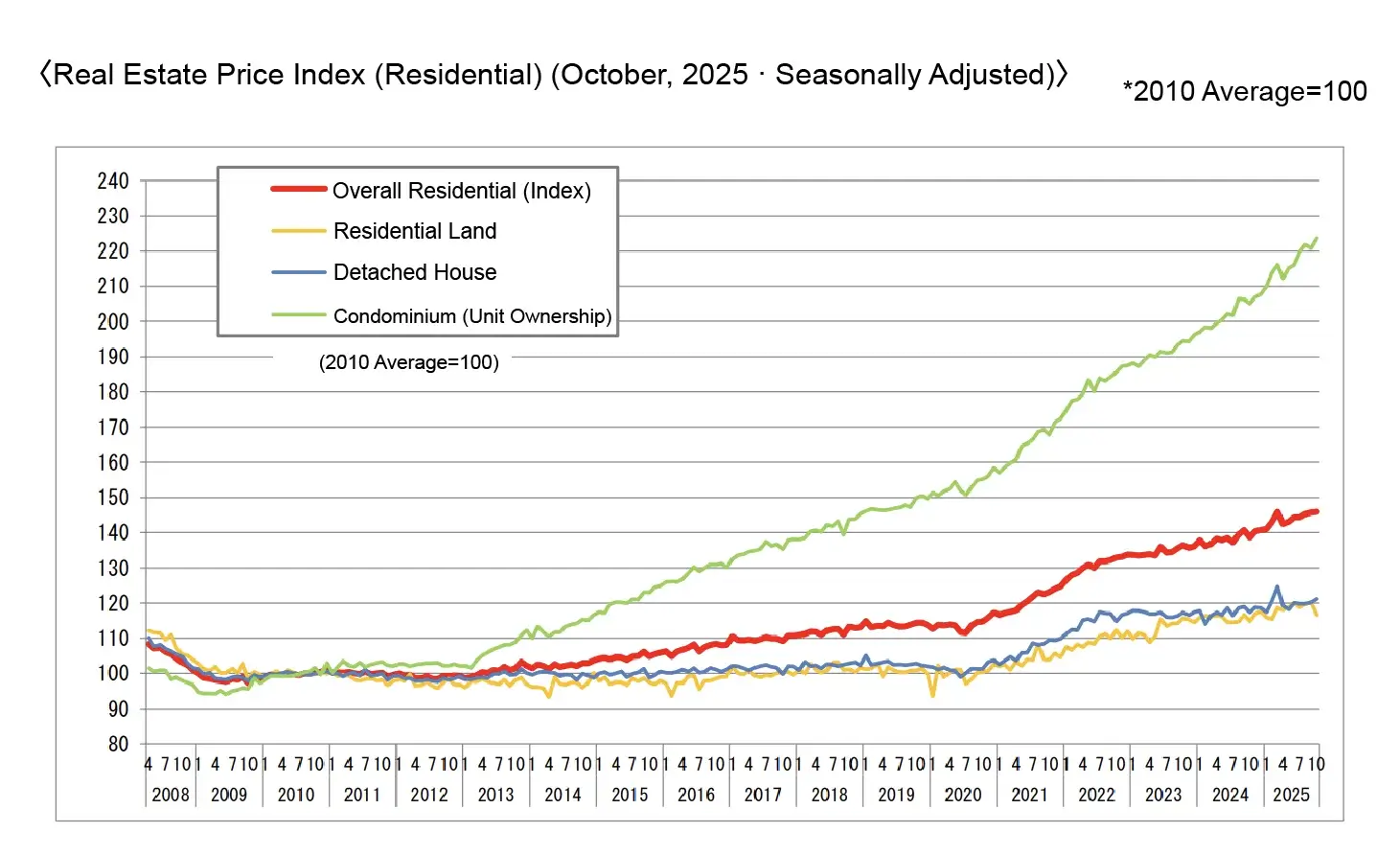
In Japan’s three largest metropolitan areas, including the Tokyo region, the market shows mixed signals. Transactions involving detached houses and business-use properties remain relatively stable, while condominium sales are experiencing slower momentum.
In central Tokyo especially, high price levels have made buyers more cautious. Rapid price growth in recent years has pushed housing costs to levels that discourage some potential buyers or prompt them to consider alternatives outside the capital.
Outside major metropolitan areas the picture is different. Transaction volumes are rising more clearly across several sectors. Because prices have not increased as sharply as in the capital, demand driven by actual residential needs remains relatively strong.
A similar pattern is visible in the resale housing market.
Osaka emerges as a regional market driver
The Kansai region is one of the areas showing particularly strong market activity. In Osaka Prefecture, both houses and apartments are seeing an increase in transactions.
Although the Tokyo metropolitan area is also recording rising transaction numbers, the pace of growth there remains slower than in many regional markets.
At the same time, price differences between central Tokyo and other regions are becoming more pronounced. In Tokyo, overall housing prices have slightly declined, while land prices have experienced a more noticeable adjustment. This suggests that price levels may have reached a point where buyers are becoming more cautious.
Meanwhile, home and land prices in Osaka and many regional cities are continuing to rise. With less overheating than Tokyo, demand appears to be shifting toward areas where prices better reflect real market conditions.
Logistics real estate grows while office demand slows
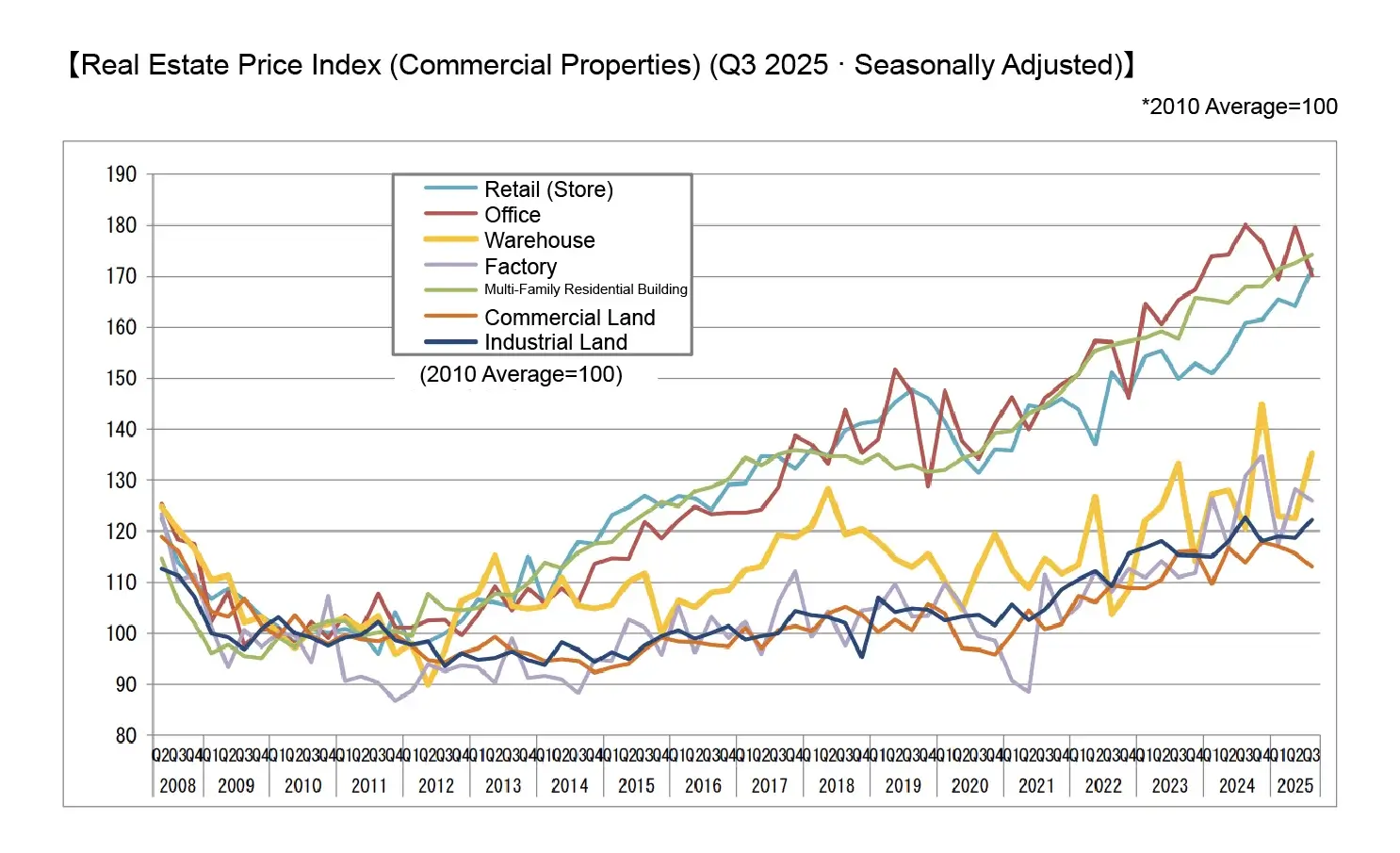
The contrast is also visible in commercial real estate segments. Demand for office space in major city centers is gradually slowing, reflecting structural changes in corporate space requirements.
At the same time, logistics warehouses and industrial land remain in high demand across the country. The continued growth of e-commerce and the restructuring of global supply chains are strengthening the strategic importance of logistics facilities regardless of location.
New transparency rules for large land transactions
Alongside market shifts, Japan is introducing an institutional reform aimed at increasing transparency in land transactions.
Starting in April 2026, companies conducting large-scale land deals will be required to disclose the nationality of their representatives and key decision-makers.
The new framework aims to clarify who is purchasing land and the intended purpose of its use. Transactions in major cities and strategically important areas are expected to receive closer scrutiny.
Although the regulation does not directly affect ordinary homebuyers, in the long term it may reduce opaque transactions and help stabilize the market by limiting extreme price fluctuations.
Buyers increasingly focus on long-term livability
For people considering purchasing property or relocating, the decision is no longer simply a comparison between city and countryside.
Increasingly important factors include population trends, transportation accessibility, infrastructure development and regional growth strategies. Evaluating these elements carefully is becoming essential for making sound real estate decisions and protecting household finances.
As experts at International Investment report, Japan’s real estate market is shifting from a phase driven primarily by price growth toward a more selective environment where the long-term attractiveness of locations becomes decisive. In the coming years, competition between cities and regions to attract residents and investment is likely to intensify.