







 Vietnam Mortgage Surge Pushes Homes Out of Reach
 Lithuanian Apartment Prices Accelerate Across Major Cities
 London Flats Lose Value Ahead of Leasehold Reform
 Construction of the Batumi–Sarpi Highway Begins in Georgia
 Baltic Property Investment Accelerates in 2026
 Hong Kong and Singapore Renew Their Expat Rivalry
Montenegro Rental Market Shifts in 2026
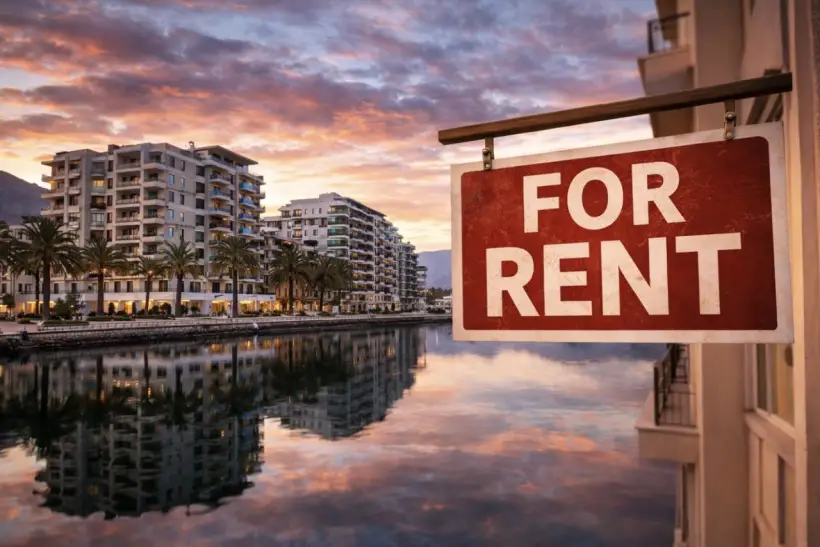
Real Estate Market Correction in Montenegro
At the end of last year and the beginning of this year, Montenegro’s real estate sector entered what economists describe as a correction phase. After several years of rapid rental price growth driven by strong foreign demand and limited housing supply, the balance between landlords and tenants has shifted.
In previous years, rising demand from foreign nationals, including Turkish citizens as well as residents from Russia, Ukraine and EU countries, supported elevated rental levels in Podgorica and coastal cities such as Budva and Tivat. Montenegro’s residency framework and relatively accessible property market made it an attractive relocation destination. However, changing political and economic conditions, along with adjustments in residence rules, have altered that trend.
Foreign Departures Increase Housing Vacancies
A significant factor behind the current adjustment has been the departure of a large number of foreign tenants at the end of last year. Turkish citizens, who had previously rented apartments in large numbers, were particularly visible in this segment. Their exit left behind a substantial stock of vacant apartments.
As supply expanded and demand moderated, the rental market began to rebalance. Real estate agencies report a noticeable increase in available listings, particularly in the mid-range apartment segment. The growing vacancy rate has exerted downward pressure on rental prices across key urban areas.
From Landlord’s Market to Tenant’s Market
Until recently, landlords set the terms. Strong demand allowed property owners to maintain high rents, request multiple months of advance payment and limit room for negotiation. That dynamic has now reversed.
With more apartments competing for fewer tenants, renters are in a stronger negotiating position. They can compare properties, request price adjustments and secure better terms for the same budget. The market environment has shifted decisively toward tenants, especially in cities where foreign demand previously dominated.
The Financial Reality for Property Owners
For landlords, insisting on last year’s peak prices carries a tangible financial cost. If a two-bedroom apartment previously commanded €700 per month but current market conditions support around €550, every vacant month represents lost income equal to the revised market rate.
Over several months, the cumulative loss can exceed the discount that might have secured a tenant earlier. In a more competitive environment, realistic pricing and flexible conditions are increasingly critical for maintaining occupancy levels.
Outlook for Montenegro’s Rental Market
Market observers suggest that the current price adjustment reflects normalization rather than structural weakness. Montenegro’s property sector remains supported by its tourism industry, foreign investment interest and strategic position in the Adriatic region. Future rental dynamics will depend on migration flows, macroeconomic stability and regulatory clarity for foreign residents.
As experts at International Investment report, Montenegro’s rental price decline signals a transition to a more balanced market environment. Property owners who adapt quickly to new demand conditions and prioritize occupancy over peak pricing are better positioned to navigate the ongoing correction.