







read also
 Vietnam Mortgage Surge Pushes Homes Out of Reach
 Lithuanian Apartment Prices Accelerate Across Major Cities
 London Flats Lose Value Ahead of Leasehold Reform
 Construction of the Batumi–Sarpi Highway Begins in Georgia
 Baltic Property Investment Accelerates in 2026
 Hong Kong and Singapore Renew Their Expat Rivalry
The Netherlands has raised income thresholds for migrants, making it more difficult to obtain a Blue Card.
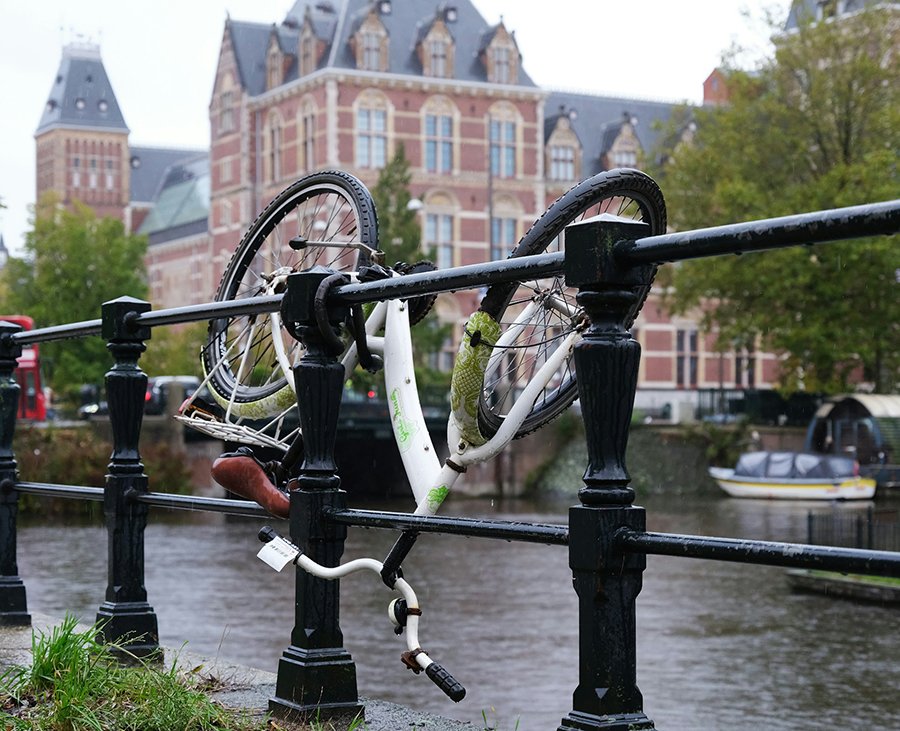
Photo: Unsplash
From 1 January 2026, the Netherlands introduced updated income and fee requirements for foreign students, highly skilled professionals, and holders of the EU Blue Card. The changes affect both the level of mandatory government fees and the minimum salary thresholds required to obtain or extend a residence permit.
New fees for residence permits in the Netherlands from 2026
From the start of 2026, government fees for submitting residence permit applications in the Netherlands increased by an average of 4.4 percent. An initial application or a change of purpose of stay for highly skilled migrants and EU Blue Card holders now costs €405. For foreign students, the same procedure costs €243. The increase is part of the annual indexation and is not directly linked to specific migration reforms.
Minimum income as a key criterion for the EU Blue Card in the Netherlands
The Ministry of Social Affairs and Employment has also revised the required income amounts that applicants must meet. These thresholds are based on gross salary subject to tax and social security contributions and are published both with and without holiday allowance.
For married couples or cohabiting partners, the minimum monthly income without holiday allowance is set at €2,294.40, rising to €2,477.95 when holiday pay is included. For single applicants and single parents, the required income is €1,606.08 without holiday allowance and €1,734.57 with it. These figures apply from January to June 2026.
Financial thresholds for students
Separate financial requirements continue to apply to foreign students throughout 2026. Students enrolled in secondary vocational education programmes must demonstrate monthly resources of €928.58. Those studying at universities or universities of applied sciences are required to show a minimum of €1,130.77 per month.
The Netherlands also maintains its orientation year residence permit. This option is available to foreign graduates of Dutch universities, graduates of top-ranked universities abroad and foreign researchers who have conducted research in the Netherlands. The permit allows holders to seek employment or start a business without immediately meeting the full highly skilled salary criteria.
Highly skilled migrants and EU Blue Card holders
The most significant changes apply to highly skilled workers. From 2026, the minimum monthly gross salary for highly skilled migrants aged 30 and over is set at €5,942. For those under 30, the threshold is €4,357. A reduced salary criterion remains in place for specific categories, set at €3,122 per month.
European Blue Card holders are subject to the same standard threshold of €5,942, with a reduced criterion of €4,754. These income levels apply throughout 2026 and reflect the government’s intention to tighten the link between migration status and earning capacity.
Policy context in the Netherland
Earlier in the year, the Dutch government considered further increasing salary thresholds for young highly skilled migrants by linking them more closely to the national average gross wage. While these proposals were not fully implemented, the updated 2026 figures underline a continued move toward a more selective, income-driven migration framework.
As International Investment experts report, the Netherlands is steadily reinforcing financial filters in its migration policy. This approach limits access for lower-paid workers while preserving the country’s appeal for highly qualified professionals, graduates and researchers with strong long-term economic prospects.