







 Georgian Law Enforcement Busts Scammers Posing as Real Estate Brokers
 World’s Largest Economies in 2026: GDP and Purchasing Power Rankings
 Turkish Airlines Cancel Flights to Moscow
 Escalation in the Middle East: New US and Iranian Strikes
 Bulgaria’s Property Market Enters a More Mature Phase
 UK House Prices Rise as Mortgage Demand Weakens
Hong Kong Property Rebounds as Momentum Slows
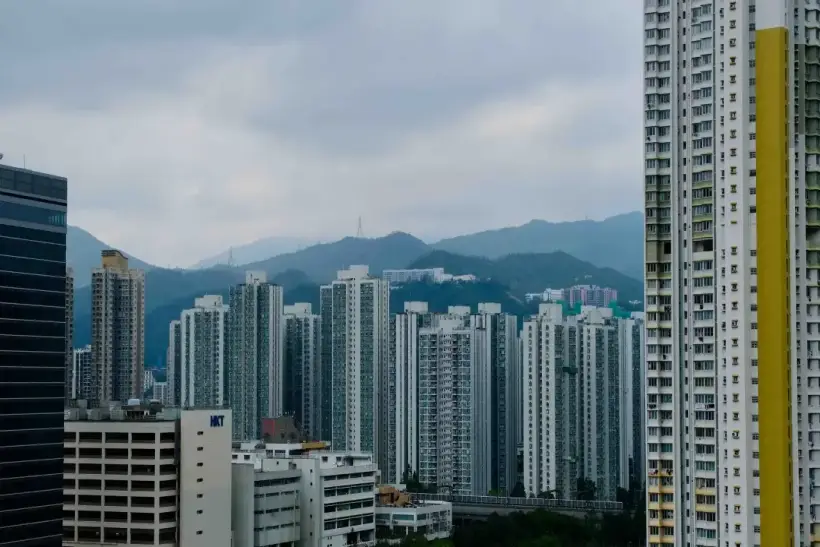
Hong Kong's real estate market has emerged from the deepest part of a correction that sent residential prices down almost 30% from their 2021 peak. Home values have recovered from their 2025 lows, rents have reached records and commercial property investment more than doubled in the second quarter of 2026. July, however, delivered clear signs of cooling: the official home-price index fell 0.46%, registered residential transactions dropped 41.7% month on month and new mortgage applications declined 24%.
J.P. Morgan Private Bank believes the market has moved beyond its trough but expects the pace of recovery to moderate after a strong first half. The Centa-City secondary-home index used by the bank has risen 18% from its March 2025 low. Mortgage rates have fallen to roughly 3.25%–3.5% from peaks above 5%, while gross residential rental yields have increased to around 3.5%. The bank identifies lower borrowing costs, stronger equity markets and returning mainland Chinese buyers as the main catalysts. Hong Kong property stocks, however, had already risen about 15% this year when the report was prepared, leaving the bank more cautious on their valuations.
Hong Kong Home Prices End a 13-Month Rally
More recent official data show that the rapid phase of the rebound is losing momentum.
The Rating and Valuation Department's private residential price index fell 0.46% in July to 321.5, ending 13 consecutive months of increases.
Despite the monthly decline, prices remained 11.6% higher than a year earlier and were up 7.3% in the first seven months of 2026.
Rental conditions remained considerably stronger. The private residential rental index increased another 0.77% to a record 207.4, its ninth consecutive monthly gain. Rents were up about 3.4% in the first seven months of the year, according to RTHK's report on the official figures.
The different rebound estimates need to be interpreted carefully. J.P. Morgan's 18% figure is based on the Centa-City secondary-home index. The government's price index uses a different methodology and market sample, so the two measures should not be treated as interchangeable.
The official index also remains well below its record. July's 321.5 reading was about 19.2% below the September 2021 peak of 398.1. Before the rebound began, the market had lost more than 28% from that high.
Residential Transactions Fell Sharply in July
The slowdown is visible in transaction data as well.
Hong Kong's Land Registry recorded 4,462 residential sale and purchase agreements in July, 41.7% fewer than in June and 22.6% below the level a year earlier.
The total value of registered residential transactions fell to HK$41.9 billion, down 44.6% month on month and 9.6% year on year.
Across all building units, 6,715 agreements worth HK$51.7 billion were registered, with transaction numbers falling 28.8% from June.
The sharp monthly decline follows an exceptionally active first half and can also reflect the uneven timing of new-project launches. It therefore does not by itself establish that another prolonged downturn has begun. It does show that buyer activity is no longer accelerating at the pace seen earlier in 2026.
Mortgage Applications Dropped 24%
Mortgage statistics provide another sign of cooling demand.
The number of mortgage applications declined 24% from June to 9,212 in July. Approved mortgage lending fell 11.4% to HK$44.8 billion.
Loans approved for primary-market purchases declined 14.1% to HK$13.3 billion, while those financing secondary-market transactions fell 16.4% to HK$24.2 billion. Refinancing increased 18.4% to HK$7.3 billion.
Mortgage loans actually drawn down rose 6% to HK$29.4 billion. The divergence is consistent with the lag between new applications and the completion of loans approved in earlier months.
The share of new mortgages priced against the Hong Kong Interbank Offered Rate, or HIBOR, dropped to 61% from 70% in June. Mortgage delinquencies remained extremely low at 0.11% of outstanding loans.
Record Rents Strengthen the Investment Case
The rental market remains more robust than the sales market.
Official rents are at record levels, while demand for well-located homes is being reinforced by professionals relocating to the city.
The widely reported 20% increase in relocations should be interpreted precisely. It does not represent a 20% rise in all expatriates moving to Hong Kong. Dwellworks Hong Kong said the number of relocation cases it handled increased 20% year on year in the first half of 2026.
Financial-sector employees accounted for much of that demand. Newly arriving professionals are also looking beyond traditional expatriate districts, with Kai Tak and Tseung Kwan O attracting more interest.
JLL expects luxury residential rents to rise about 5% in 2026, supported by hiring in financial services and wealth management and limited availability of high-quality rental stock.
For investors, faster rental growth than capital-value growth is gradually improving rental yields. That is a significant change from the previous market peak, when extremely high home prices compressed residential yields to low levels.
Unsold New-Home Inventory Has Fallen
A large stock of unsold new housing was one of the major constraints on the market following the 2021 peak.
That overhang has eased substantially. At prevailing sales rates, the estimated time needed to absorb unsold inventory fell to 44.3 months in March 2026 from 101.6 months in December 2023. The average during the 2015–2021 bull-market period was 51.3 months.
JLL therefore no longer views excess inventory as a major obstacle to developers launching projects. The firm forecast mass-market residential prices to rise 5%–10% in 2026, while noting that much of the year's potential gain had already occurred in the first half.
The risks it identified included inflation, interest-rate changes, equity-market volatility and the possibility of tighter controls on outbound capital from mainland China.
With the official price index already up 7.3% in the first seven months, the market has moved well into that forecast range.
Commercial Property Investment Jumped 129%
The recovery is not limited to housing.
Hong Kong commercial real estate investment reached $3.1 billion in the second quarter, up 129% from a year earlier. First-half volumes totalled $4.7 billion, an increase of 90%.
Office and retail transactions were the main drivers. Some office deals involved assets under receivership following difficulties experienced by previous owners, illustrating another side of the rebound: investors are returning partly because the long decline has created opportunities to acquire repriced assets.
JLL also highlighted the low comparison base. Triple-digit growth in investment volume followed a particularly weak period and should not be interpreted as evidence that commercial property valuations have returned to previous peaks.
Hong Kong's Office Market Is Improving
Offices remain the most challenged major property segment. Values in parts of the market have fallen by more than half from their peaks, while a large supply pipeline and changes in companies' space requirements continue to weigh on landlords.
Recent leasing data nevertheless show meaningful improvement.
In JLL's separate market series, overall Grade A office vacancy declined to 12.8% at the end of July from 13.1% a month earlier, reaching its lowest level in 31 months.
Central's vacancy rate fell to 8% from 8.8%. Kowloon East remained much weaker at 19.8%.
Net absorption — the amount of newly occupied space after subtracting space vacated during the period — reached 313,000 square feet in July. Overall Grade A rents increased 0.8% month on month, while Central rents rose 1.5%.
Financial institutions, investment funds, banks and professional-services companies were the primary sources of leasing demand.
Vacancy estimates produced by different property consultancies should not be combined into a single time series because definitions of Grade A stock and market coverage differ. JLL's July figure is therefore most useful when compared with its own previous readings.
Hong Kong Retail Sales Continue to Grow
Retail property is also benefiting from stronger spending and tourism, although the latest figures point to slower short-term momentum.
Hong Kong retail sales were provisionally estimated at HK$31 billion in July, 4.5% higher than a year earlier. Sales increased 8.9% over the first seven months of 2026.
Jewellery, watches and valuable gifts recorded a 19.7% annual increase. Medicines and cosmetics rose 7.3%, while electrical goods and other consumer durables increased 11.5%.
Online retail sales rose 9.5% to HK$2.8 billion and represented 9.1% of total retail spending.
The seasonally adjusted figures were less buoyant. Retail sales value declined 1.7% in the three months through July compared with the preceding three months, showing that strong year-on-year growth is being accompanied by some loss of short-term momentum.
For retail landlords, the data improve the operating backdrop but do not guarantee a broad rise in rents, which remain dependent on location, visitor flows and tenant mix.
Hong Kong Has Passed the Trough, Not Returned to Boom
Most major indicators are substantially healthier than they were during the deepest stage of the correction.
Residential prices have recovered from their lows, unsold new-home inventory has fallen, rents are setting records, commercial-property investment has accelerated and demand for prime Central offices is improving.
July nevertheless illustrates why the current phase should not be described as another property boom. Home prices declined after a long run of gains, registered residential transactions dropped more than 40% month on month and mortgage applications fell by almost a quarter.
Performance also varies sharply between segments. Residential leasing looks stronger than offices outside core districts. Primary and secondary housing react differently to new supply, while some commercial-property investment is being driven by the opportunity to buy assets after substantial repricing.
As International Investment experts report, the evidence increasingly supports the view that Hong Kong real estate has moved past the bottom of its cycle, but that does not imply a return to prolonged rapid appreciation. A significant part of the initial rebound has already occurred, while July's decline in transactions and mortgage applications shows that demand remains sensitive to valuations and financing conditions. Residential leasing currently appears to offer the strongest fundamentals, supported by record rents, limited quality supply and demand from incoming professionals. For investors, entry price, actual rental yield and location remain more important than the broad direction of “Hong Kong real estate,” because housing, offices and retail assets are at very different stages of recovery.