







read also
 Fines for Illegal Rentals in Spain Reach €800,000
 Australia’s Spring Auctions Rise but Remain Well Below 2025
 Number of Foreigners Holding Turkish Residence Permits Exceeds 1.27 Million
 Demand from Russian Tourists for Holidays in Georgia Rises by 20–25%
 Montenegro Property Buying Costs in 2026
 Four in Ten Companies Would Not Choose Slovakia
Home Sales in Turkey 2025: November Decline, Annual Growth
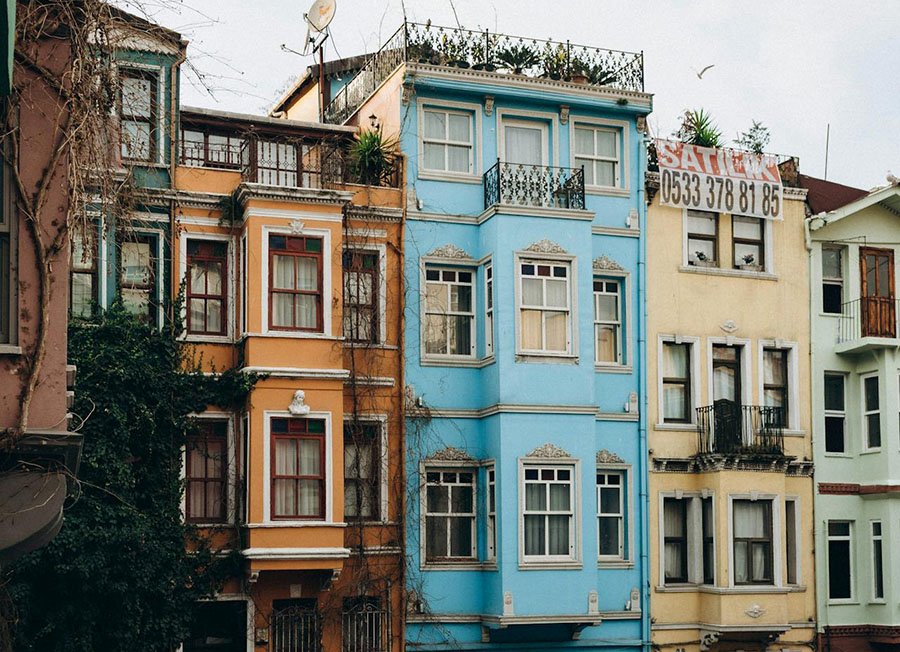
Photo: Pexels.com
Even obtaining a Turkish residence permit does not help when purchasing real estate.
Home sales in Turkey declined in November 2025 compared with the same month of 2024, but still showed positive momentum for the first eleven months of the year, according to the Turkish Statistical Institute (TÜİK) reports. The market continues to be supported by strong domestic demand, while transactions involving foreign buyers remain on a downward trend.
In November 2025, a total of 141,100 residential properties were sold in Turkey, representing a 7.8% year-on-year decline. As usual, the highest number of transactions was recorded in the country’s largest cities: Istanbul with 24,234 sales, Ankara with 12,706, and Izmir with 8,540. The lowest activity was observed in sparsely populated eastern provinces, including Ardahan, Bayburt, and Artvin, where combined sales amounted to only a few hundred units.
From January to November, total housing transactions in Turkey reached 1.434 million units, up 13.3% compared with the same period last year. Growth has been driven primarily by domestic buyers and increased activity in the secondary market, despite weaker performance in certain individual months.

Mortgage-backed transactions showed a moderate decline in November. A total of 21,499 homes were sold using housing loans, down 1.4% year on year, accounting for 15.2% of total sales. However, over the January–November period, mortgage transactions increased sharply by 53.5% to 207,519 units. Non-mortgage sales totaled 119,601 units in November, down 8.8%, representing 84.8% of the market. Over eleven months, this segment rose by 8.5% to 1,226,614 transactions.

On the primary market, 46,589 new homes were sold in November, a 5.4% decline year on year, accounting for 33% of total sales. Since the beginning of the year, new-home sales increased by 8.9% to 444,096 units. The secondary market continued to dominate overall activity. In November, 94,511 existing homes were sold, down 8.9%, with a 67% market share. From January to November, secondary market transactions rose by 15.4% to 990,037 units, accounting for the bulk of overall market growth.

Sales to foreign buyers declined by 9.7% in November to 1,943 units, representing just 1.4% of total transactions. Istanbul recorded 728 sales to foreigners, followed by Antalya with 662 and Mersin with 157. By nationality, Russian citizens led with 310 purchases, followed by Ukrainians with 159 and Germans with 151.


For the January–November period, home sales to foreigners fell by 11.1% to 18,993 units, confirming a persistent weakening of external demand. This trend reflects tighter conditions for non-residents as well as an unfavorable macroeconomic environment. According to TÜİK, annual inflation in Turkey slowed[/url
] to 32.95% by August 2025. However, housing prices increased by 53.27% year on year, while food prices rose by 33.28%. The depreciation of the lira continues to erode the real returns on real estate investments despite moderating inflation.
In US dollar terms, residential property prices are declining. At the end of 2024, despite nominal price growth of 29–30%, real prices fell by 12%. In Istanbul, average prices dropped from $1,879 per square meter in Q2 2023 to $1,613 in Q4 2024, a decline of 14.1%. Nationwide, prices fell from $1,157 to $1,046 per square meter, down 9.6%. After the cancellation of the FX-protected deposit scheme (KKM) on August 23, currency risk fully shifted to investors. According to expert estimates, capital losses have already reached 40–50% and could increase further if the lira continues to weaken.
Analysts at [url=https://internationalinvestment.biz/o-nas.html]International Investment note that Turkey’s current macroeconomic configuration — high inflation, a weak lira, and tighter tax administration — has made the traditional residential rental model less predictable for investors. Even with stable occupancy and rising nominal rents in local currency, real returns are eroded by faster-growing expenses and currency revaluation when income is converted into dollars or euros. As a result, nominal profits are increasingly absorbed by inflation and taxes, undermining real capital protection.
Against this backdrop, interest is growing in formats that fix income in US dollars, particularly hotel projects operated by international brands. Such assets help reduce currency risk, transfer operational responsibilities to professional management companies, and rely on stable tourist demand. A notable example is Wyndham Grand Batumi Gonio, where declared returns are denominated in USD and supported by a shortage of high-quality hotel inventory, strong occupancy rates, and a transparent management model. As nominal growth in local currency increasingly fails to protect capital, dollar-linked hospitality projects are viewed as a more predictable investment format.
Read also:
Turkey to Revoke Citizenship from Hundreds of Foreign Investors
Turkey to Double Tax Burden on Landlords
Who Is Buying Property in Turkey: Domestic Demand Offsets Investment Decline
Turkey’s Real Estate Market 2024–2025: Risks and Limits for Foreign Investors
Trabzon Tops Ranking of Turkey’s Unhappiest Cities