







read also
 Manila Condo Inventory Hits Record as Values Weaken
 Cyberattack Paralyzes Real Estate Transactions in Romania
 Short-Term Rental Rates in Greece Rise to €200 per Night
 Asia-Pacific Property Investment Hits Record $92.5 Billion
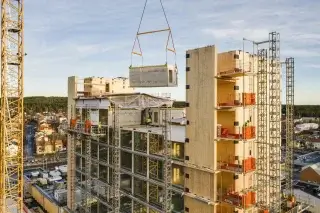 Scandinavian Prefab Housing Market Seen Reaching $7.9 Billion
 Denmark Sets First-Half Tourism Record as Germans Lead
EU Unveils Housing Crisis Plan

The European Union is set to unveil its first-ever comprehensive plan to address the continent’s deepening housing crisis, marking a significant shift in Brussels’ policy approach. According to European Commission data, nearly 1.3 million people across the 27-member bloc are currently homeless, while housing prices have risen by around 60 percent over the past 15 years and rents by nearly 30 percent. These trends have turned housing affordability into one of Europe’s most pressing social and economic challenges.
Why the EU is stepping in
Housing policy traditionally falls outside the EU’s direct mandate, remaining largely the responsibility of individual member states. However, mounting pressure from cities, regions, and lawmakers has pushed Brussels to act. European Commission President Ursula von der Leyen has acknowledged that for many Europeans, housing has become a source of anxiety rather than security. The new “affordable housing plan” reflects growing recognition that the crisis affects all member states and requires coordinated action beyond national borders.
Short-term rentals under scrutiny
A central element of the plan is the proposed regulation of short-term rental platforms such as Airbnb, particularly in tourist hotspots. Local communities increasingly blame short-term rentals for driving up rents and reducing housing availability for residents. Draft proposals reviewed by AFP suggest that Brussels is considering limits on the number of nights properties can be rented out, aiming to strike a balance between tourism and long-term housing needs. Spain’s recent decision to fine Airbnb for advertising banned properties has intensified the debate at EU level.
Boosting supply instead of price controls
Rather than imposing construction quotas or rent caps, the European Commission is focusing on increasing housing supply. Measures under consideration include easing certain environmental regulations to speed up building permits and addressing labour shortages through large-scale apprenticeship programmes in the construction sector. Officials have stressed that the goal is to remove structural bottlenecks rather than dictate prices or output targets to member states.
Mobilising investment for construction
The scale of the challenge is substantial. The Commission estimates that the EU needs more than two million new homes each year to meet demand. To achieve this, Brussels aims to facilitate public investment and attract private capital, with total funding for housing construction potentially reaching €375 billion by 2029. These investments are seen as critical to stabilising housing markets and curbing further price escalation.
Broader economic and social implications
The housing crisis has increasingly become a central political issue, influencing labour mobility, urban competitiveness, and social cohesion across Europe. The strong interest generated by the Commission’s proposals highlights the urgency felt by policymakers and the public alike. While implementation will remain largely in the hands of member states, the EU’s involvement signals a new phase in how housing affordability is addressed at the continental level.
As reported by International Investment experts, the EU’s housing initiative marks a turning point for Europe’s real estate landscape. Tighter oversight of short-term rentals combined with large-scale investment in construction is likely to reshape housing markets, creating both regulatory challenges and new opportunities for long-term investors across the bloc.