







read also
 Turkey Is Losing Its Cheap-Holiday Advantage
 Development Is Rewriting Southeast Asia’s Historic Districts
 How Ukraine’s New-Build Housing Market Has Changed Over Four Years
 European Prime Rents Rise as Property Yields Turn Higher
 The Most Expensive Airlines in Europe in 2026
 Housing Prices in Italy Reach a Two-Year High
Housing Market in Buenos Aires in Early 2026: Prices, Neighborhoods, and New Demand Benchmarks
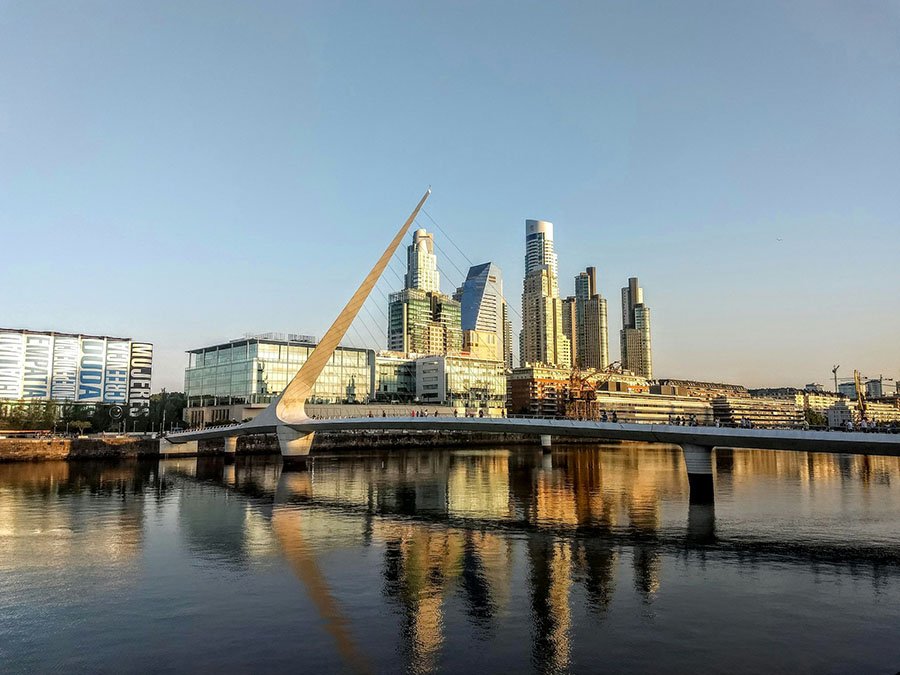
Photo: Unsplash
In early 2026, the Buenos Aires real estate market emerged from a prolonged downturn that had lasted for nearly ten years. Over the past twelve months, apartment values in USD terms increased by 5.6%, while remaining around 10% below the levels recorded in early 2016, reports the analytical platform The Latin Investor.
Average and median property prices in Buenos Aires
To assess market conditions in Buenos Aires, the median indicator is used as the primary reference, as it reflects the parameters of a typical transaction. It is not distorted by high-end properties in premium locations and stands at around ARS 193 million, equivalent to approximately 129 thousand US dollars or €110 thousand. These figures correspond to an apartment of about 50 sq. m, which falls within the most liquid segment of supply.
The citywide average is noticeably higher, reaching roughly ARS 255 million ($170 thousand). This gap is explained by the presence of larger units and a significant share of listings in districts with higher prices per square meter. About 80% of active listings fall within the range from $70,000 to $350,000, reflecting the dominance of the mass market segment. The lower entry threshold is formed at $45,000–80,000 and is represented mainly by compact studios in the southern and peripheral parts of the city.
In early 2026, the median price per square meter for apartments in Buenos Aires stands at around ARS 3.7 million ($2,450). The average level is about $2,600 per sq. m, as expensive locations and new residential projects are included in the calculation. The most expensive housing is found in Puerto Madero, a waterfront district with modern development, where prices reach up to $6,100 per sq. m. High levels are also recorded in Palermo and Núñez, in the range of $3,300–3,400. In the southern part of the city, property is cheaper: in Villa Lugano, Nueva Pompeya, and La Boca, prices start from $1,100–1,500, reflecting differences in infrastructure, transport accessibility, and demand structure.
Dynamics and long-term trends on property prices in Buenos Aires
The 5.6% increase in USD-denominated values over the past year resulted from improved macroeconomic expectations and a rise in the number of notarized transactions throughout 2025. Growing transaction activity points to a gradual return of buyers after a prolonged wait-and-see period. At the same time, the recovery remains moderate and is not accompanied by sharp price spikes.
Over a longer horizon, the picture looks different. Compared to January 2016, apartment values in Buenos Aires are still about 10% lower in real USD terms. This reflects the impact of many years of high inflation, currency controls, and financial system instability. As a result, property in the city has long served primarily as a store of value rather than a capital growth instrument, which continues to influence investor behavior.
Supply structure
The Buenos Aires real estate market has a distinctly urban character. About 82% of all listings are apartments, reflecting dense development and a historically established housing model. Detached houses account for around 10%, while traditional low-rise PH units represent roughly 5% of the market. Other segments—duplexes, townhouses, and penthouses—remain niche and are represented by a limited number of properties.
A typical three-room apartment, popular among families and expats, is priced on average at $180,000. Studios of 35–40 sq. m are valued at $105,000, while family houses of around 170 sq. m reach $300,000. The premium segment starts from $700,000 and includes modern apartments and penthouses in prestigious districts.
In 2026, new residential properties in Buenos Aires are sold on average at about a 20% premium to comparable secondary-market apartments. This gap reflects rising construction costs as well as shifts in demand structure. Higher spending on materials and labor directly affects starting price levels in new projects, especially in the mid-range and upper segments. Quality factors also play a role. Modern residential complexes typically offer underground parking, 24-hour security, elevators, shared amenities, and higher energy-efficiency standards. For buyers, this means no need for immediate post-purchase investment, increasing the appeal of new developments despite higher entry prices.
Transaction nuances real estate market in Buenos Aires
Real estate transactions in Buenos Aires are typically accompanied by negotiations, and asking figures rarely match final purchase terms. On average, the closing amount ends up about 7% below the listing level. Thus, a property offered at around $140 thousand most often closes near $130 thousand. Larger discounts are typical for units that remain on the market for extended periods, as well as for older housing and properties requiring additional investment.
Buyer interest is unevenly distributed and is concentrated primarily in Palermo, Recoleta, and Belgrano. These districts combine a well-developed urban environment, good transport connectivity, and stable resale liquidity. More affordable areas, including Caballito, Almagro, and Villa Urquiza, form a separate demand segment focused mainly on local buyers and first-home purchases.
Investment benchmarks and real estate market risks in Buenos Aires
When planning a purchase, it is necessary to account for additional costs that increase the total transaction budget. In Buenos Aires, they average 6–9% of the property value and include notary fees, taxes, and administrative charges. For an apartment priced at around $200,000, this translates into additional expenses of $12,000–18,000, while renovation needs can significantly raise total investment volumes.
Analysts at International Investment note that the short-term rental segment, despite its large market size, is facing declining occupancy amid falling tourist flows and rising operating costs, including mandatory property registration. Returns in this segment are becoming less predictable and depend on seasonality, location, and management quality.
Under these conditions, a growing number of investors are shifting their focus toward medium-term rentals ranging from three to twelve months, targeting local tenants, students, and corporate demand. This model delivers lower but more stable cash flow and reduces risk exposure.