







read also
 Vienna Leads Rentals, Alpine Resorts Earn More
 US Prepares to Revoke Up to 200,000 Visas of Asylum Applicants
 Denmark Pushes EU Toward Tougher External Borders
 New-Build Home Prices in Russia Rise 34% in Three Years
 Singapore Core Inflation Hits Highest Since 2024
 High Prices Cool Hong Kong New-Home Demand
TOP 10 Deals in “Sacred Real Estate” in Europe and USA: How Churches Are Becoming a New Market Segment
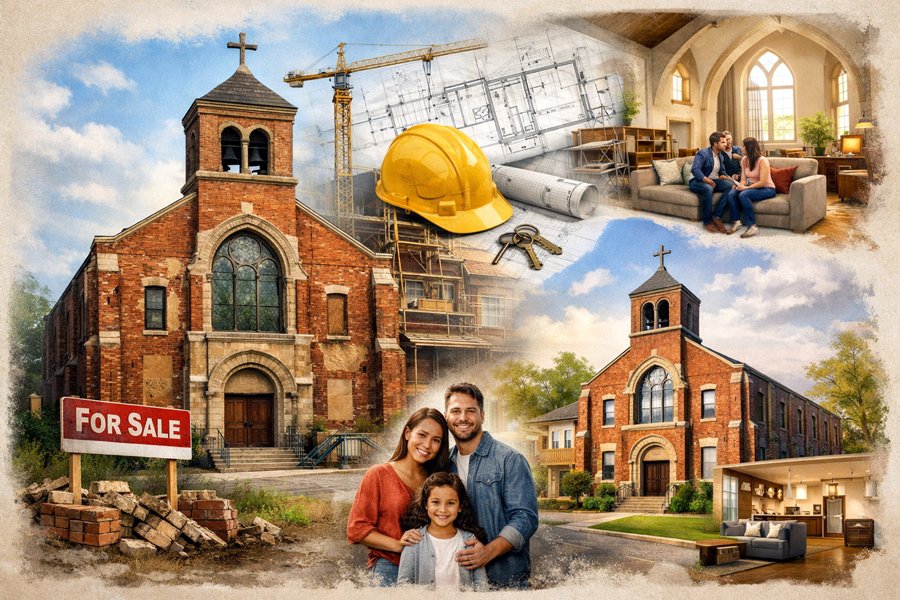
In the West, an unusual and still little-understood segment of the real estate market is becoming increasingly visible — former churches removed from religious use and sold as ordinary historic buildings.
The reason is simple and systemic: in Europe, the USA, Canada, and Australia, the number of parishioners has been declining for decades, while maintaining historic churches has become financially impossible for religious organizations. As a result, religious organizations themselves close parishes, officially remove the buildings from religious status, and put them up for sale. This gives rise to a phenomenon that can be conditionally called “church real estate” — properties originally built for worship, but now functioning according to the rules of the secular market.
TOP 10 “Church Real Estate” Properties
1. Great Hope Baptist Church – Richmond, Virginia, USA
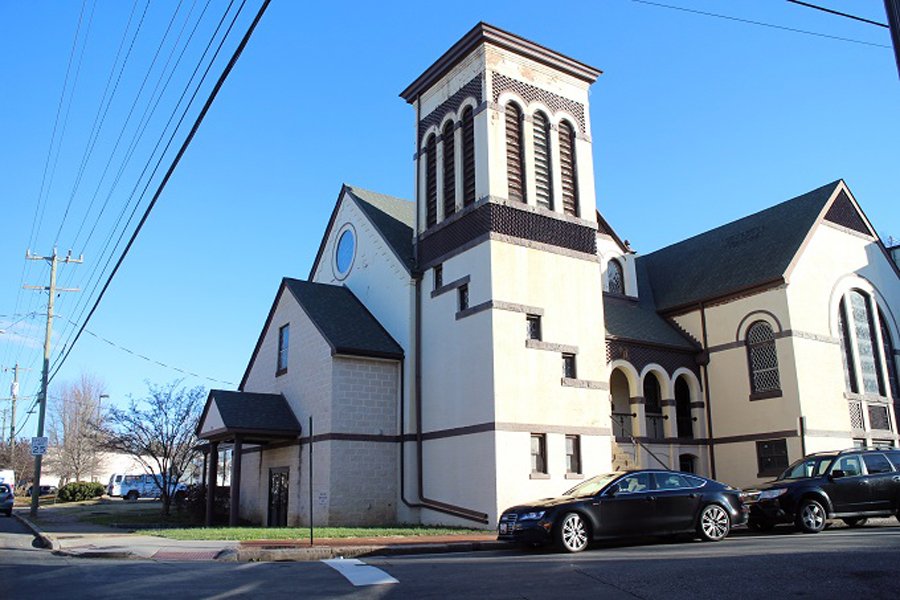
Sold for approximately $2.15 million and being converted into a residential complex with townhouses and apartments.
2. Grace United Methodist Church – Jacksonville, Florida, USA
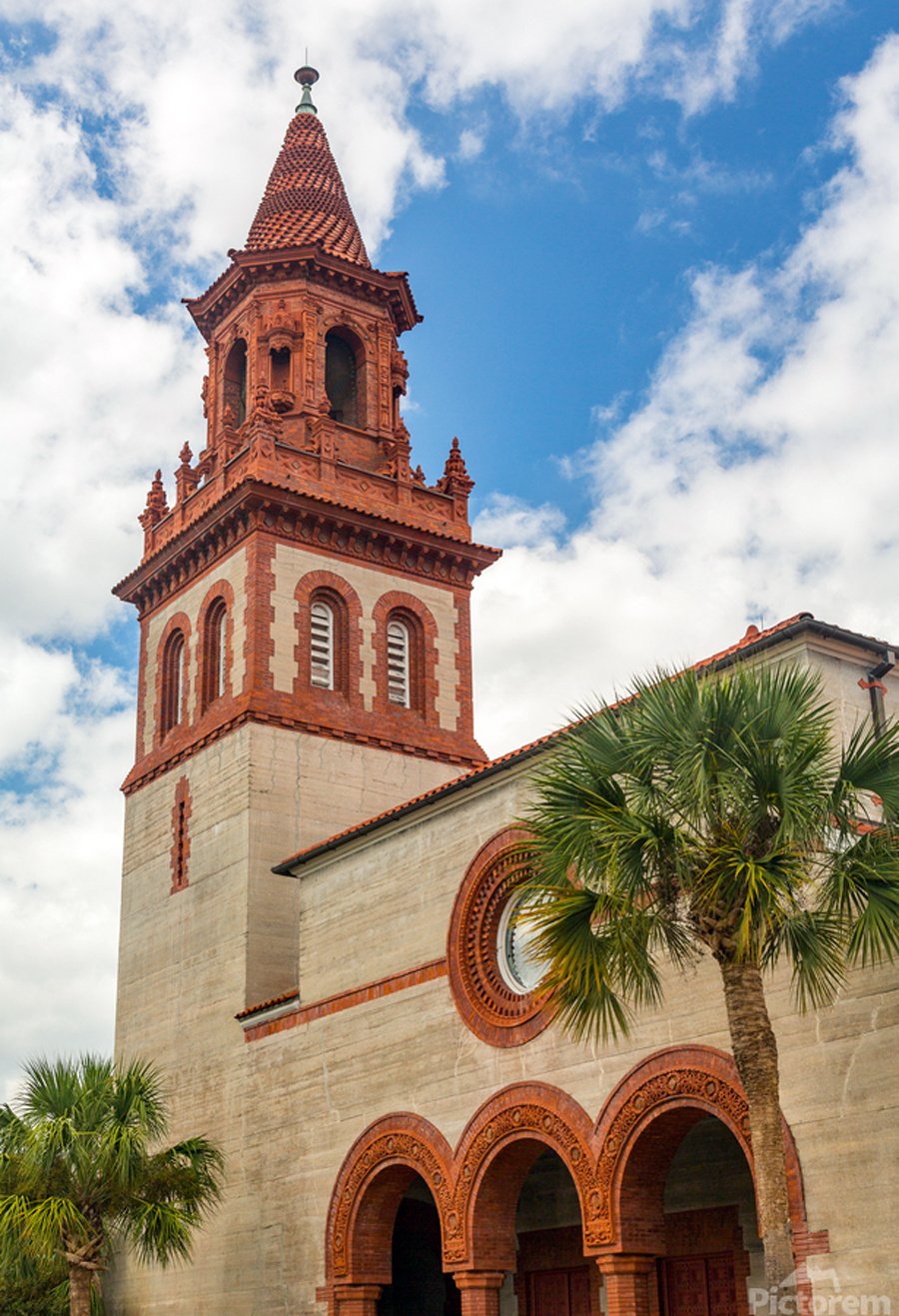
The historic building was sold for $400,000 to create an arts school and community center.
3. Church conversion in St James’ Church – Birmingham, England
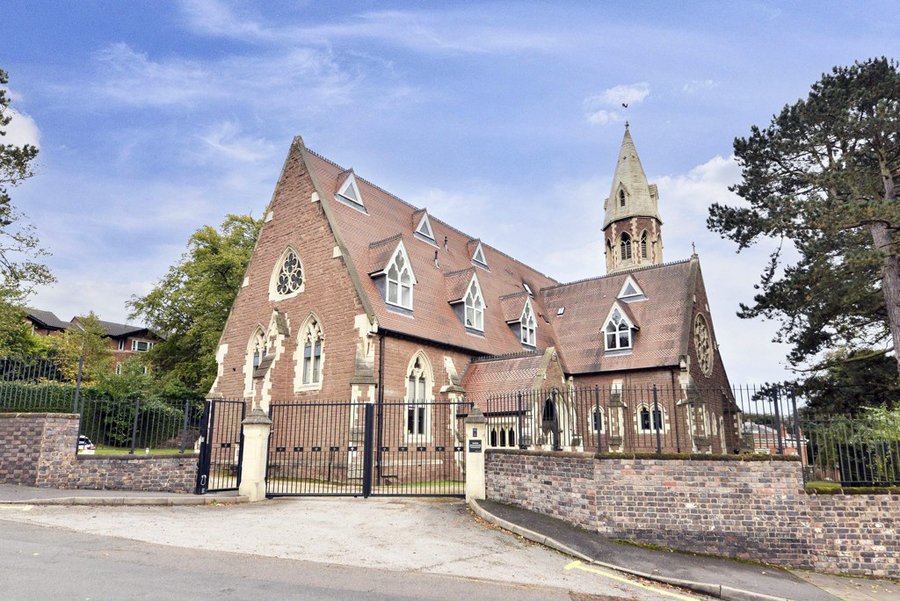
The former church was removed from the list of sacred buildings in 1967 and converted into residential apartments in 2004 — preserving the church architecture.
4. St James the Great – Cardiff, Wales
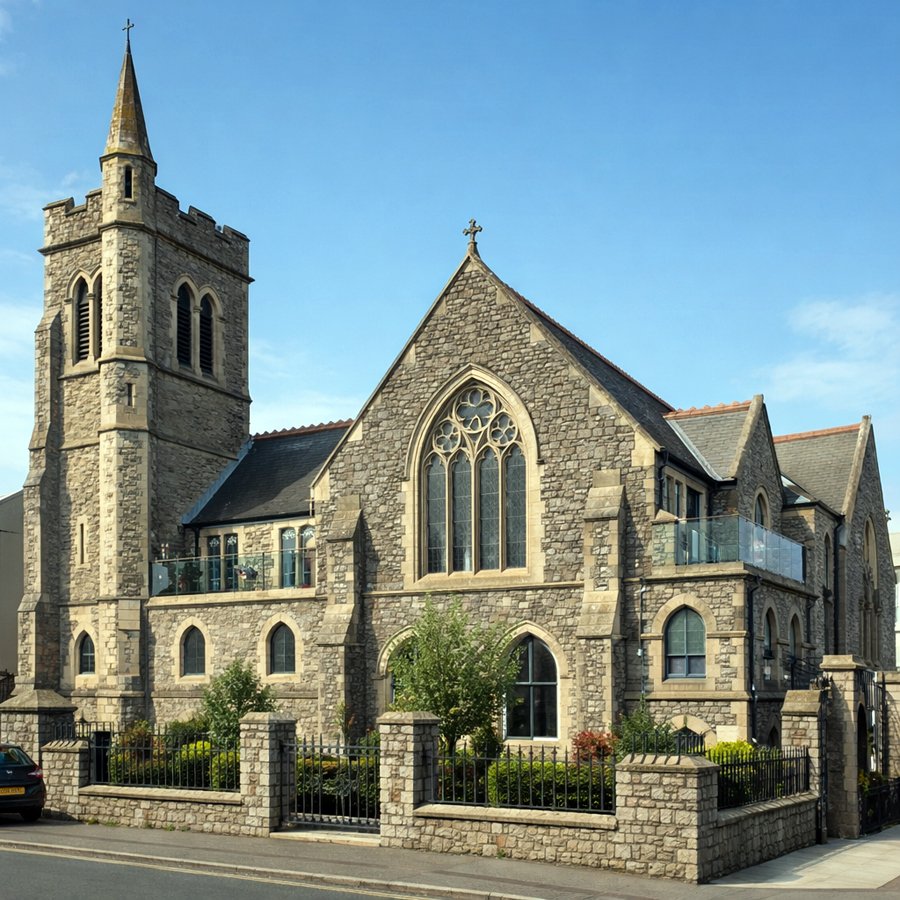
The church was sold in 2007 and later converted into residential apartments while keeping original architectural elements.
5. Lundie Kirk – Lundie, Scotland (UK)
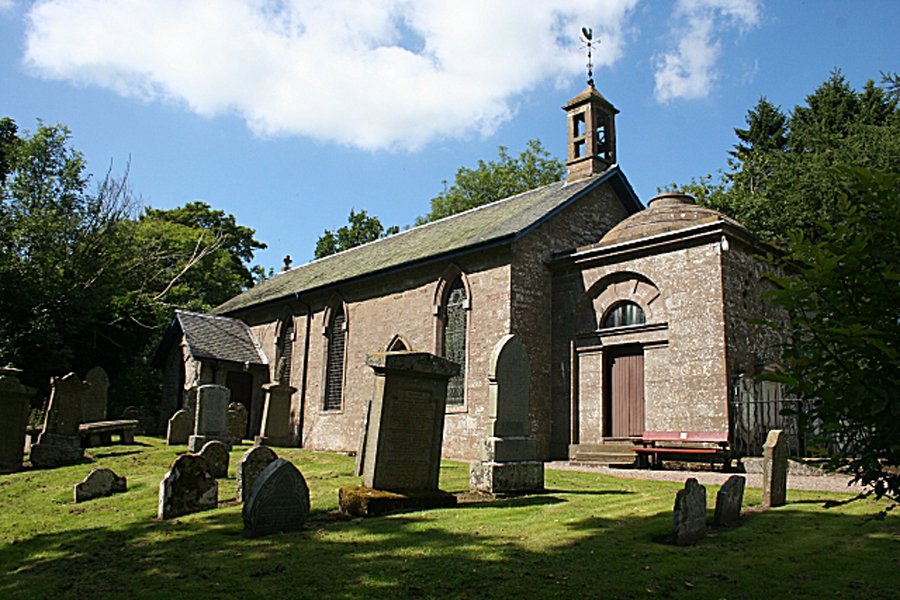
The 12th-century church was closed and sold at auction (approximately £40,000). It is now private property used as a residence.
6. Churches in Germany
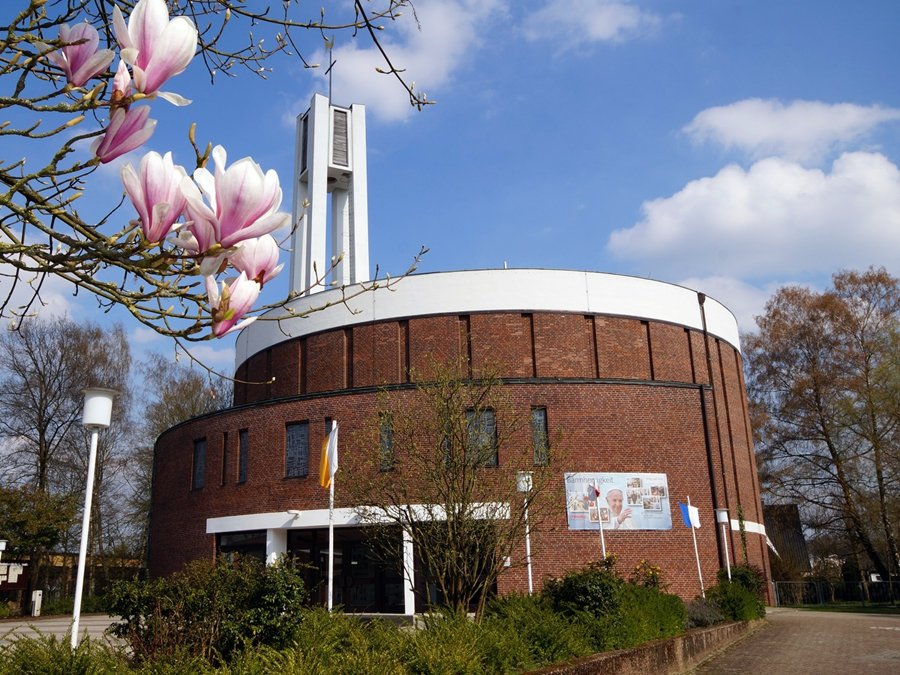
Germany is a world leader in selling “church real estate.” Many former churches in the country have been closed and repurposed. Some buildings have become art galleries or studios. Former churches are now used as hostels, residential spaces, or sports halls. For example, in Osnabrück, the former Holy Family Church became a columbarium, and in Mönchengladbach, the former St. Peter’s Church became a climbing hall.
7. Zara store – Santo Antonio el Real, Salamanca, Spain
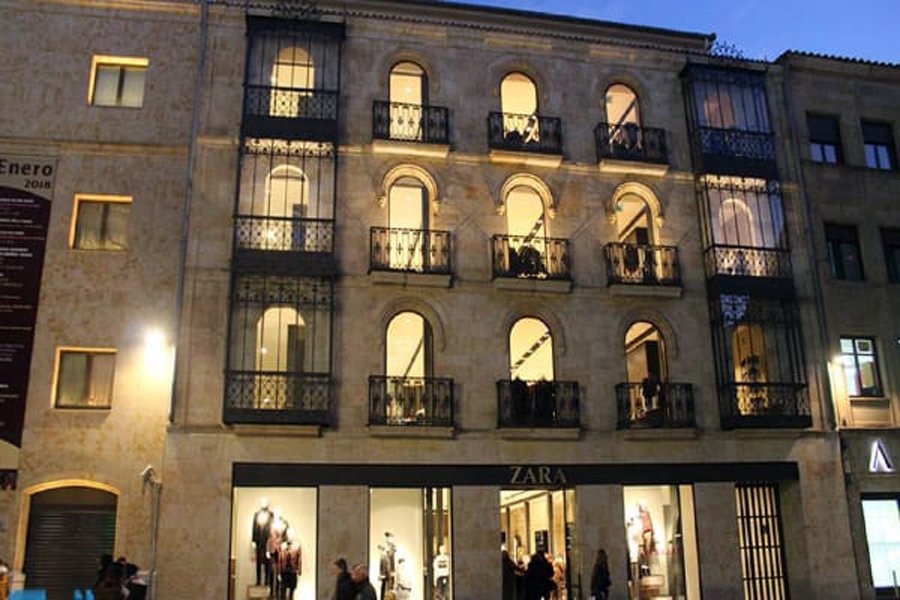
An old monastery complex was fully renovated and turned into a Zara store while preserving the historic façade — an example of commercial use of religious property.
8. St. Matthew’s Church – Hull, England
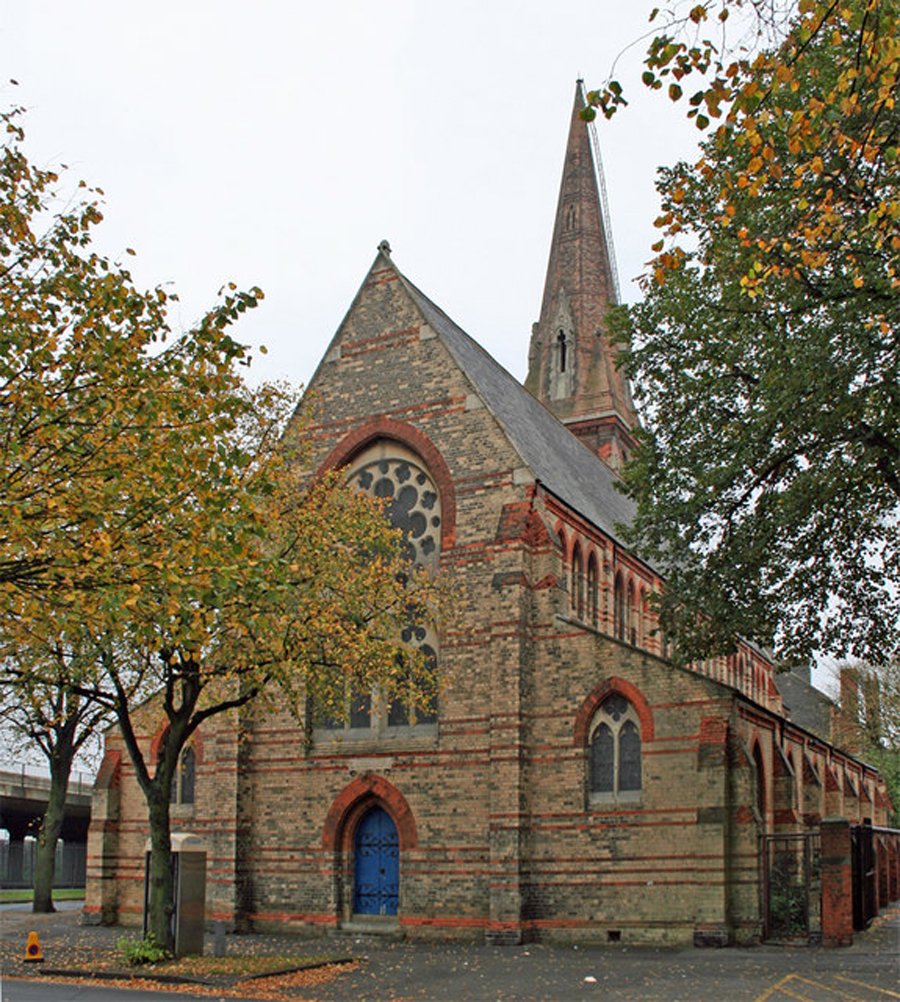
In spring 2025, the former church was renovated and opened as a commercial center and office space while retaining historic elements.
9. Former church in Bizkaia – Spain
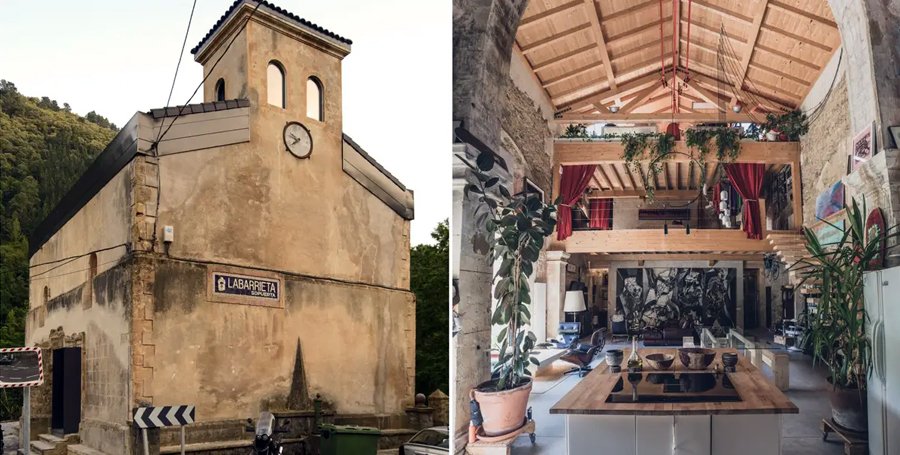
A small 16th-century church in the Basque region was restored and rebuilt into a spacious residential property (three-bedroom residence), becoming stylish private property.
10. Our Lady of Mt. Carmel Church – Schenectady, New York, USA
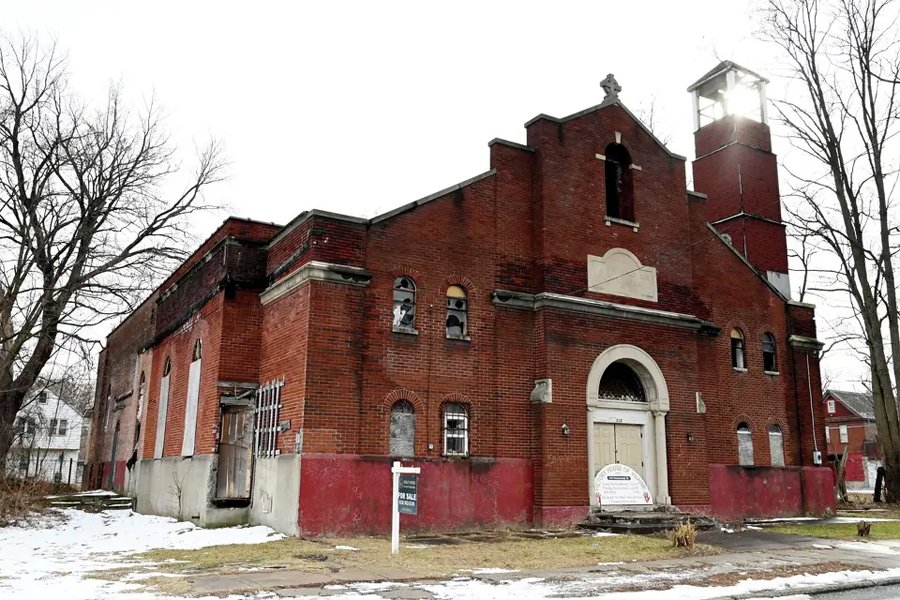
This property is an example of a low initial cost (~$39,000) and future conversion into affordable apartments as part of addressing housing shortages.
Why Churches Sell Their Buildings
Most closed churches are 19th–early 20th century buildings requiring constant and expensive maintenance: roof repairs, heating large spaces, façade restoration, and compliance with heritage preservation requirements. At the same time, the number of active parishioners in many locations has decreased to just a few dozen.
For religious organizations, selling becomes the only way to:
* avoid accumulating debts;
* finance other parishes;
* preserve the building, even in a new function, rather than let it fall into ruin.
After official deconsecration, such properties legally cease to be churches and are sold as ordinary real estate.
Social and Cultural Reinterpretation
One common scenario for reuse is converting former churches into public and cultural spaces. This path is often chosen by non-profits and municipalities.
A notable example is the former Grace United Methodist Church in Jacksonville, Florida. The historic early 20th-century building was sold after a sharp decline in parishioners. The new owner announced plans to convert the church into an arts school and community center, combined with social support programs and temporary housing for the homeless. Architectural elements — vaults, stained glass, wooden structures — are preserved as part of the cultural heritage.
In Europe, similar projects are implemented in the Netherlands, Germany, and Scandinavia. Closed Protestant churches become libraries, concert halls, exhibition spaces, and coworking centers. In such deals, buyers are often chosen not by the highest price, but by the concept for future use.
Housing and Multi-Apartment Projects
The second key direction is residential development. Here, former churches attract developers working in niche and premium segments.
In Richmond, Virginia, the former Great Hope Baptist Church was purchased by a developer to create townhouses and apartments with high ceilings, while the historic façade and arched windows were preserved as architectural features.
In the UK, Canada, and France, similar transactions have become widespread. Former Anglican and Catholic churches are converted into lofts, apartments, and mixed-use residential complexes with commercial spaces on the ground floor.
Prices vary widely. Small provincial churches — $150,000–$300,000, large urban properties — $1–3 million and higher, depending on location and heritage status.
Commercial and Tourist Use
Another niche is converting churches into hotels, restaurants, and event spaces. In Scotland and Ireland, former churches often become wedding and cultural venues. For example, the historic Braemar Kirk in Scotland was sold for over $200,000 and included in a luxury hotel and event business project while preserving the original interior.
In the USA and Canada, churches have been converted into restaurants, breweries, and boutique hotels, where sacred architecture becomes a marketing advantage.
Formation of a New Market Segment
The combination of these transactions already allows us to talk about the emergence of a stable “church real estate” segment with its own features: unique architecture, restrictions on remodeling, interest from niche investors, and high symbolic and cultural capital.
For some, this is a way to preserve buildings that have lost their religious function. For others, it is an opportunity to create a unique property that cannot be reproduced in ordinary development.
Conclusion
The sale and repurposing of churches is not a series of isolated cases but a long-term structural process. Declining religious activity, economic realities, and urban development pressures make such transactions increasingly common. As a result, a special type of property appears on the market — former churches living a new secular life.
“Church real estate” is no longer exotic and is gradually becoming a separate direction, finding its place between cultural heritage, investment, and modern urbanism, note experts at International](https://internationalinvestment.biz/]International) Investment.