









Slovenia’s Property Market Turns Selective
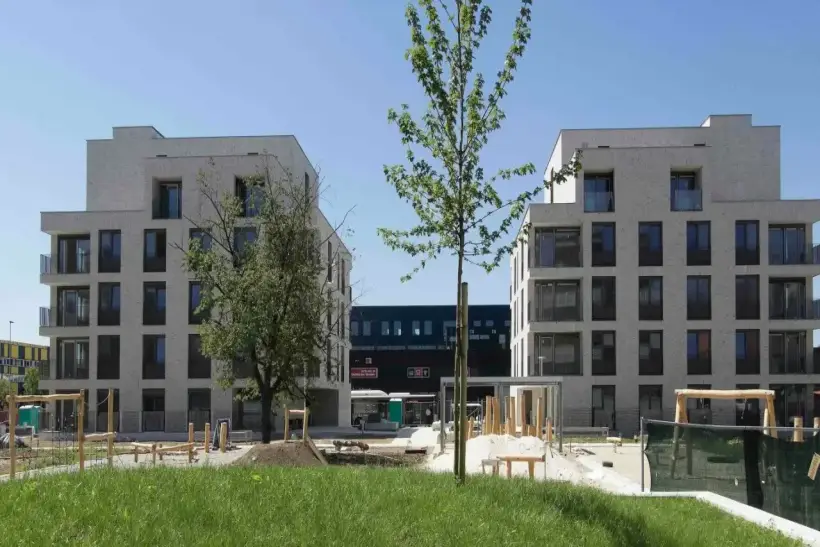
Slovenia’s real estate market has not entered a deep downturn, but it has become much more demanding about asset quality. Capital remains active in resilient segments — housing in Ljubljana, coastal and Alpine locations, logistics, high-quality offices and properties with a clear energy-upgrade path. Assets with weaker locations, outdated technical standards or complex permitting issues are under growing pressure.
Slovenia is not soft, but more selective
CEE Legal Matters describes Slovenia’s real estate market as resilient but no longer even. According to lawyers from ODI Law and Sibinčič Novak & Partners, capital has not left the market, but it is increasingly concentrated in assets able to withstand tighter financing, stricter due diligence and higher technical expectations. A weaker property can no longer rely only on general scarcity or price-growth inertia.
This kind of market can look calmer than an overheated cycle, but it is tougher for sellers. Buyers and investors are still looking at Slovenian property, yet demand is shifting toward assets with clean legal histories, predictable income, energy efficiency and the ability to be used or leased quickly. In that sense, Slovenia is becoming a market of selection rather than softness.
Chambers and Partners also says in its Real Estate 2026 guide that the market is entering a period of gradual stabilization after several years of strong price growth, macroeconomic volatility and changing financing conditions. Resilience is supported by Slovenia’s legal framework, geographic position, EU and eurozone membership and role as a logistics link between Central Europe and the Adriatic.
Housing prices rise without a transaction boom
Slovenia’s Statistical Office recorded continued housing-price growth in the first quarter of 2026. Average dwelling prices rose 3% from the previous quarter and 9.3% from a year earlier. Newly built family houses posted the strongest annual increase at 11.9%, followed by existing flats at 10.7%, existing family houses at 9.1% and newly built flats at 6.2%.
Prices are rising without an explosive increase in transactions. In the first quarter of 2026, 2,512 existing dwellings were sold, broadly in line with last year’s average. The total value of all housing transactions reached €499.4 million, of which €474.7 million came from existing dwellings.
That is the key signal: the market is not frozen, but growth is driven less by mass demand expansion than by a shortage of quality supply and a limited pool of liquid assets. For buyers, negotiation power is not universal. For sellers, pricing must be backed by location, condition, documentation and use potential.
Ljubljana is no longer the only engine
Domestic dynamics have become uneven. In the first quarter, prices of existing flats in Slovenia rose 3.2% from the previous quarter, but fell slightly by 0.3% in Ljubljana municipality. In Maribor, prices rose 5.5%, while the rest of Slovenia excluding Ljubljana gained 4.3%. Year on year, existing flats rose 6.3% in Ljubljana, 17.5% in Maribor and 11% in the rest of Slovenia excluding Ljubljana and Maribor.
That does not mean the capital is weak. Rather, Ljubljana has become a more mature and expensive market where some buyers have hit affordability limits. Stronger quarterly growth outside the capital may reflect demand moving toward more affordable cities and regions where starting prices are lower and some segments look more attractive.
For investors, this changes the strategy. A bet on the capital used to look almost automatic. Now, district, transport access, building condition, energy class, renovation potential and real rental liquidity matter more. Growth in Maribor or other regions does not make every asset investable, but it shows that demand is looking for alternatives to expensive Ljubljana.
New supply remains constrained
New housing in Slovenia is becoming more expensive in a way that does not fit a weak-demand story. In the first quarter of 2026, prices of newly built dwellings rose 6.9% from the previous quarter; new flats gained 7.3%, while new family houses rose 5%. Year on year, newly built family houses added 11.9% and newly built flats 6.2%.
A shortage of new supply remains structural. Chambers and Partners points to limited development land in major cities, complex spatial-planning procedures, fragmented land ownership, rising construction costs and labor shortages. Even where land is formally zoned for development, projects often require additional planning steps, stretching the development cycle.
Statistics for new dwellings in 2025 were revised after additional data from Slovenia’s Surveying and Mapping Authority. Final figures showed 675 newly built dwellings sold for a total transaction value of €183.7 million. That was higher than the preliminary estimate, but it still confirms the narrow scale of the new-build segment compared with existing housing.
Commercial property needs quality and ESG
Slovenia’s commercial property market is also far from uniform. High-quality offices, logistics assets and tourism-linked projects in strong locations continue to attract investors. Older buildings without a credible modernization plan face a growing discount.
One of the key filters is ESG — environmental, social and governance standards. In real estate, that mainly means energy performance, operating quality, compliance with future rules and the ability to reduce tenant costs. Chambers and Partners notes that new developments are commonly designed for international sustainability certifications, while owners of older buildings face pressure to improve energy performance.
For investors, that raises capital-expenditure requirements. In the past, an old building in a good location could look attractive because of price and resale potential. Now a buyer must calculate renovation costs, energy upgrades, permits and possible tenant disruption during works. Without that calculation, a property is not necessarily cheap even if its price is below the market average.
Tourism and logistics support demand
Slovenia remains a small but strategically placed market. The country sits between Central Europe, Italy, Austria, Croatia and the Adriatic, supporting demand for logistics, hospitality and property in tourist destinations. Chambers and Partners notes investor interest in premium residential projects in tourism locations including the Slovenian coast, Lake Bled and Alpine resorts.
This demand differs from the mass residential market. Buyers in coastal and Alpine locations often focus on scarcity, views, rental potential and personal use. These assets are less sensitive to average mortgage affordability, but more exposed to short-term rental rules, tourism flows, seasonality and technical condition.
Logistics also benefits from geography, but the criteria are different: transport access, floor area, warehouse height, energy performance, permits and tenant quality. In these segments, Slovenia can attract capital, but it competes through specific asset quality rather than market size.
Housing affordability becomes political
Rising prices and constrained supply are intensifying the affordability debate. Chambers and Partners notes that housing affordability has become a prominent public-policy issue, prompting renewed government initiatives to increase rental housing supply and regulate short-term rentals.
This is sensitive in a small market. Even limited investment demand or tourism rental activity can affect prices in individual cities. At the same time, new supply is constrained by land, permits, costs and construction capacity. Supply cannot be increased quickly, while demand in Ljubljana, the coast and tourist areas remains resilient.
If the government tightens short-term rental rules, some housing may return to the long-term rental market, but investor returns could be hit. If policy relies only on new construction, the impact will be slow. Slovenia is therefore entering a phase in which legal and planning policy may influence prices as much as mortgage rates.
Investors must underwrite risk more carefully
Slovenian real estate remains attractive to domestic and foreign investors in 2026, but the simple strategy of buying any asset in a growing country no longer works. The market demands checks on legal status, permits, energy performance, building condition, future capital expenditure and real tenant or buyer demand.
In residential property, the main risk is overpaying for an asset that is formally in a popular location but needs expensive renovation or has weak liquidity. In commercial property, it is buying a building that may lose tenants because of outdated engineering or high energy costs. For developers, the risks are planning delays, rising construction costs and difficulty consolidating land.
As International Investment experts report, Slovenia’s real estate market in 2026 looks resilient only at the headline level. Inside the market, asset quality is being repriced sharply. Strong properties continue to rise because supply is limited and demand remains solvent. Weak assets are being discounted because investors are no longer willing to buy legal, technical and energy problems at scarcity-market prices. The critical conclusion is simple: Slovenia has not become cheap; it has become a market where a bad asset choice costs more.