







 Asunción Property Market Accelerates as Construction Booms
 Egypt Expands Aviation for Tourism Growth
 Latvia’s Residence Permits for Real Estate to Be Abolished from September 15
 Egypt Prepares New Law for Property Developers
 Young Japanese Buyers Turn to 50-Year Mortgages
 Argentina Narrows Tourism Gap as Arrivals Rise
Singapore Home Sales Rebound as New Launches Return
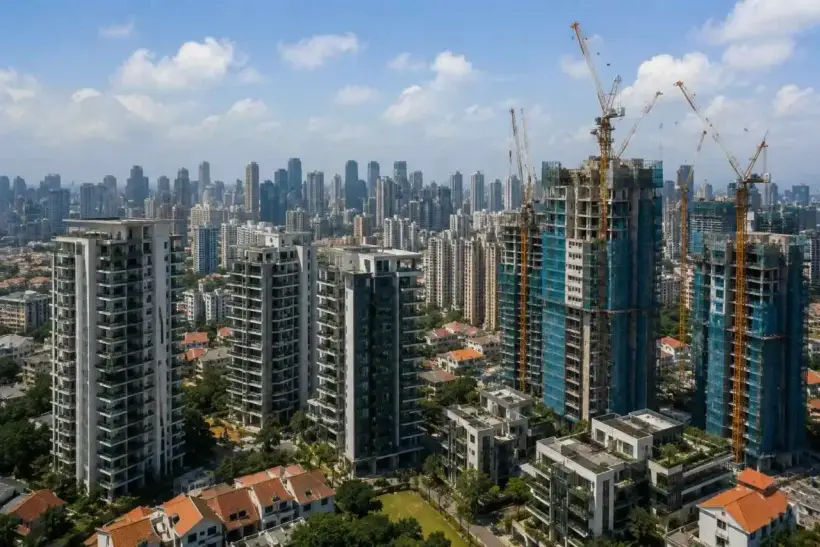
Singapore’s new private home sales rebounded sharply in July 2026, with developers selling 731 units excluding Executive Condominiums, up from just 156 in June. Sales were nevertheless 22% below the 940 units recorded in July 2025. Two projects generated almost two-thirds of the month’s transactions, showing how strongly Singapore’s primary market remains tied to the timing of launches rather than signalling the start of another broad housing boom.
Bloomberg reported on August 17 that sales recovered as developers resumed project launches. A review of government and market data confirms the sharp monthly rebound while pointing to a more moderate broader picture: year-to-date developer sales remain below 2025 levels, overall home-price growth has slowed, and Singapore continues to maintain a substantial future housing pipeline.
New-Home Sales More Than Quadrupled
Developers sold 731 new private residential units excluding Executive Condominiums in July, more than four times the 156 units sold in June. It was the strongest monthly result since April 2026, when sales reached 1,548 units. Compared with July 2025, however, transactions were down 22%.
PropNex, analysing the newly released figures, said the recovery was mainly supply-led. Developers launched 889 new units excluding Executive Condominiums in July after a severe shortage of major launches during the June school-holiday period.
Developers sold 4,885 new private homes excluding Executive Condominiums during the first seven months of 2026, compared with 5,527 in the corresponding period of 2025, leaving year-to-date sales about 11.6% lower.
The comparison therefore matters: July was exceptionally strong against June’s unusually low base, but remained substantially weaker than the same month last year.
Two Projects Generated Almost 66% of Sales
Lentor Gardens Residences and Dunearn House together generated 482 transactions, equivalent to about 65.9% of July’s new private home sales excluding Executive Condominiums.
Lentor Gardens Residences was the month’s top-selling project. Buyers purchased 270 units in the 499-unit development, representing about 54% of its stock, at a median S$2,357 per square foot.
About 82.2% of the units sold there in July cost less than S$2.5 million. These homes ranged from 646 to 1,012 square feet, or roughly 60 to 94 square metres.
The result was notable because Lentor Gardens Residences was already the seventh major launch in the Lentor Hills precinct since September 2022. Six earlier projects had collectively sold 2,933 of their 2,954 units based on lodged caveats.
Dunearn House Boosted the Prime Segment
The 380-unit Dunearn House sold 212 homes in July, equivalent to around 56% of the project. Its median transaction price was S$3,111 per square foot.
The development is the first new private residential launch in the emerging Bukit Timah Turf City precinct. Its land was acquired at about S$1,410 per square foot per plot ratio, while a neighbouring government land site was subsequently awarded at S$1,625, roughly 15% higher.
Despite the high unit-area price, 42.5% of Dunearn House transactions were below S$2.5 million. Those units ranged from 527 to 678 square feet, or approximately 49 to 63 square metres.
The figures illustrate the increasing importance of total purchase quantum: a smaller apartment in a prime location can stay within a household’s budget even when its price per square foot is high.
Suburban Markets Led Transaction Volumes
The Outside Central Region recorded 334 developer sales in July, up from 57 in June. Lentor Gardens Residences alone generated 270 of them.
The Core Central Region recorded 235 new-home sales, the strongest monthly figure since March 2026, when 472 units were sold. Dunearn House accounted for approximately 90.2% of July’s transactions in the region.
Sales in the Rest of Central Region increased to 162 units from 84 in June. Union Square Residences led the submarket with 34 transactions at a median S$2,798 per square foot, followed by Hudson Place Residences with 21 sales and One Marina Gardens with 18.
S$2.5 Million Remains a Critical Price Threshold
About 58.1% of new non-landed private homes sold in July, excluding Executive Condominiums, changed hands for less than S$2.5 million.
The proportion has declined steadily. Homes below that threshold represented 71.7% of new non-landed sales in 2023, 68.4% in 2024 and 66.4% in 2025. During January through July 2026, the share had fallen further to 61.6%.
Meanwhile, homes priced from S$2.5 million to below S$3 million accounted for 17.2% of transactions during the first seven months of 2026, compared with 14.5% in 2025.
Rising land and construction costs are making it increasingly difficult for developers to keep total purchase prices within previous affordability bands, even when unit sizes are reduced.
Singapore Citizens Dominate Primary Demand
Singapore citizens accounted for about 87.5% of new non-landed private home purchases excluding Executive Condominiums in July, up from 84.5% in June.
In the Core Central Region, citizens represented around 83.4% of transactions in this category.
Foreign buyers without permanent-resident status represented only about 3% of new non-landed private home purchases in the Core Central Region, equivalent to seven transactions, while permanent residents accounted for another 13.6%.
These percentages apply specifically to new non-landed private homes rather than Singapore’s entire residential market.
Most Foreign Buyers Face a 60% Additional Duty
The Inland Revenue Authority of Singapore applies Additional Buyer’s Stamp Duty according to nationality, residency status and the number of homes owned. Singapore citizens pay no additional duty on their first residential purchase, 20% on their second and 30% on subsequent purchases. Permanent residents pay 5%, 30% and 35%, respectively, while most foreign individuals face a 60% rate on residential acquisitions.
The duty is calculated on the higher of the purchase price or market value. A foreign individual buying a S$2 million home and subject to the standard 60% rate would therefore incur S$1.2 million in additional duty.
There are treaty-related exceptions. Certain buyers covered by Singapore’s free-trade agreements may receive treatment equivalent to Singapore citizens. Official guidance, for example, describes circumstances in which a US citizen can receive Singapore-citizen treatment. It would therefore be inaccurate to say that every foreign buyer automatically pays 60%.
Executive Condominiums Are a Separate Housing Segment
Singapore’s Ministry of National Development describes Executive Condominiums as strata-titled homes developed and sold by private developers with design features and facilities similar to private condominiums, but subject to initial eligibility and ownership restrictions.
For Executive Condominium land-sale sites with tenders closing on or after May 8, 2026, the minimum occupation period has been extended from five to 10 years. During that period, owners cannot rent out the entire unit, purchase another residential property or sell it on the open market. After 10 years, eligible sales can be made to Singapore citizens and permanent residents; unrestricted sales, including to foreigners and corporate entities, begin after 15 years.
Developers sold 27 Executive Condominium units in July, compared with 28 in June. Coastal Cabana led the segment with 18 sales at a median S$1,829 per square foot, while only 154 unsold new Executive Condominium units remained at the end of July.
Private Home Price Growth Has Slowed
The Urban Redevelopment Authority reported that Singapore’s overall private residential property price index rose 0.5% in the second quarter of 2026, slowing from 0.9% in the first quarter. Prices increased 1.4% during the first half, compared with 1.8% in the first half of 2025.
Landed-home prices increased 2.5% during the quarter after declining 0.4% previously.
Non-landed private residential prices moved in the opposite direction, falling 0.1% after a 1.3% first-quarter increase.
Non-landed prices rose 1.8% in the Core Central Region but declined 1.2% in the Rest of Central Region and 0.1% in the Outside Central Region.
July’s transaction rebound therefore does not yet amount to a new broad acceleration in private apartment prices.
Private Residential Rents Are Still Rising
The overall private residential rental index rose 0.7% in the second quarter after increasing 0.3% in the first.
Non-landed rents gained 0.4%, matching the previous quarter, while landed rents rose 2.7% after a 0.1% increase.
Non-landed rents increased 1.2% in the Core Central Region, were unchanged in the Rest of Central Region and declined 0.3% in the Outside Central Region.
Resale Transactions Remain Larger Than Developer Sales
Singapore recorded 3,813 private residential resale transactions in the second quarter, up from 3,225 in the first. Resales represented 62% of all private residential transactions excluding Executive Condominiums, compared with 59.6% previously.
Developers sold 2,141 new private residential units excluding Executive Condominiums during the quarter, compared with 2,013 in the first quarter. Another 194 transactions were sub-sales of properties before completion or before they had fully entered the conventional resale market.
Monthly developer-sales figures are therefore important but do not represent the entire Singapore private housing market.
The Vacancy Rate Rose to 6.4%
The vacancy rate for completed private residential properties excluding Executive Condominiums increased to 6.4% at the end of the second quarter from 6.2% three months earlier.
Vacancy stood at 8.3% in the Core Central Region, 6.1% in the Rest of Central Region and 5.6% in the Outside Central Region.
The stock of occupied private residential units actually declined by 387 during the quarter while the completed housing stock increased by 416 units.
The figures make it difficult to describe Singapore as facing a uniform physical shortage of private housing, even though individual projects and districts can experience much tighter conditions.
More Than 60,000 Homes Are in the Future Pipeline
At the end of the second quarter, 42,472 private residential units including Executive Condominiums were in the supply pipeline with planning approval. Of those, 15,810 remained unsold.
A further 18,153 unsold units were associated with projects that had not yet received planning approval. This figure included 4,745 units on the Confirmed List of the Government Land Sales programme for the second half of 2026.
Around 60,600 private residential units including Executive Condominiums are expected to be completed in the coming years. Approximately 25,900 are expected by the end of 2028 and another 34,700 from 2029 onward.
The figures should not be conflated: 42,472 represents projects with planning approval at the end of the second quarter, while 60,600 is the broader expected completion pipeline.
Government Land Supply Remains Elevated
Singapore’s Confirmed List for the second half of 2026 provides sites capable of delivering about 4,745 private homes. Full-year confirmed supply totals 9,320 units, more than 50% above the average annual level over the preceding decade.
The broader supply pipeline is around 61,000 units, including roughly 32,000 unsold homes that could potentially be released by developers over the next two years or so.
The policy reduces the risk that strong demand at individual launches translates into a persistent market-wide shortage.
Large En-Bloc Projects Received Longer Timelines
From July 29, 2026, Singapore adjusted Additional Buyer’s Stamp Duty remission timelines for certain large-scale collective redevelopment sites.
Housing developers acquiring residential property are generally subject to a 35% remittable duty plus a separate non-remittable 5% component, producing an aggregate 40% developer duty at acquisition.
For qualifying large en-bloc redevelopment sites yielding at least 700 but fewer than 1,400 homes, and at least 1.5 times the number of homes in the existing development, the completion and sales timelines can extend to six years.
Qualifying sites yielding at least 1,400 homes can receive seven years. At least 50% of the units must be sold within six years, and the entire project must be completed and sold within seven years to retain eligibility for the remission.
The distinction matters: the six- and seven-year timelines do not automatically apply to every development of those sizes.
Singapore’s Economy Is Supporting Domestic Demand
Singapore’s Ministry of Trade and Industry upgraded its 2026 GDP growth forecast on August 11 to 4.5%-5.5% from 2%-4%, citing stronger-than-expected first-half performance and an improved external outlook, including accelerating global artificial-intelligence-related capital expenditure.
The economy expanded 5.9% year on year in the second quarter after 6.3% growth in the first quarter. On a seasonally adjusted quarter-on-quarter basis, GDP increased 1.4%, while first-half growth reached 6.1% year on year.
July’s Rebound Does Not Yet Signal a New Housing Boom
The July sales figure demonstrates that substantial purchasing power remains available for attractive new projects, but the composition of transactions does not support describing the 731 sales as a self-sustaining market-wide acceleration.
Two developments produced almost 66% of monthly sales. Year-to-date primary sales remain 11.6% below the 2025 level. Overall private-home price growth slowed to 0.5% in the second quarter, non-landed prices fell 0.1%, the vacancy rate increased to 6.4%, and the government continues to maintain a large future housing pipeline.
As International Investment experts report, July’s jump is better interpreted as evidence that well-located, carefully priced projects can still generate rapid take-up rather than proof of another broad Singapore property boom. The main risk for investors is that strong sales at individual developments obscure a much more measured market backdrop. With more than 60,000 homes in the future completion pipeline, elevated government land supply and strict tax barriers, future performance is likely to depend increasingly on location, project quality, unit size and total purchase quantum rather than on a generalized housing shortage.
FAQ: Singapore Property Market in 2026
How many new private homes were sold in July 2026?
Developers sold 731 units excluding Executive Condominiums, compared with 156 in June and 940 in July 2025.
Why did sales rebound so sharply?
Two major project launches returned after a very quiet June. Lentor Gardens Residences and Dunearn House generated 482 transactions, or 65.9% of July sales.
Which project recorded the most sales?
Lentor Gardens Residences sold 270 of its 499 units at a median S$2,357 per square foot.
How many homes did Dunearn House sell?
The development sold 212 of its 380 units at a median S$3,111 per square foot.
Are Singapore private home prices still rising?
The overall private residential index increased 0.5% in the second quarter, but non-landed private home prices declined 0.1%.
Who is buying new private homes?
Singapore citizens represented about 87.5% of new non-landed private home purchases excluding Executive Condominiums in July.
Does every foreign buyer pay 60% Additional Buyer’s Stamp Duty?
No. The 60% rate applies to most foreign individuals, but treaty-related exceptions exist for certain buyers.
What is an Executive Condominium?
It is a strata-titled development built by a private developer with facilities similar to a private condominium but subject initially to government eligibility and ownership restrictions.
How much new housing is in Singapore’s pipeline?
Around 60,600 private residential units including Executive Condominiums are expected to be completed in the coming years, with about 25,900 expected by the end of 2028.
Has another Singapore property boom begun?
There is not yet enough evidence to support that conclusion. July sales rebounded sharply from June but remained 22% below July 2025, while broader private-home price growth slowed during the second quarter.