







 Canada Fast-Tracks Tax Rulings for C$1 Billion Investments
 China Nears a Decision on Fresh Stimulus
 Fines for Illegal Rentals in Spain Reach €800,000
 Australia’s Spring Auctions Rise but Remain Well Below 2025
 Number of Foreigners Holding Turkish Residence Permits Exceeds 1.27 Million
 Demand from Russian Tourists for Holidays in Georgia Rises by 20–25%
Almost 900 flights delayed and more than 60 cancelled at Asian airports
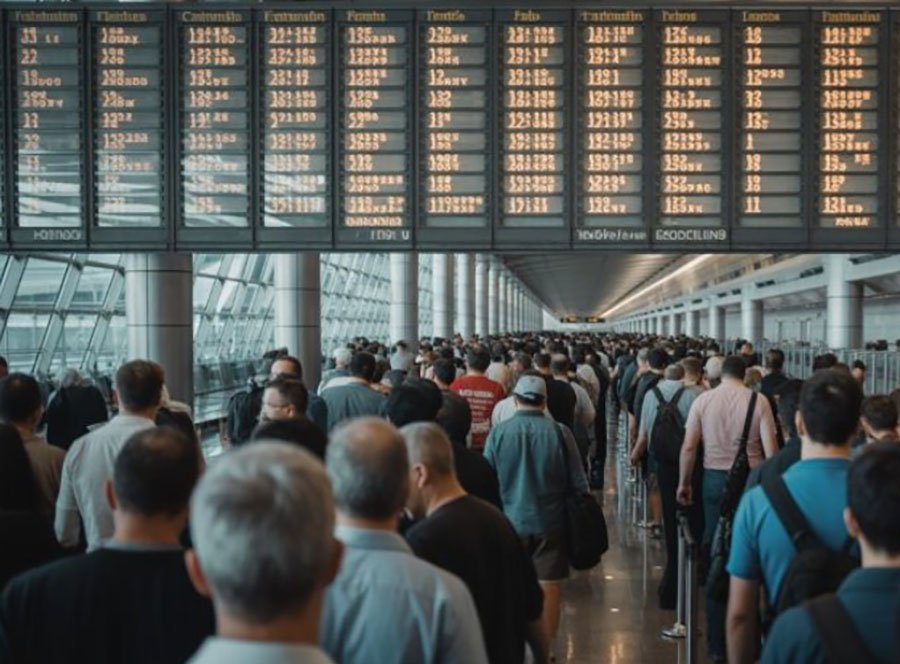
A total of 887 flight delays and 62 cancellations have been recorded at major airports across Asia, reports Travel And Tour World. The disruptions affected several countries and key aviation hubs in the region, including China, Japan, Indonesia and Thailand. Schedule disruptions were reported across a number of major airlines, including China Eastern, Hainan Airlines, Jetstar, ANA Wings, Malaysia Airlines, Singapore Airlines, Batik Air and Garuda Indonesia.
The most severe disruptions
The heaviest impact was felt at the largest aviation hubs in China and Japan. At Shanghai Hongqiao Airport, 82 delays and five cancellations were recorded, while Beijing Capital reported 65 delays and nine cancellations. Additional pressure was placed on Beijing’s second major hub, Daxing, where a further 94 schedule disruptions were registered.
Serious problems were also reported in Japan. At New Chitose Airport in Hokkaido, eight departures were cancelled and 144 flights operated with delays. In Tokyo, three cancellations and 50 delays were recorded, while Fukuoka reported 32 schedule changes.
In Southeast Asia, the most tense situation developed in Jakarta. At Soekarno–Hatta Airport, the disruptions affected 113 flights. In Bangkok, Suvarnabhumi Airport reported 55 schedule disruptions. Taken together, these figures show that the problems were not local in nature but had a cross-regional impact, affecting key transit routes.
Mass flight delays at major airports led to a redistribution of passenger flows and increased pressure on neighbouring hubs. This, in turn, affected transit routes, including flights to Southeast Asia, North America and Europe.
How passengers were affected
Widespread delays and cancellations disrupted connections on international and regional routes. Passengers at major hubs faced flight departures being postponed by several hours and were forced to urgently change travel plans, including on transit routes via Beijing, Shanghai, Tokyo and Jakarta.
At a number of airports, pressure increased on ground services and airline call centres. Queues for rebooking and information stretched for hours, and some passengers were forced to remain in terminals due to a lack of available hotel accommodation near airports.
The disruptions also affected business and leisure travel. Flight changes led to cancelled plans, altered arrival dates and additional expenses, particularly on popular international routes during the peak season.
Causes of the aviation crisis
Adverse weather conditions were one of the causes of the disruptions in China and Japan. At some airports, reduced visibility and strong winds lowered runway capacity and affected air traffic control operations. At major hub airports, including Beijing, Shanghai and Jakarta, the situation was exacerbated by heavy infrastructure loads. Disruptions in aircraft rotation and limited crew availability during the peak season led to an accumulation of delays and their spread to subsequent flights.
Some disruptions were linked to airline operations. Delays were recorded due to technical inspections of aircraft and schedule adjustments, which, given the dense flight network, further increased pressure on the regional aviation system.
Other incidents
Problems with air connectivity in Asia had been recorded earlier as well. Due to adverse weather conditions and increased pressure, it was already reported in early December that 858 flights were delayed and 94 flights were cancelled. In China, significant disruptions were recorded in Shenzhen, Shanghai and Beijing. Reports also mentioned Narita and Fukuoka (Japan), Kuala Lumpur (Malaysia) and a number of other airports in Southeast Asia.
Transport problems in Asia are also being intensified by geopolitical factors. The deterioration of relations between China and Japan led to the cancellation of around 1,900 flights. The most significant impact was felt by Air China and China Eastern Airlines — key carriers on the Beijing–Tokyo and Shanghai–Osaka routes — coinciding with the peak holiday season.
According to Chinese and regional media, the reduction in flights was accompanied by official travel advisories urging tourists to reconsider trips to Japan. This resulted in a sharp drop in bookings and forced airlines to adjust schedules and extend refund conditions.
Analysts at International Investment note that, combined with weather-related and operational disruptions, such decisions increase pressure on the regional aviation market and accelerate the redistribution of passenger flows in favour of alternative destinations.